Solo /Mindset / Nov 13, 2026 · 28 min
Not Everyone Who Helps You…
Show notes
“Not everyone who helps you is your friend. Not everyone who hurts you is your enemy.” -Mike Tyson Sometimes the greatest disservice a person can do is shield you from the consequences of your own actions. True friends will challenge you and help you grow, even when it’s unpleasant. Adopt that trait in yourself & search for it in those that you surround yourself with..
Transcript
Count money, man.
I'm a beast blood.
What's up, gang? Welcome back to
another episode of the Grind Cast. Get
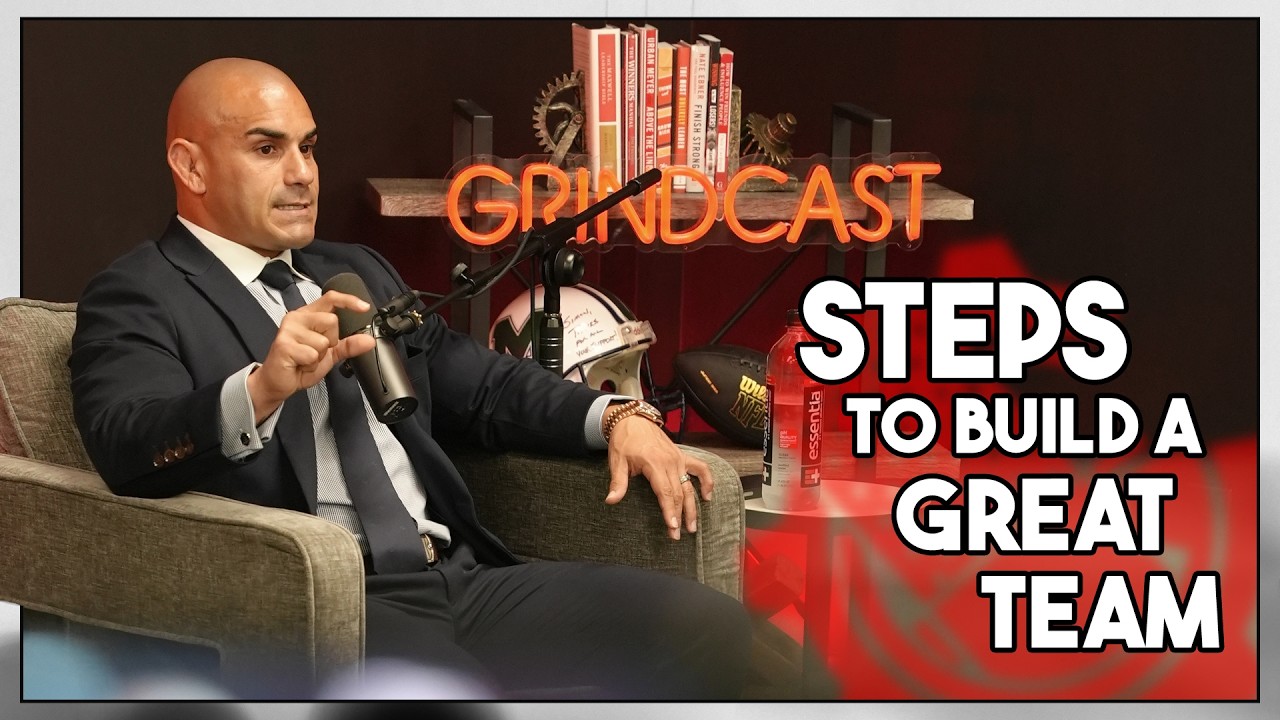
ready. It's a new day and I want to go
over some steps to building a great
team. Um, I apologize. A lot of this is
going to be specific to building a sales
organization because I'm thinking of our
own team.
However,
I think there's things that people can
pick up in this that would benefit a lot
of organizations. And so,
you know, first steps for us
is a person needs to master the art of
sales, right? So if I want to build a
team, you know, one of the challenges
I've seen people have is they want to
build a team, but they don't want to
master the beginning phases of sales in
what we do.
So, I think when you don't master the
art of sales in the beginning, it bites
you down the road to where you can't
coach people, you know, the right way
because you don't know how to teach them
properly because you haven't done it
with experience and success and belief.
So, it's easier for you to buy into
excuses because you haven't done the
process.
Secondly, while you're building, you
know, you don't go from walking in the
door to having the team of your dreams.
It has to be built, right? So, while
you're building, people want to follow a
leader that is getting results. And they
want to follow somebody that's doing
what they do and is has done what
they've done, you know, at a high level.
And so I think if you're if you're not
doing the sales process, then people
underneath you are not going to be able
to have someone to look up to and
they're going to be looking at other
people of who can they look up to.
Furthermore,
it's hard to lead someone else when
you're going through, you know, like I'm
selling a dream, but I'm living a
nightmare because financially
until your team is built, you have to be
making money on your own sales, right?
Until your team is built, and there's
phases where, hey, beginning 100% of it
of the income is on you. Then it's 90%,
then it's 70%, then it's 5050. 50 comes
from my team, 50 from myself. Then then
it's 8020. 80 from my team, 20 from
myself. And you go through this whole
process. I think what I see happen
sometimes is people will get promoted
and they go straight from 100% of it is
on me
to this vision where 100% of it is going
to be on the team and they skip all the
steps in between and they try to start
focusing on the team and not themsel.
And they're not at that level yet. So
their income goes down,
their respect level goes down, the
excuse making goes up, the pressure goes
up because their paycheck is not where
it needs to be. Right? And so it's hard
to be in this healthy place if your
income is not where you want to be and
your income isn't where you want to be
because you're not making the sales the
way that you should be leading the deal
from the front. Because I think the
easiest way to recruit is to recruit
with your income.
People go about it in all different
ways. You know, you don't have to blast
it all over social media, but you can.
But at the end of the day, I think the
best form of of recruiting is I'm
getting a result. Here's the money that
I make. Here's the money I have made.
Is somebody else making that level of
money? Do I think I can help this person
make that level of income and put them
in a better position than what they're
currently in right now? Well, it's going
to be hard for me to recruit if I'm not
making sure that I'm making the income
first because I did and then I stopped
doing the same things that got me
promoted in the first place. Okay, so
that's like one thing in building the
organization.
Then you know like if if I'm selling and
I'm making money while I'm building a
team now I can make investments into the
business that's going to take us to the
next level
from there I have to develop the
leaders.
So how do I develop leaders? So the
first step is all right I got promoted.
Now in order to get promoted in order to
continue to build a team you have to
start building multipliers.
Building multipliers
means you have to start to develop other
people that are successful.
And and here's the tips that I would
give. You know, for our situation,
you know, we have a process of like, all
right, here's a person that is ready to
be successful on the resources, you
know, that we give them. they're
educated enough to properly handle a
client the right way and not ruin a
relationship. And so we'll check the box
and say, "All right, that person is
released to work with these leads."
Different than if they're running their
own referrals. But if they're going to
work with our leads, you know, which we
give out for free and come with with
relationships, you know, and stuff like
that, this person has to have a good
basis of what they're doing, right?
And so I think a lot of times
the trainers will rush that process just
to to to get that person out of, you
know, the training process without doing
it with purpose.
Meaning every time I'm training
somebody, I think you should think of
two different things. You should think
one, I could be training my next trainer
because the key to getting to where you
want to be is you got to multiply other
people to do what you can do. So you
could delegate and you could duplicate
yourself and delegate to other people.
And so the way to do that is I'm going
to bring this person up to where they
only know what I'm teaching them
to where if I can just be in a a
position where I taught this person the
right way, then all I got to tell them
to do is like, remember the way that I
taught you? That's what I want you to do
to somebody else.
But if you cut corners
now, I have to go back and say, "All
right, you know, I didn't do all these
things with you, but I want you to do
these things when you're training
somebody else." A little bit harder than
for them to just reflect upon how were
they developed,
right? And so the other thing I'm
thinking of, you know, other than uh I'm
training the trainer is is this person
could I sign off with pride saying when
this person is released, they're good
enough to make a healthy amount of sales
to make a living, right? Or am
I just rushing this person, you know,
out of the process? And I think if you
take that approach of like I'm not
signing off. I'm not saying that I train
this person if they're not going to come
out and have success
where I know that they should have
success.
I'm not co-signing for it
or I understand I'm going to have to do
a little bit more work, but
that's work I'm not going to have to do
down the road because I'm training the
trainer right now.
I think those are key
parts of that next phase is starting to
develop the next level of leaders in
order to grow your organization. And
it's real simple. I do it, you
watch, you do it, I watch, and then you
do it. I would make a list of things
that you want to duplicate or things you
want to delegate to someone. What are
all the things that I need to be able to
delegate? And then I train the people on
those things. the the insurance to not
wasting your time
is let's say I'm training somebody
that's newer and they're not proven.
I'm like, "Ah, here we go again. I got
to put all this time into this person,
but I got two people that are proven
that are almost ready to start
multiplying, almost ready for
leadership. If I go train this person
right now, I'm going to make these two
people watch me
teach this person because the reality is
the only reason why I really want to
teach this person is so I could train
these two live on the job and show them
how to train this person properly. If
that person has success, that's extra
credit. If they don't have success, it
doesn't matter because I just was
training these two on how I want people
to be trained properly, how I want
people to be developed properly. And so,
take somebody with you. Don't do things
alone in the process of building. Take
your right-hand person, take the next
person up, take the next two, three
people up, have them watch you do what
what what you're going to do. And then
the next step to that is you start
watching them do it. So then I'm going
to say, "All right, now you do it. I'm
gonna sit back and watch you. I'm going
to take notes. And immediately after you
watch them do that thing. When it's
done, critique them. Not in front of
everybody, but pull them aside and say,
"All right, here we go. Here's what you
did good. Here's what you can improve
on. So, next time, let's get this done."
And you keep doing that. Keep doing
that. Keep doing that. Keep doing that
until that person is perfect or close to
perfect in what it is that you wanted to
train somebody on. And now I know if
this person is developing somebody, it's
going to be done the right way. Now that
takes time.
That's why I think people sometimes will
be in a position where they should be
further along 6 months, 12 months, and
they're not. It's because they skip the
process of the foundation and it it'll
build and crumble, build and crumble,
build and crumble, build and crumble
instead of building the foundation the
right way. It might take you a little
bit more time, might be a little bit
slower, might be a little bit less
results. It might still I got to do some
things I don't want to do in the
process. But then the foundation is
built just like building a house. Just
like anything else, you start with the
foundation and that foundation takes
time and then everything else starts to
become built from there.
So I would like to role play with people
when I'm developing them in sales. You
know, I I would break things into
sections. So, for example,
let's say there's five sections to this
presentation. We're going to do section
one till it's perfect. Once section
one's done, we're going to do one and
two and put them together. If I don't do
good on two, I got to improve two, but
then we start back over. One, two, put
them together. Done. All right. Now, we
got section three. Section three we're
working on. Go one, two, three together.
Put it all together until you can put
them all together. Then we start moving
on to four. I'm not trying to teach them
all five things. I'm trying to break it
down, master one, then put it together,
master two, then put it together, then
master three. Break it down into
sections to where it ends up being high
level by the time you're done with it
all. And I like to have somebody
prepared for the worst case person, the
worst case scenario, not the best case
person. So, if I could be tougher on
you, you're going to be prepared to be
released out there on your own. I'd like
to develop somebody to where it's like,
hey, very rare is it going to be harder
on you out there than it was for you in
here. If I'm harder on you and I'm
grouchy as a I'm role playing and I'm
giving you a person that's tough to deal
with. When you go out in the real world,
95% of those people ain't going to be as
bad and it's going to be easier for you
to handle versus if I'm making it all
easy for you and it's not reality, then
you're going to get out there and have a
rude awakening. It's like, "Oh, you
didn't really prepare me, you know, for
the reality.
Okay. And I think when you do the
process that way, you have more people
have success, more new people have
success, more people wanting to build a
team. So now it's building faster
because I have people recruiting other
people because they're naturally having
more success and then they start
bringing in more people and and you
develop this culture,
right? C what I've learned over the
years is culture over everything. CO E.
Culture over everything. No matter what,
it always catches up to you. So, what do
I got to do to keep my culture tight?
That's a part of building a big business
is what type of culture do I want? How
do I enforce that culture? And it's
really this simple. It's rewarding
behavior you want to see, cutting out
behavior you don't want to see, grabbing
a hold of things quicker, don't letting
them linger, and uh define what you want
that culture to be. And if your best
people can carry out that, then you're
in a good position. Meaning, if if my
star players aren't bought into the
culture, no one else is going to be
bought into the culture. But if my star
players are bought into the culture and
they live the culture, those are the
people that everybody's looking up to.
Now, I got a really good chance of
having a really good culture. where I've
been blessed currently right now is is
our captains, our leaders in the locker
room, our leaders in the business, the
they're they're their good character and
they're bought into the culture and so
now it's starting to spread and the
entire organization is healthy in the
culture. Does that mean out of 700
people everybody's perfect? Heck no. But
is the culture really good? Do we have
people at the top levels that are good
people that are carrying out that
culture? Absolutely. is starting to
trickle down all the way down to where
you'll see and feel something very
special in this culture.
And so in the process of building, you
know, you got to have faith
before it happens, right? So a lot of
people, you know, they'll be in the
middle of the process and then they they
like lose faith and and then they start
to quit. they start to question themsel
which is a normal part like to question
yourself but that's where you got to
have faith
and to me the faith was always for me
was there's people I see doing it and
there's no way that I won't be able to
do it because there's 1 2 3 4 5 6 10 15
20 people having success at it. How can
I not have success at it? It's only a
matter of time and I'm willing to do the
work.
Because if you can only like a lot of
people are like, man, when when I start
making that amount of money, then I'm
going to get that committed. Then I'm
going to put in that much work. The
problem is it never happens unless you
get allin committed and you put in the
amount of work that it requires to go to
that level. And so what comes first, the
chicken or the egg, but what comes first
is the belief and the faith in the
middle of building this that you have
your eye on the vision of where you're
going to be. And I think in that
process, the difference between taking
you from the middle to the top to where
you want to be is discipline.
Because discipline is the foundation of
leadership.
What is discipline? Discipline is, man,
there's a bunch of things that I don't
feel like doing that I know are going to
be good for us or good for me. Can I get
myself to do it? There's a bunch of
things that I do feel like doing that
are not going to help us that are not
good for me. Can I get myself to not do
it? There's always going to be that. And
I think the issue in building is people
start to say, "Well, I don't like that.
So, I don't want to do that. So, I'm not
going to do that. I don't want to do
that. So, I'm not going to do that."
Well, I got news for you. to build
something great, you're going to have to
do things that you don't want to do,
especially in the bottom and especially
in the middle. And the closer you get to
the top, you're still going to always
have to do some things that you don't
you don't want to do. But in my
experience, it gets way better to where
you can actually focus on the things
that you want to do and like to do. So,
you got to have a vision. Meaning
when I first started, you know, I hear
people say, well, you know, I'm not
passionate about it or I don't
I I don't get it all the time because I
started out right now it's virtual
sales, so people can work from any
anywhere they want and they're they're
in beautiful places. They're in condos.
We had to drive to people's houses,
knock on their doors, wintertime, snow
tires, I mean, stay in hotels, the whole
deal. Do you think I love that? like,
"Oh man, this is my dream come true
right now." No. Well, why did I keep
doing it? The vision. I had a vision
of doing something way better with the
opportunity and being in a position that
I saw people and I could tell you from
where I'm sitting right now,
the vision I had, it's way better than
that. Way bigger than that. I love what
I do. People ask me all the time like,
"Man, do you love what you do?" I love
what I do.
I love what I do.
It's not just the sales or the the I I
love building teams. I love building
relationships. I love building people. I
love being having an opportunity that I
could bless other people with an
opportunity. A lot of times in life, if
you run a business, it's like, "All
right, yeah, you're making money. Maybe
one other person on your team is making
real good money." After that, you're
dealing with people not making no money.
So now I got to coach a bunch of people
that ain't making no money and there's
no upward mobility. There's no vision
for a better future. There's no way that
they're going to be able to grow or
anything here. I could have 10 people
that I care about and all those people
can make big money and they could have
people that make big money and I could
be coaching people making six figures,
seven figures and creating more
opportunity. It's it's the vision is way
beyond even what I first initially saw.
But what's applicable to people out
there right now is you got to see a
vision of something. And on your way to
making that vision a reality, you got to
be willing to do things that you do not
feel like doing.
If you can only do things that you feel
like doing, that's weak. You're not
going to win.
That's what losers do. They only do what
they feel like doing. I'm a dad. A dad
is a lot like leadership. And so I start
trying to teach my boys, you know,
already of like, hey, man, it's a cold
world out there. It's hard out there. I
love you, but I got to get you to do
some things. I don't care. I don't want
to hear it ain't fair. I don't want to
hear that. I don't want to do that. I
don't care. I don't feel like doing
that. That That's going to get you
losses. If you only do what you feel
like doing, that's called losses. In
life, there's times you got to do things
you don't feel like doing in order to
get a result that you do feel like
having.
And so, in the middle, we got to take
that approach seeing the top.
And then I start to duplicate myself
into other people,
which oh, by the way, you got to be
working on yourself this entire process
because if you want to build something
special, you can't get yourself to a
place where your talent can take you to
a place that your character cannot keep
you. So, I have to be building myself up
as an individual to be able to handle
for what I prayed for. So, I pray for a
million dollars. Well, now you got a
million dollars worth of stress, million
dollars worth of problems. Can you
handle it?
This is what you wanted. This
is what comes with it. Or did you only
want the glory? You don't want the other
stuff that comes with it. There's a lot
that comes with it. Oh, I want to be a
professional athlete. I want to make
millions of dollars. Okay, now you got
to visit hospitals. Now, everybody wants
your autograph. Now you can't even go to
the restaurant. People want to take a
picture with you. That's what you pray
for.
You can't want all the great things and
then not come not not the responsibility
that comes with it. And so the same time
we're building the business, you got to
be building yourself up so you can
handle it when you get what you actually
prayed for.
and I'm duplicating myself into people
because the way to scale a business is
you got to duplicate you have to have
systems.
So everything that you could think of
right now in your business that you want
to grow that you want to get better at
create a system for it you can't have a
feeling for it. You got to have a
system. What is the system for that?
What is the system for this? Simple
systems scale businesses
and also people that are growing. If you
want to grow your business, grow
yourself.
So then now I can duplicate other
people. To me, the growth plan is grow
myself times grow others equals explode
the business. So I got to grow myself, I
got to grow other people, duplicate
myself, duplicate the process, duplicate
the system. Then they become
multipliers. And then the business
continues to grow. And then the last
thing, man, where people start making
mistakes is is they get to the top
and they get lazy once they did all that
work. And and and this is you could see
this in everything. It's not a people
make it to the NBA, they make it to the
NFL, and then they stop doing what got
them there because that was their goal,
and now they think they've arrived. And
that's why NFL stands for not for long.
That's why you'll have some people that
were free agents, never drafted, become
the best in in the history of the game.
And you'll see people that were first
round draft picks, first pick of the
draft, never do anything with their
career. Because it's not about once you
make it there. That's just the
beginning.
So now you made it to the top. Now you
got what you wanted. Now you're in a
position that you wanted to be. Okay.
One thing that I that I'll tell you that
I heard from Mr. Maxwell was that that
you cannot get to the top on accident.
That has to be intentional. It's a
climb, but you can fall off on accident.
And so, I think it comes from a spirit
of humility
of, hey, you're at the top now. I don't
mean get lazy. You still got to earn
respect. You still got to earn respect
to the people that are choosing to
follow you.
They're not forced to follow you. So,
how do I earn their respect? By serving
those people, by still working hard. I
tell people building the business could
look a lot like bluecollar work. Labor
like drilling holes in the ground,
stacking bricks, building things. It's
hard hats, dust, gritty, and then you
get it built and it's white collar work,
but it's still work. That's what people
miss is they stop working altogether
once it's built and their work ethic
gets down and then the business
collapses or the business goes backwards
because there is no such thing as an
easy way.
You want to go from 1 million to 4
million. You're going to have to put in
some work. You're going to have to make
some sacrifices. You're going to have to
do some things to earn respect, to keep
respect, to keep growing, to keep
challenging yourself. And the issue is
people get to this destination
and they stop
without understanding that there's
really only two directions. You're
either growing or you're dying. You got
to choose. Am I going to be in growth
mode or dying mode? But there is no
staying the same. There's no
neutral.
Now that we're at the top, now that we
got it built, it's gas pedal. But now,
how do I how do I Well, I thought the
whole vision was to get it built so I
didn't have to do this and so I can have
time. If you can,
you're going to be able to reap the
rewards of the fruits of your labor.
Life will be sweet. You'll be able to
eat things others can't eat, fly things
others can't fly, buy things others
can't buy, bless people the way other
people can't bless people, live a life
of your dreams. There's all these things
and perks that come with it, but you
can't celebrate it too long.
You could take nice vacations. The
vacation can't last a year.
You could take off most nights. You
might not be able to take off every
night. You could take off most weekends,
but you might not be able to take off
every weekend.
You could set your own schedule, but you
got to pay attention. Am I putting in
enough work? There's still things that
are going to have to be done. There's
still sacrifices that are going to have
to be made. There is no free ride.
And I think that's what people
miss once they get to the top, which is
why they fall off is that there's you
you got two options now that we're here.
You go backwards or you go forwards, but
you ain't going to stay the same.
I've chosen a life of growth.
And I think what has helped me is my
purpose is I think the people that say
it's about the money, those are the
people that fall off the fastest because
once you get all the money and you got
enough money and your bills are paid and
all that, the effort can go down. But it
got to be bigger than money.
So when the purpose even just
competitive, you know, wanting to win,
you know, boom, that's that's one.
helping other people become successful,
being a good influence, being a get good
mentor, being a role model. There's so
many things that can keep you driving,
keep you pushing. You got to find your
purpose when you're at the top, when
you're successful. And I think the if
you're selfish, it becomes difficult to
stay motivated. But if you're thinking
of others, it's easy to stay motivated,
especially when you understand now that
I've been blessed with this, I have a
gift from God, and to much is given,
much is required.
There's people that are expecting me to
grow this because they're depending on
me.
I owe I owe it to God
with the talent. I owe it to God for the
for the gift that he's given me. I owe
it to the people that have chosen to
follow me over other people that they
they're putting their life in my hands
that I can help grow them. I owe it's
but it's a spirit of humility
because if you don't have a spirit of
humility that then you think that you're
God's gift to the people and you're
God's gift to the world versus this is
God's gift to you. That's why those that
humble themselves will be exalted. Those
that exalt themselves will be humbled.
Stay in a humbled spirit. And that's a
typ typically an easier way to grow.
Speaking of a humble spirit, I want you
to know how grateful that I am for each
and every person that takes time out of
their day to listen to us on the grind
cast. And we ain't making no money on
this. We're just, man, straight giving
out there. Hopefully, it's impacting
some people. I'm blind to it. We're
letting it rip on the mic. And then God
knows where this thing goes. Hopefully,
you know, God's spirit is having to go
through the wire, you know, on the mic
to where it needs to be with whoever it
needs to be with. And if you know
anybody out there that could benefit
from this message or any of the other
messages, I know it's busy out there,
but if you could take a minute and just
share this with people so we could
impact more people. Uh, and we
appreciate you, man. So, we got another
week under under our belt here on the
Grind Cast. Thank you as always for
joining us on another episode of the
Grind Cast. Get ready. It's a new day.