Solo /Business / Mar 18, 2022 · 25 min
Instagram Q&A
Show notes
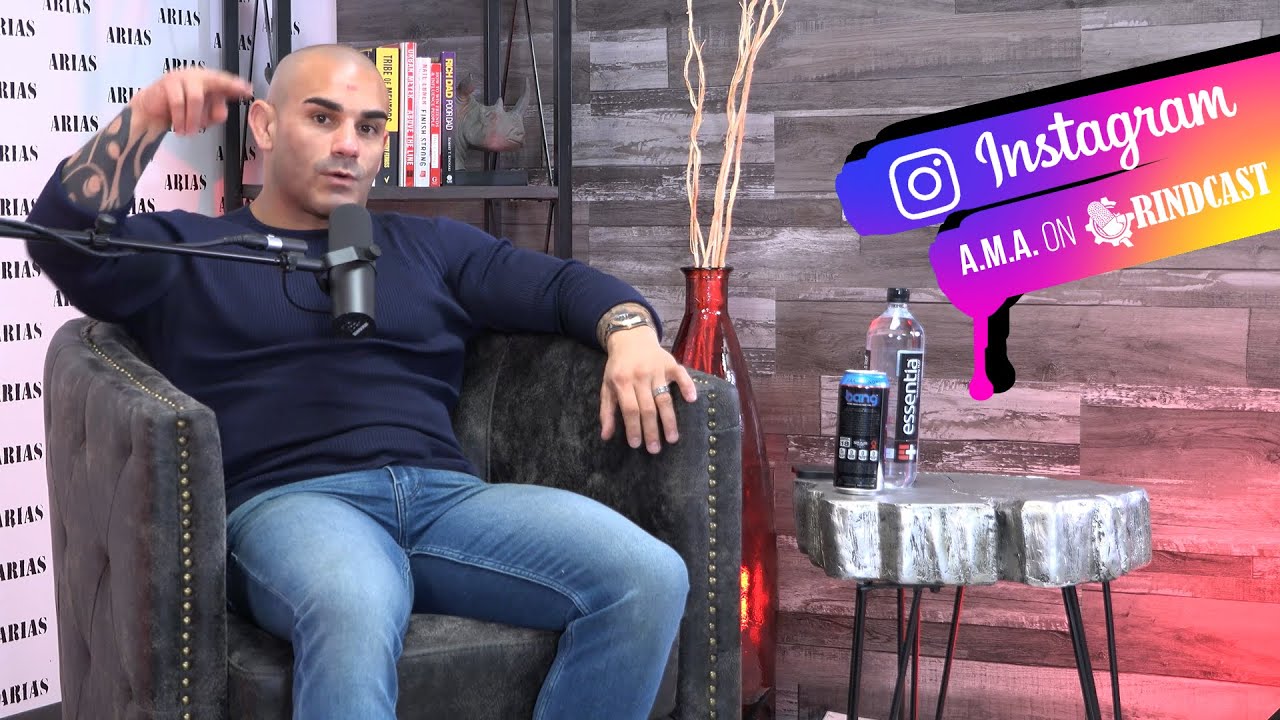
Last week on Instagram we threw up an Ask Me Anything post. This week on the GRINDcast, we’re tackling some of those questions. Shout out to Chloe, Byron, Joey, Melissa, Max, Ana, & Ali for providing some great topics!
Transcript
Count money man, money back riches.
I'm trying to try and told them I'm a beast.
What's up gang?
Welcome to another episode of the grind cast.
Get ready.
It's a new day.
And today we're going to switch it up a little bit.
I'm going to be answering some of the Instagram AMA.
Ask me anything on Instagram.
And so we got a lot of good questions.
And so I wanted to take some time to knock out a few of them
and miss Chloe asked, what is your number
one tip for someone looking to start their own business?
Which are number one tip for somebody looking to start
their own business.
Man, very, very, very good question.
And something that I'm passionate about Chloe.
First off is understand that you have to change everything.
It's like having a baby.
When I have my first child, everything in life changed.
The way I looked at things changed, sleeping patterns
changed, everything changed.
And you have to understand everything changes.
And up front there's a lot of grind and sacrifice
that mirrors having a baby.
You're having a baby, basically.
Congratulations, Chloe.
And so what happens is when you have a baby,
it's painful to come out.
They tell me.
And I've been a witness in the room and grateful
that my wife had to do that part, not me.
And man, after that, there's some nights where the baby's
waking up.
Could last longer than a year where you're not
getting a ton of sleep.
But it's also an exciting time.
There's some sleepless nights.
There's some times where you got to take some drinks,
some extra coffee to make it through the day.
The baby needs everything from you.
It needs to be bathed, needs to be fed.
It's going to do a lot of crying.
But over time, it gets bigger.
And once I've watched my children get into school,
it's like, OK, they're brushing their own teeth.
They can wash themselves.
They can feed themselves.
They can do everything.
Still needs a little maintenance.
But then they're gone to school all day long.
And you have a little bit more time.
And then opening another business is starting over with,
I have a one-year-old right now.
So we opened up another business, Baby Business.
Baby Enzo came.
And so if you continue to add growth over time
to your business, we'll feel like you're having multiple babies
as you open up more locations or things
that at nature.
But you have to keep in mind that it's worth it.
And so the tip that I'm trying to give you
is to have the right mindset coming into starting your own business.
I think that's one of the reasons for a lot of business failing
is unrealistic expectations, not knowing what they're getting
themselves into, not being able to see the light at the end of the tunnel.
And I think the best way I can explain that to you
is congratulations you're having a baby.
And all the things that you know about people that have had children
the struggles but also the joy and the love
and everything that comes with it is mirrors a lot of starting
your own business.
And so just look years out because there's a lot of pros
that come from owning your own business,
to controlling your own schedule down the road,
helping so many other people down the road,
making more money than you probably would at a normal job.
There's a lot of pros to it.
But the obstacles and the struggle and the grind.
And so everything that you have as a mom goes into that child.
And so everything as a business owner in the beginning
goes into that child of the business.
And my second piece of advice unsolicited
because you really just asked for one would be to short term
sacrifice leads to long term gain in everything
that you do from a mindset standpoint.
But just look at it that way from your finances.
And live way below your means.
Way below your means so you can invest your money
and profits back into your business.
There's no greater return that you'll find on the stock market
typically or any other places real estate
than putting that money back into your own business
as many times as you can, also known as flipping the money.
And so you keep putting it into the business.
And as your business grows, it'll pay you a little bit more money.
But just try to fight the urge to not reward yourself too soon
and keep putting that money back into your own business.
So thank you for your interest.
Hopefully that helped.
Next question is going to be from Byron.
Byron asked, what was your biggest obstacle
when you became a leader and how did you overcome it?
Man, I think my biggest obstacle
when I became a leader was, oh, I remember now.
There was so many running through my mind.
I remember my biggest obstacle when I became a leader
was not being able to handle me wanting it for someone
more than they wanted it for themselves.
Almost like the likes of a coach
that wants to push a player because they know they have so much talent
and could do so many great things in sports.
But the player just don't want it.
The player don't want to put in the work.
The player don't.
And not that I had so many.
I look back on it in my first couple of years of leadership
and I think that I'm way better now.
And I probably hopefully feel that way another 10, 15 years
from today about where I'm sitting right now.
But what I could look at there is people not making it
that I was developing, that I was helping,
not everybody made it, not everybody makes it.
And I would take it so personally because I wear my heart
on my sleeve in a sense.
I've learned to not do that so much anymore in business.
But I have a deep compassion for people
and a passion to help people.
And I'm competitive.
And I like to make no excuses and take responsibility.
And so I would take everything on myself
if the person didn't have success.
And so my obstacle, one of the bigger obstacles was
understanding that all I could do is all I could do.
All you could do is all you could do.
Do all you can with the best intentions as possible
and serve that person.
But don't allow someone that doesn't grasp it,
doesn't make it, doesn't put in the work
to let your fire burn out and burn you out in the process.
Because sooner or later, just again,
with the sports analogy, sooner or later,
you're going to have a draft class where you get Tom Brady in it,
or you get Patrick Mahomes in it,
or you get LeBron James in it.
And all of a sudden, if you don't give up,
your coaching ability will meet the right person.
And it can go to the next level.
I think one of my bigger mistakes,
which wasn't really the question,
but the kind of along the lines of obstacles was myself.
I think the hardest person to lead in a number one person
that you need to lead is lead yourself.
It's easier to lead other people and tell them what to do.
You got to be able to take your own advice and lead yourself well
if you ever want to lead other people well.
And I look at in the beginning, I lacked patience for people.
And if I could look back to the mistakes,
if I could do things over again,
what I would do is I would slow myself down,
not in a growth mode of the business,
but I would just slow my emotions down
to the sense of having more patience with people
and not allowing myself to get so emotional
and be so hard on people.
I was tough on people because I was tough on myself.
I was tough on people because my coach was tough on me
and I saw what it did for my life.
And I wanted the same thing for others,
but I had to learn that not everybody could be coached
the exact same way.
And so just because I saw benefit from really hard coaching
and I wanted it for these people so bad
that I had to be able to coach them in a style
that they would be able to receive it.
And it took me a long time to grasp that,
even though we had a lot of success,
when I looked back at it,
if I was more patient with people,
we probably would have had even more success.
Next question, Joey asked, wonder which Joey?
What was the hardest obstacle you had to overcome
in life?
Man, I think the hardest obstacle I had to overcome
in life in general was figuring out
who I wanted to be as a man.
In business was a little bit different,
but in business, that's kind of a simple one.
Loyalty is something that is huge to me.
A lot of people think it's huge to them,
but I'm talking about old school, deep, deep,
rare loyalty that doesn't really exist as much anymore
as my vision and dream and hopes
to be that type of a person and attract those type
of people in my life, true, true loyalty.
And having people that I care about and cared about
and helped to put on in business
and to grow them in business,
not always reflect that value, that loyalty
and allow themselves to get,
I don't know if it's jealous or just ego or whatever,
but get in their way.
That was a tough one for me to overcome in business
that I had to learn to not allow those moments
to stop me from continuing to pour everything I got into
people in the future because of a couple obstacles
and people at that time in their life,
because people don't always stay the same.
They can grow, they can change just like I make mistakes
and I can grow and I can change.
But I think in life, it was finding out who I wanted
to be as a man because I had so many mixed emotions
and mixed signals being sent my way.
So I was raised on the east side of Youngstown, Ohio.
Single mom had me at 19.
If you go outside where I live, that was my house.
And it's confusing, that's why I was saying it was confusing
because I had a good grandmother who lived five minutes away,
cut hair, wasn't exactly a millionaire, worked hard
and was able to pair bills and help a little.
My grandfather had a good grandfather
although my mom's parents were split.
And myself, if I walk out of my house,
really my block, the people around, I'd say it was probably
an area within a few blocks that probably would be 70% African-American,
20 to 25% Hispanic and maybe just a few folks, white folks.
And so my dad was 100% Venezuelan although I didn't really meet him
until I was in my 20s.
I did have some interaction with my family,
but my mom was Italian.
And so I was kind of just trying to figure out who was I,
from race to everybody, who am I, who do I want to be,
and then trying to fit in with the culture of the people
that I'm around, but you look a little bit different.
And so that was a positive, you know, it was an obstacle at the time,
but it was a positive because I learned the ins and outs of some cultures
better than people that are actually even that born into that culture.
I mean, I knew those cultures so well.
And so that was, serve me well, being able to understand people
and get along with people, connect with people, you know, down the road.
Every obstacle pretty much brought with it, a seat of opportunity,
and then not having a dad, I became the man in my house,
you know, somewhere in my mind, you know, I remember a switch going off
in my head of like, I want to protect my mother, I want to protect my house.
I am the man in my house.
And so it made me aggressive.
It made me protective.
You know, my mom didn't have a ton of guys, but you know,
I can remember a few relationships,
boyfriends, you know, one would turn into a marriage,
you know, when I was in high school.
You know, some emotions, you know, around man, another dude,
you know, around my mom and what role am I supposed to play,
you know, in that, you know, those that whole process and upbringing,
and then I'm living a double life, you know, so I'm
going to decent schools because my grandma, my mom, my grandfather,
everybody would pitch in whether they'd have to drive me further
or everybody pitch in a couple hundred bucks and, you know,
we're late with the tuition, but we find a way to get you to go to
Ursula, which was a Catholic school for high school, which had, you know,
better academics and really good sports went, you know,
going to win a state title there in football, you know, but the,
but I'm running with a crew that I grew up with that is, is moving really fast,
you know, and there's like, man, you think of, you know,
every kid got a little bit of that in him, but I'm talking about like,
life on the line, life in danger, this ain't fun.
We didn't still candy bar from the store.
You know, it's like we're at war with people, you know,
and no guidance, you know, really as a man trying to find
out, trying to figure out, you know, who did I want to be?
Did I want to be a gangster?
You know, that I want to be a thug,
that I want to be a mobster, that I want to be an athlete.
You know, who did I want to hang with?
You know, I was like, I was just trying to figure myself out.
And that was an obstacle, you know, for me,
trying to really, you know, figure out who I was and who I
wanted to be, that would be a long journey in my life,
you know, for me to finally start to figure out like,
all right, this is who I am.
Like it'll love it, you know, I know who I was.
I know what I know, I know what my background is.
But this is who I am, you know, today.
And, you know, I remember the first time I called one of my
friends back home, you know, Perm, who now has with me a lot.
And, you know, I told them, like, yo, I just got to let
you know before you come up here and see me, I started
wearing tight pants, you know, because I want to prepare
them because we would clown each other, you know, and I,
you know, we grew up, I mean, especially in the era, you
know, it's like man, big baggy, big, big clothes, you know,
everything way too big, you know, on you oversized, you know,
and all that and would clown people that would wear the clothes
that I ended up wearing, you know, just a little bit more of a
fitting look and tapered look and started to get suits to fit
me in and all of that stuff.
So that was all the process.
And I think the obstacle for me was finding myself as a man
and as a person and getting comfortable in my own skin.
And a lot of that obstacle I think came from lacking having a
stable father figure in my life.
So I had a bunch of men that would pitch in and some of the
men that would pitch in or molding me, taught me things that
were not great, but would end up actually ended up benefiting me
down the road because I learned how to hustle and learn street
smarts.
And then other people were putting in the seeds of the right
things to do.
And I had all of that argument going on in my mind.
Next question, Melissa asked, knowing what you know now, if
you had to start over as a brand new agent.
So that means this is probably someone within our business.
What are your first five moves?
If you had to start over as a brand new agent, what are your
first five moves?
Well, a lot of the moves I made as a brand new agent is the
exact same thing that I would tell you to do even 16 years
later, which is why I think I move so quickly as a person in
business coming up young.
And I'll give you a couple of those.
One is find the right coach, like the best leader that you
could find in that organization and follow them off the edge
of a cliff, like just just follow them to the T with loyalty
and commitment and execute every single thing that they tell
you to do without fail.
Be the best student.
There could be no better student.
There could be nobody more coachable than you.
The goal needs to be am I the most coachable person that you've
ever come in contact with?
And if the answer is no, you're not doing what I'm telling you
that you need to do.
You have to be the most coachable person that person has ever
come in contact with in the business.
And first is identifying, you know, that person.
So identify the right, the right person, follow them.
Second one is listen to every single thing that they that they
tell you to do with those goals and mine have been the most,
the most coachable.
Developing a relationship, you know, with the Lord was huge
for me, that would be a move that I would tell you to make in
your five inner circle.
Identify who you are going to allow in your circle, even
though you're new, you really need to be getting in other
circles.
But don't allow negative people not getting results to be in
your circle.
It's not personal.
It's just business right now.
I'm not trying to look for who's the nicest guy or gal.
I'm trying to find the people that are nice.
Yes, but I want the ones that are getting results.
And I'm only going to listen to the people that are getting
results, not listen to the people complaining that are not
getting results.
Misery loves company.
Find the ones that are having the success that you want to
have and mirror them and hang around them and don't listen to
the people that are not where you want to be.
Try not to take advice from people that you wouldn't want
to trade places with.
Probably next move I would make is hold yourself accountable
to mastering your presentation.
Nobody needs to teach you your presentation.
You're a grown man or a grown woman.
And it's your job and responsibility to put yourself in a
room somewhere and memorize that presentation.
100% word for word to the tea robotically until you can
make it your own.
You know, you hear people say, well, I don't want to be
robotic and I don't, you know, I learn better this way and
I do it better this way and I do it now.
Master the basics first.
Get all the words properly, even like a robot.
Same all.
And then you could start to put your personality and swag on it
and add some things, you know, to it.
That's that's probably the advice and make sure you're
listening to the right books, audio books, podcasts, put
things into your mind, focusing on your mind body and
spirit because inward growth precedes outward growth.
So that means if you want external growth, first, you have
to grow yourself personally over time and I think the foolish
people or things that that fool people are when they have
success without doing those things, it temporarily tricks you
into thinking you don't need those things and is setting you
up for a crash.
Next question, max asked if you could choose one skill to
master, what would it be?
One skill to master.
What would it be?
Connecting with people, you know, technology is booming
right now, but at the end of the day, you still at some point
you got to deal with people and that's a skill set.
Before you lead anyone, to accomplish anything great, you
know, there's no such thing as self-made.
I mean, I just, I get it.
I really do and I get it.
I know what people mean by it and I try not to take it out
of context, but when I hear somebody say to yourself made, it
really concerns me about that person and where they're going.
They're either oblivious to the fact of all the people that have
helped them, which is an ego issue, which causes problems, you
know, down, down the road, or they're truly trying to do
everything by themselves, which is going to get them get them in
trouble.
And so I think nothing great is ever done without having other
people help you, even if it's an individual sport.
It's like, well, I'm the only one box and I'm the only one
wrestling. I'm the only one fighting.
But did your doctor help you get healed from an injury?
Did your coach, who taught you to box?
Who taught you how to wrestle?
Did you just figured that out on your own or did a bunch of
training partners help you rep stuff?
Did a bunch of coaches help you with stuff?
Did somebody give you a ride to practice that, you know,
in the past?
There had to be people that have impacted your life and impacted
you.
And so you can't do nothing great without people.
And so if you're going to, if you know you can't do nothing
great without people, that means you got to deal with people.
And so I would want to develop the skill set of mastering how
to connect with people because you can't, you know, Maxwell
always says, you know, before asking for someone's hand, you
know, which is like, all right, come this way or let's go this
way, you must first ask for their heart and get their heart.
And so once you've got somebody's heart, then you can ask for their
hand for things.
And so I think it's, it's developing the skill set of being able to
connect with people but not just the people that you grew up
around. That's easy.
So I can connect with people that are just like me.
Well, that's better than some people, but that really doesn't mean
you've developed a special skill set because I'm talking about
you grew up in the city.
I want to see you connect with people that are from the country and
grew up on the farm.
I'm talking about you grew up in a wealthy affluent area, private
schools your whole life and you connected with people that grew up
in the projects that got an Afro and don't look nothing like you,
you know, different color of skin, different, you know, ways that
they were raised.
Can you connect with those people?
Old people, young people, Christians, Muslim Jews, non-believers,
black people, white people, bodhikwa, Hispanic people.
Can you can you connect with anybody or can you only connect with
somebody that's like you?
And most people can only connect with people that are like them.
And so I think if you can learn the skill to connect with other people
in the way to do that is to put yourself and other people's
shoes into have empathy and be inquisitive before you race to
judgment.
It's easy to judge people with
your own.