Solo /Business / Jan 7, 2022 · 37 min
Roger Smith
Show notes
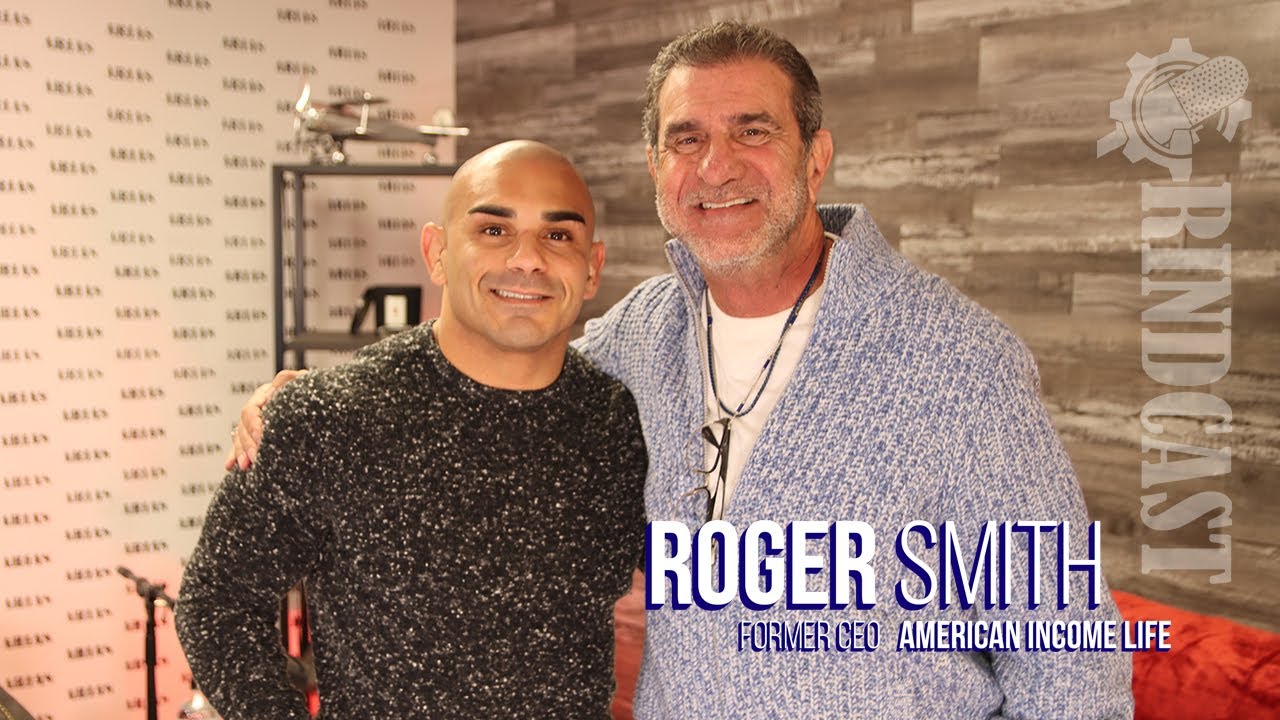
This week on the GRINDcast we have Roger Smith, former CEO of American Income Life & National Income Life. His new book, “The Most Unlikely Leader” will be released later this year and it’s available for pre-order now!
Transcript
Count money, man.
Money back riches.
I'm trying to told him I'm a beast.
What's up, everybody?
Welcome back to another episode of The Grindcast.
Get ready.
It's a new day.
And we have a very special, special, special, special, extra special guests today.
And my friend and mentor and former CEO of American Income Life.
And man, I can't even believe you're here right now, Roger.
Thank you for coming to visit us.
And thank you for being here.
Love it, man.
I thought Natalie was made a mistake.
We were just, Rodgers in town, we're coming up off our fundraiser for Still City Impact.
And you've always been supportive that way.
I remember with Inspire Mons, you guys all flew in my first one that I had in the middle
of nowhere in Youngstown.
We had this wine tasting event fundraising for the kids.
And Natalie, you know, tells me Jenny contacted her, Rodgers assistant, long time assistant
who's still an assistant to our new CEO, Steve Greer.
And she said she thought Roger was coming.
I said, Natalie, I don't think he's coming at this.
Right now, I think he's talking about when his book comes out, because you know, we'll
be talking about your book coming out and all that.
I think he's talking about April or something.
His book's starting to drop.
He's going to come in and come in and this thing.
And I got so busy with everything.
Now, I think he's coming to this.
And when you're planning something like that, it's just like a lot of hustle and bustle.
And it just slipped my mind for a minute.
That it was actually happening.
When I saw you yesterday, when it was like, all right, I didn't believe you were coming
to my son and person.
And man, I'm just really grateful that we had the opportunity to see you and some of
my people meet you.
You're literally a legend for American income.
You spent over 40 years of your life with this company and looking forward to diving in
a little bit with you.
And almost 20 years, 17, 18 years or so at the corporate level with the company as president
or CEO.
So we're just really, really excited to have you, Roger.
Thank you, son.
And listen, thank you.
Thank you for being you.
And I mean this sincerely.
What you do and the way you give back to your community is really one of the core philosophies
of American income.
And it's one of the philosophies that Mr. Rappaport tried to pass down to us.
And of course, I tried to continue.
Some people talk it and some do it.
And the reality of it is very few really do it at the level that you do.
So I appreciate you, man, and I appreciate what you do.
And it was really a pleasure.
And it was inspiring for me to come and see what you're putting together.
Really inspiring to me.
I remember when Marcus Smith, who called my resume and was my first mentor here, we first
started getting going.
I remember before I met you, he's like, man, you're going to love our CEO.
You're going to love Roger.
He's your type of guy.
I didn't really know what that meant.
Until I started to get to know you and watch you and see the shoes that you wore.
The shoes just always had really, really sharp shoes and a lot of swag, or just the best
of the glasses, the chrome hearts glasses.
But this huge heart, and then I see the background of you of going from GED to CEO, which is
what the book is going to be coming about.
Can you give us a brief synopsis?
Because I want to pick your brain.
But I think just for people to understand the journey that you've had, did you ever
see it that your life would turn out that way and maybe give them a brief?
What was your upbringing like and all the way from where you started to where you're
going to be?
No, absolutely not.
Listen, I can't believe that I was still alive after 19.
So there were so many things that happened early on.
My mom was a single mom trying to take care of the kids and everything.
I was trying to work and therefore there wasn't really anybody watching over me a lot,
which allowed me the freedom to unfortunately get as much trouble as it is.
And it's kind of crazy because up until the time that I was like 13 and a half, I was
a really good kid.
I mean I was in the musical, the junior high musical, Carousel.
I was on the chess club.
I was on the woodworking club.
I was like, I didn't get A's and B's but I didn't get D's and F's.
I was like a normal kid.
And then that summer was 13 and a half.
It's like a switch flipped.
It also coincided with the hippie movement that was just starting.
And to me all of a sudden was wow, these are my people.
These are the people that could accept me and accept my values and so on.
And unfortunately the peace and the love lasted for a year, year and a half.
And then from there it went into drugs and from there into very hardcore drugs and so on.
So, I didn't do well in school afterwards.
I got kicked out of school my first month that I was in high school because I wouldn't
wear socks with my sandals or something that they wanted me to do.
And then it was alternative school and alternative school and none of it worked.
And then for the next three or four years in my life I was basically on the streets
and just trying to survive.
I was fortunate my stepfather had started working for American income about six months before I started.
And he said Roger I think you should try this and I'm going, first I didn't want to disappoint him.
I didn't want to be an embarrassment to him.
There wasn't the chances of me being successful in my own mind was very negative.
But I gave it a shot.
And you know what, it changed my life.
And that was at what age that was at 21.
21 years old you started with the company.
And it's interesting.
I look back and there isn't anything that any part of my career that came naturally.
You know how they say well you're naturally born salesperson, you're naturally born.
This you're naturally born leader.
I wasn't naturally born at all to anything.
All of it was just learned, learned, learned behavior.
And then I went through, we'll get into a more concerned back giving up and not person.
It's like who's standing last, you know, and the person standing last is the person that persevered.
You know, all the way up to the top of our business and just business in general.
You know, how much of that do you think plays a role in people's success of like that,
just the whole perseverance thing of like, I think it lasts.
I would put that as the number one thing.
I would put that as the number one thing.
You're going to have obstacles, you're going to have adversities.
You know, it's Maxwell's failing forward.
It's okay.
I failed in this or this didn't work out.
Great. What did I learn from it?
Because the odds are the same circumstance happens again.
But now how do I respond to that circumstance?
Right.
And each time you get better and better and better and better and better.
So, you know, it's a long journey.
It's a long grind.
You know, people see you and they go, wow, man, I want that.
And they think they're going to have it, you know, three, four years later.
And they're, no, man, it's a grind.
It takes a while to build it up.
And then it takes even more effort to keep it up, right?
Right.
So many, I feel like fall off and lose their way and give up on themself in the middle of that process
because it just is part of what it requires in order to go.
It's not an overnight, you know, it's not an overnight thing.
And their picture isn't clear enough.
The vision?
The vision.
Yeah.
Yeah. If their vision isn't clear enough and it's not strong enough, then they're going to have all these things taken.
You know, hearing your story, you know, when people read the book and, you know,
remember, you tell in your story just a whole story of American income, your journey.
It's like it sounds like a 12-round, you know, boxing match, you know, where it's like, man, you're woozy.
You got to hit and you stumbled and you got back up, standing eight count.
And at the end of it, you know, your hands raised and you're victorious.
It was like a battle.
Yeah, yeah.
What would you say to the Rocky theme a lot?
Really?
I did.
I love it.
And it ain't in my car.
What would you give to the, you know, people in business or in our business that are like, at a point where they feel, you know, they're stuck or they feel, you know, there's no hope because you have some of those moments of feeling like, man,
it's always going to be the way I'm stuck and, you know, you start to bouch yourself a little bit.
What would you say to those people?
I think, listen, I think we're going to probably talk a little bit about mentors in a bit.
But one of the things that Mark McCandor taught me was that nothing's as good as it seems
and nothing's as bad as it seems.
Your highs aren't really as high or shouldn't be, and your lows aren't as low.
Those two shall pass.
And I think that if you keep that vision of where you want to be, very, very clear, and
it's interesting because for a large part of my life, I talked the talk of success.
But the real picture of what I saw was somebody drugged the drug addicted, alone.
It was a really, really negative picture.
But I kept on talking that picture.
So it's not the picture that you say to everybody else.
It's that picture way, way down, deep inside.
And that is the picture that you have to change if you want to find success.
And so if that picture's strong, then whatever stutter steps that you have, whatever failures
that you're going to have, listen, we've all said it a hundred times.
If it was easy, everybody would have it, right?
It's not easy.
This is hard.
Start with that premise.
Know that you're going to have failures along the way.
And that those failures will lead you to more successes.
Amen.
What struggles would you say that you remember that stand out to you as CEO?
Oh my gosh.
Well, I tend to have blocked the struggles and just think of the triumphs.
But I will say that starting off was, it was really, really hard.
I mean, it was transition.
Yeah, well, first of all, there was a few transitions.
Number one, I was used to running my own shop, right?
And all of a sudden, now I was in a corporate world.
It was a corporate world that I didn't really understand.
And at times, especially when I would get into like the financial, we put the financial
meetings, you know?
Literally, I felt like a kid in school doesn't know how to read.
You know, and he's trying to bluff his way through.
Yeah.
There were many times that that was the way I felt.
I remember Debbie Gamble talking to me in the very beginning and she, you know, we had
to do things and she was going, okay, well, what do you want to do with this and what do
you want to do with that?
And I said, Debbie, I don't have a clue.
So listen, you just keep doing what we've been doing until I configure this out.
And you know, and there's an important note there.
And that is that oftentimes you hear people say, well, you know, listen, I'm just not
ready yet.
And the reality of it is, is that for anything that is a challenge or anything that is going
to take you out of your comfort zone, you're not going to be ready.
Nevermind.
You get ready in the position.
And that's what happened with me, but it was not easy.
It was a struggle.
I remember thinking, God, if I had any stock and torch mark, which was what it was called
that time, I would have sold it.
And I was like, well, I don't know what I'm doing and I don't know why anybody's going
to follow me at this point.
What would you say carried you then in that moment before you, you know, because I saw
you really comfortable, you know, you know, what I think that I started to have a series
of successes.
So things that I thought should work, did work.
They didn't work all the time, you know, but they worked the majority of the time.
And I think those, you know, things, the reality of it is, is that, listen, I know there's
no self-made man.
You know, I can only look back in my life, look back at this career and say, thank you,
God, thank you for, you know, watching over me, thank you for blessing me.
And I'll try to bless on the beat, you know?
Speaking of that, you know, not self-made, you know, one of your mentors was the founder
of our company, Bernard Rappaport.
What things stick out to you that you grabbed that helped you in the company or maybe even?
today that you learn from me.
So I was really, really fortunate to sign them
because I happened to have three mentors
that really, really changed my life.
Bernard taught me about the social injustices of the world.
I was fortunate because my mom had also taught me,
but this rapper really solidified about what was happening
and that you're only as good as the community that you're in
and if that community's suffering,
then everything's suffering.
And so it's your responsibility to put back into that.
I think that he taught me about patience.
Gosh, I mean, we were wild.
There's no other way to say it.
We were very young SGA body
and it was nuts and it was crazy and it was wild
and he was extremely, extremely patient with us.
And I think he also just taught me about forgiveness
in business, which is important with the people.
I do want to say that my stepfather was a great mentor
as far as training and he was the original charter member
of the Presence Club.
And so he taught me how to close,
he taught me how to create rapport in the home, all of that.
That was big.
And then Mark McCandru, who really taught me about data
and up until that point, we only knew one way to motion.
The motion.
Motivate with emotion and if it's negative,
use a motion screen.
And he taught me about data and using data
for the negative parts of the business.
He taught me to respond and not react.
To actually look at what the issue is
and stop and think and then respond to that issue
versus emotionally reacting to that issue.
And nothing says good as it seems and nothing says bad as him.
So I think that you really, really have to seek out the mentors
in your life.
And because I don't think you could mentor other people
unless you seek that out.
What was it like to be able to meet and spend time
with Bill Clinton?
Listen, in Jimmy Hoffa, some of those guys that you were,
no, it was oftentimes I'd look back my life and said,
wow, I can't believe that I was sitting,
met these people with these people.
One of the greatest experiences in my life
is when I went to Israel with Jimmy Hoffa, his sister,
his sons.
And it was, you know,
Teempsons had always been involved in Israel
when the father Hoffa had an orphanage in Israel.
And so when I went with Jim,
they recreated the opening of the orphanage and stuff.
And it was just, it was an emotional experience.
I remember talking to the grandsons, you know,
who were grown at that time.
And I told him, I said, you know, listen, I was in New York City
and I saw a, on a billboard, it says, you know,
do you know where Jimmy Hoffa is or something?
And I was thinking, you know, as a grandson,
how do you deal with it?
How do you deal with, you know,
all the crap that goes on?
And how did you deal with it?
Because they were in school at that time.
And he said, you know, I dealt with it
with my fists in the beginning.
And then I learned how to do it with words.
So, you know, you really get to know these people personally
and how much they are committed to doing right
and doing right by working people.
You know, all the crap that went on with President Clinton
and all that stuff didn't take away
from his deep beliefs of social injustice
and trying to do that same thing when I met President Obama.
And you know, and I met him when he was a senator,
you know, running on the second term
and getting ready to run for President.
And you know, the deep, deep sincere passions
about working people and communities and so on.
That was a real pleasurable part of my career journey.
So, Roger, what would you say are, you know,
if any at all, any regrets you have,
you could look back on your career with American income,
40 plus years, any regrets?
Yeah, I really don't have any regrets as far as the journey
because I think that that, I think like each mistake,
each thing I kind of did wrong kind of led me
to the next thing that I could do right.
So, I don't have that.
My only regret was I wish I had stuck around for the 250 million.
You know, I kind of like left right before that.
And yeah, if that would probably be, you know,
just crossing that, that yeah, that would kind of like be
doing. We talked about it for so long.
But you guys went ahead and took care of business, so appreciate it.
Believe it.
What would you say you're most proud of in your personal life?
I would, I would think that my kids, you know,
I think that I have a really good relationship with all my kids
and loving. Yeah, it's really special for me.
How would you describe in a nutshell,
and I know we covered some of it, but you know,
if you had to just boil it down, explain to somebody,
what it takes to be successful in business, what would you,
what would you say to them?
I think that I would, I would, I would ask that question,
but more and more of what it takes successful, what it takes to be a
successful leader, which would then end itself to the business.
And, and I think that in that case, I think that you have to be
visionary. I think it's so important that you have to see further
than, than everybody else that you're associated with.
And if you can believe in, in what you're saying, that vision,
if you set up the systems for the implementation of that vision
and the inspection systems that it takes to make sure that the systems are
doing exactly what you're doing.
And, and you're able to gain the trust so that you can have the influence.
Then you have all the ingredients are set up to be successful.
What sacrifices do you think need to be made to launch to get off the ground,
to get a business off the ground, to get your, you know, you're in your first
few years, or you know, what, what sacrifices?
Because there's no real success without making some form of sacrifice.
Yeah. What do you think?
Yeah. Well, I mean, I think, listen, I think that if you, if you look at it and
say, okay, I'm not above any position in this business.
You know, it's like you're the cook, the bus boy, the waiter, well, it's the same
thing. You know, you're becoming an SGA.
Well, you better not be above while I got to go out in the field or I got to do
this or I have to do that.
You can't draw any lines in the sand.
You got to be willing to do the dirty work, to do the dirty work and, and not
just a little bit of dirty work.
He got to be willing to do a lot of dirty work.
Yeah.
And anything that you've learned, you know, over over the years that you could
look back and say, man, you know, I wish I knew then 30 years ago, you know,
what I, what I know now, yeah, as it applies to more business related things.
Well, I don't know.
I do think that I do think that it's, it's really, really important to have a balance in
your life.
We talked a little bit about that in the car.
And I think that it's really important, you know, I think that if you can balance
your family and balance your business and balance your spirituality and balance, you
know, your physical and keep that all in balance, that leads for success and happiness.
And you know, my body spirit, you got family, you know, you can be successful, but that
doesn't mean that you're necessarily happy.
You know, that the more balance you can find on it and focusing on having that balance,
I think the more happiness that you'll find with your success.
How do you, how do you, how do you do that?
Like how would somebody apply that of like, man, I'm trying to grow something.
There's a certain amount of effort, you know, that's required.
There's a certain amount of commitment, time necessary.
How do I, how do I accomplish that?
So okay.
So I think that that being present becomes very important.
So if I'm in my business mode, then I am going to be present in my business mode.
If I am in my family time, I'm going to be present in my family time.
This is my time with you, with my kids, with my wife, and I'm present.
If I'm working out, I'm not taking calls when I'm working out.
This is my time physically for me.
If I'm a church, sometimes it's not, I'm not focusing on anything else except my spirituality.
So I think it's being present in the moment that allows that.
Love it.
I really love that.
Takes discipline to zone in for that moment and I get distracted either way.
You know, having success, having a title, having influence, having, you know, tons of people
that you're responsible for, it comes with critics, you know, oftentimes,
sometimes with some critics and people that don't like you.
Really?
Sometimes I'm disappointed.
Very rarely, but once in a while, how have you been able to handle when you did have,
you know, critics or people that, you know, hated you or hated on you, or, you know,
how did you learn to handle that?
Okay.
Well, you know, first I had to differentiate whether they were, whether they just didn't
understand where I was trying to go or if they were just going to hate on me no matter
what, right?
So I felt there was part of my responsibility to make sure that I spent the time so that
they understood what my vision was, why I had the vision, why it was important for this
change.
And if they kept on and they just wanted to hate, then, you know, then I just had to have
the attitude like, well, okay, really, who gives a, you know, because I can't, I can't
get off my mission because of the chatter.
And there's always going to be the chatter.
If you're good, somebody's running at you.
And a lot of times those people aren't playing fair.
So yeah.
So as long as you're aware of it and you know it, you know, then it's just, it's just
like chattering the background.
You just, you know, how have you learned or how would you suggest for people to learn, you
know, every time I think I have this mastered, you know, my emotions take over once in a
blue moon and I realize that I don't have it mastered, but I've come so far.
And then I have the opportunity to mentor other people, you know, on their journey.
And I see, you know, the first thing is, you know, like you said, is it, is it, do they
just not understand or is the first thing?
Let me look at myself and say, ask myself, maybe is there something I can learn?
Are they right?
Is there a part of it that's not necessarily hating on me, but they're right.
But once you sort through that and it's really, you know, there's not really anything that
you could find or you know, you could learn something from everything.
But when you, when you can really identify, it's just, you know, people that have ill will
for you or jealous of you or hate on you.
I mentor people, you know, as they go through this for the first time as I did, you know,
how did you learn to do that?
Like how do you, like it's easy to say, well, I've just learned to chatter to, you know,
block it out and maybe now, but you know, people just learning this, you know, how do you
handle that?
Listen, you know, I, I believe in that philosophy of, you know, either get on the bus or get
off the bus, you know, I just, you know, get with me or you're against me.
I don't know another way to put it.
So, so I will put out the effort for to try to have you with me because I want you with
me.
But if you're not going to be with me, then you are now a cancer.
And I'm not going to let you spread your disease to the rest of the organization.
So, you know, there was quite a few people that retired, you know, or I might have asked
to or suggested.
Listen, I turned over 50% of the SJ body in the first year that I was running the company.
So you know, either come with me or, or don't.
Yep.
And that's kind of the way that I dealt with it.
Did, did, did I answer your question?
I think it did.
I think it did.
Perfect balance of it actually.
Did you ever, you know, see, or could you ever imagine yourself, you know, when you were
at rock bottom, you know, being the CEO and, you know, retiring with, you know, the life
that you were able to.
to retire with never.
Never could see it.
Never.
No, I mean, no, I didn't,
I, you know, for many, many years of my life,
it was a very destructive picture.
So for sure I couldn't see it then.
And then, you know, I think that, you know,
what happens is, as you get more and more successes,
then at least for me, you know, I was like,
oh, wow, I can do this.
Oh, wait a second.
I really, I can really lead this,
well, I can achieve this goal.
I can affect this many people.
I can inspire this many people.
I can teach people about giving back.
I, you know, all these things that I can actually do.
That stands out to me, you know, too.
I think when you talk about balance,
one of the balance balances that I saw you lead with
that I admire is your balance to be able
to retire people, you know,
if you need to encourage them to retire,
but also have such a heart, you know, for people
to forgive people and to be able to work with people,
you know, that we're struggling
or having a situation like you would,
you would, you, you had that perfect balance of,
man, he has such a huge heart and a soft heart,
but he's not soft, he'll cut you in a minute.
He's like, man, what a balance
and then your heart for always giving, you know,
to people, man, there's like, man, these moments,
you know, we were joking in the car, I was saying, man,
sometimes I can't remember what I did last week,
you know, what I said last week,
but there's like very significant things
that I can remember of people and things
that happen in my life.
Like one of the moments, you know, I remember at convention,
I think your father was there, your step's father was there,
Bernard was there,
and I was real young in the business couple years in,
and I loved your chain, you know, you had that dagger,
and I still have it, I should have brought it today,
the Chrome Hearts dagger chain, which is why Marcus saw,
you know, it was one of those things,
it's like, man, what a balance,
you know, he's such a business person,
but he got a little thug in him, you know,
and I loved that chain and I complimented you
and I came downstairs, you know,
we were outside and you walked up to me
and gave me the chain, you know,
gave me that chain and I've had that chain for 14 years.
You know, since you gave me that chain,
and the first time that we,
I kicked off eight years ago, my first fundraiser,
when I ever thought about doing a youth program and stuff
to watch Mark McAndrew, former CEO of Torchmark and you
and Jim and so many people get on a plane
and teammates and players, you know, around me coaches,
get on a plane, you know,
and there's no real like flights
that are going straight to Youngstown,
you know, you gotta like, it's a hustle, you know,
to get to Youngstown and that you would come out there
and do that and then same, same, which, you know,
just you showing up at something like this, you know,
recently, your heart for giving, you know,
and leading by example has inspired me a ton, you know,
the, I've given the chain off of my neck to people
to hope to give the feeling to them that you gave, you know,
to me, there's people in this office walking around
with my chain, you know,
a perm, you've seen me, you know,
give my chain to people and if that started,
you know, started with you and I really appreciate that.
And I think people are really going to benefit
from learning your journey and I'm really excited
about the book that's getting ready to come out,
your book that's coming out is called From GED
to CEO.
Most unlikely leader and unbelievable journey from GED
to CEO.
Yeah, yeah, yeah, I'm excited.
A lot of people, a lot of people are going to find inspiration
from this, a lot of parents are going to want their children
to read this.
There's a lot of people that are going to find hope in that
journey in that never quit, you know, I hope so.
It's super excited for me, my purpose in, you know,
hoping that I could inspire people and when's the book come out?
So yeah, like every other industry today,
there are distribution problems.
Got you.
But maybe by summer?
Yeah, no, no, it's May 14th, I believe, is a published date.
OK, so yeah, hopefully we got a paper showing you.
We got a hard date.
OK, yeah, we got a hard date on that.
And I'd love to come out and as we get closer to that,
visit with your agency.
You can't wait to sit and talk to the agents.
And I love you, man.
I think if I had to take a prototype of a person and say,
this is what an SJ, this is what a business leader
in a community should look like.
And that it would be your picture, it'd be you.
It is.
You're just a remarkable human being.
Appreciate it.
It means a lot coming from you.
How would somebody go about following you or following your journey
or any of that?
I know you're super young at heart and always have a laugh.
But I know your name is just so-so-for-me.
I'm sorry, I'm just telling you that.
You're on social media right now.
I'm on social media.
And just Roger Smith would have to tell me what that is.
Peter's with us.
Peter, how would they get a whole of?
I just missed CEO on Instagram and on TikTok.
Roger Smith CEO on Instagram.
And we got him on TikTok.
All right.
That's what I'm talking about.
OK.
The most unlikely leader is the book.
It's on Amazon.
OK.
They could pre-order it right now.
Yeah.
Beautiful.
Beautiful.
OK.
Well, Roger, I just want to say thank you for taking time out
and getting on a plane and coming to support.
And thanks for joining us on an episode of The Grandcast.
We appreciate having you.
Yeah.
Love it.
So if this helped anybody, please share it
so we can continue to inspire people.
Stay tuned on Roger Smith's book soon to come out.
And thanks for joining us on another episode of The Grandcast.
Get ready us a new day.
Good.
Thanks for joining us again on another episode
of The Grandcast.
If you're looking for extra help, extra mentorship
or you know somebody that does just this past year,
my partner Marcus Smith and I, who was the guy that started me
into business called My Resume and was one of my first mentors.
My partner Marcus and I opened up cash money mentoring,
something that would provide an affordable way for people
at all different walks of life, different businesses,
different stages of their life and career.
For us to be able to in person live, mentor folks and help them.
You know, I got so many messages on Instagram and social media.
So many people asking for time.
And I hated that I had to say no, that we found a way to say yes.
And so every month we're spending a few hours with people.
So head over to cashmoneymentoring.com.
And thank you as always.
Thank you for the time that you've invested with us.
And let's get it.