Solo /Faith / Dec 17, 2021 · 46 min
Pastor Stephen Chandler
Show notes
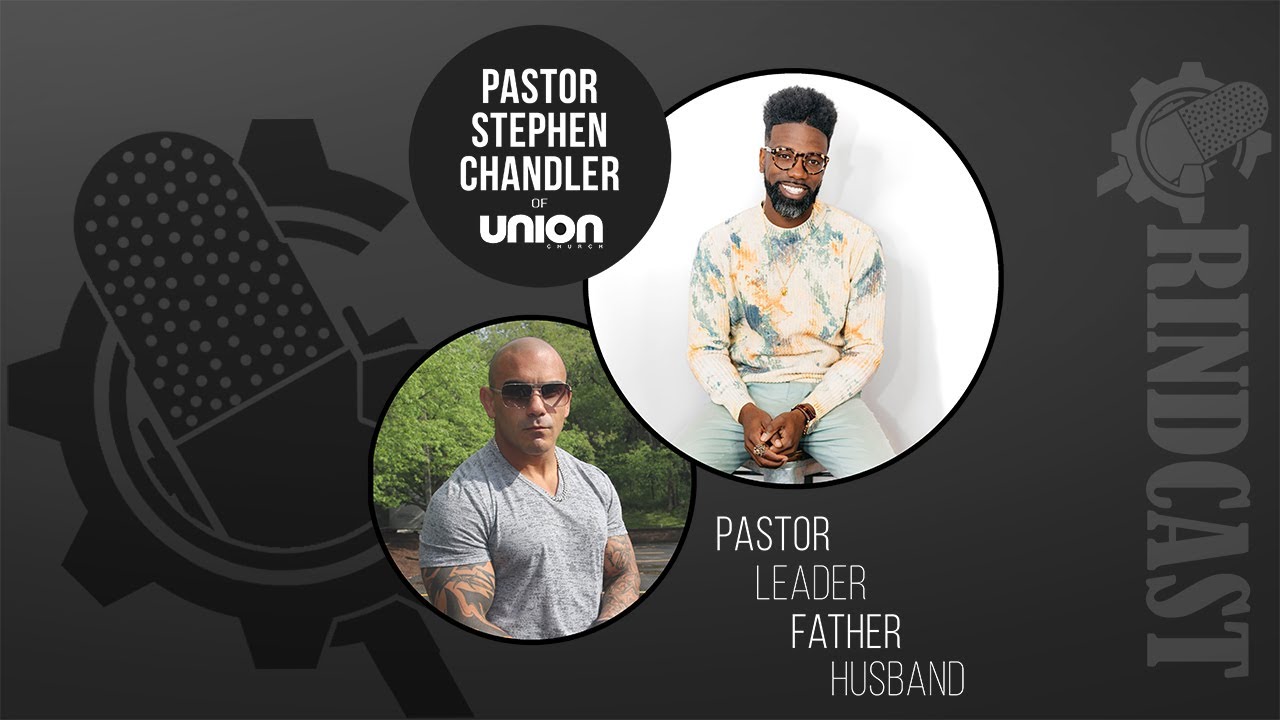
This week on the GRINDcast we have my friend, Pastor Stephen Chandler. Stephen runs Union Church in Maryland & they’re getting ready to open their 4th location in PG County. He and I met awhile back at a John Maxwell event and we immediately hit it off. This guy is a beast in and out of the church. Check it out!
Transcript
Count money man, money back riches.
I'm trying to try and told them I'm a beast.
What's up gang welcome back to another episode of the grind cast get ready.
It's a new day and I got my man.
We have pastor Steven Chandler in the house down there in in Ravens country.
Down there in Maryland soon to come your way PG County get ready for an absolute
beast in and out of the church Steven Chandler is getting ready to build a church in PG County.
Can't wait to hear all about it.
You've even in the short period of time in the last couple of years.
I've known you have watched your growth in your expansion with union right.
It's it's union church and how many churches do you have currently right now?
So there's currently three locations in the Maryland area and they were opening our fourth
February six coming up in just a few weeks February six and the fourth one that's in PG County.
PG County would come in down DC here we go DC coming your way we got friends.
I know I got listeners on here in that area they educated me on that on that area.
That's why I think I surprised you.
I think that is that is known as as the in America.
I think that's the is it the wealthiest African American community in the
state or in the region or in the country.
It's it's top two probably for the last 10 plus years.
So it's been number one or number two for the last 10 years of wealthiest African American community.
So it's a great love it.
Love it. They're going to love you.
They're going to love you. I'm excited for you.
I'm going to come down there and visit.
I got to visit the the Columbia the Columbia church.
And it was it was rocking and you had you hosted permanent.
And he brought us in.
You know we got the the presidential treatment because we knew you.
We got front row and permed on take them glasses off whether he's whether he's going to
heaven or going to church to get get some of the Lord.
Permed his son glasses on in church and and we was we was vibing in there with you man.
And so why why don't you tell us a little bit about how you got started as a pastor.
I know some of the story but I'm going to learn a lot more you know today with you.
I believe was your dad a pastor.
Yep. So my dad pastor man.
He pastor longer than a bit alive.
I've probably 37 years he's been a pastor.
So he pastor a church for about 15 years.
And then in 2010 to make a long story short my mom was battling cancer.
My dad had a business on the side.
And he's just like man, this is this is a big season right now.
I feel like it's time to pass the church on to you.
Stephen I was 23.
I was single and I was like never been a seminary.
So I I've grown up in church grown up in a ministry family but never been a senior pastor.
You know just not your typical candidate for being the next senior pastor but it was God's
will.
Our board of trustees voted me in and I became a senior pastor January 31st 2011.
Wow.
I was like six 10 years.
So we connected with an organization that really coaches you through planting a church
from scratch.
There's about 50 people in the church at the time.
So I went to them I said we've been open for a few years but I think this looks like
a church plant or a brand new church to me.
What would it look like for us to kind of relaunch.
So we spent about nine months kind of rebranding.
So we changed the name of the church.
We completely renovated the interior.
We got rid of our three piece suits and our alligator shoes and threw us some jeans and
some t-shirts and got a little bit more casual and added some smoke and some lights trying
to make it look like a snipped out concert.
So we did the best we could to keep Jesus and to keep the presence of God but to make it
more relevant to our generation.
So under that new name we relaunched it as a brand new church in September of 2011.
We had 331 people show that first Sunday.
So we went from 50 to 331 over the next eight weeks.
And this is my favorite part of the story over the next eight weeks and I always say this
had nothing to do with God.
It was my expert leadership.
I grew that church from 331 people to 70 people in eight weeks.
But I like it.
By the end of this year we're going to be the fastest closing church in the history
of America.
This is not looking good.
They culture shift.
They culture shift.
They get, yeah, well, big culture shift but also later I learned that that was kind of
just normal that whatever you launched with you have a lot of well-wishers family that
comes in from out of town and all that and you'll probably retain about 50% of that.
Okay.
So by the end of the first year we were 150 people, second year, 250, third year, 350
and we just grew, I mean real slow.
I thought we were going to be a thousand after year one.
So it was just kind of slow grind type of deal.
Seven years in, we're 750 people.
Wow.
I'm loving this.
That's so much.
That's so much in this.
I can't wait to get to it.
Yeah, yeah.
Seven years in.
Seven hundred people.
Seven hundred people.
How many years in?
Seven years in?
Seven years.
Okay.
Seven years.
So that's really when it popped and doubled every year since then for the last three years.
And we went from about 700 members to right now this probably about 4500 members just in
the last three years and it's been a roller coaster to say the least.
That's the as a drive by.
Wow.
Amazing.
What do you think?
Man, there's a lot of net.
So the first is, there's probably, there's a difference between the alligator shoes and
the hoodies and the smoke.
And so there's a little bit of a, all right, we're going to change the culture up a little
bit.
So there's probably some lessons in there that you've learned that you could teach, teach
some folks.
And then your ambition as a young man, you know, coming out in your mind, probably thinking,
you know, we're going to go from 150 people to a thousand people, you know, overnight.
We're going to be at 2000 people overnight.
And it's a seven year, you know, journey in that process.
What would you say that you can give to people that you learned, you know, in that, in that
beginning phase and in that seven year process?
Because building a church is similar and we got listeners in all different walks of life.
We got professional mixed martial artists and athletes and entrepreneurs and church folk
and gangsters.
We got a bunch of folks listening to the grind.
Come on now.
I love the gangsters.
Let's do it.
Let's talk about the smoking and the genes and the hoodies for a second.
Similar to your industry, people have a preconceived idea of what church is.
And for the typical person that does not go to church, their idea of church is it's
going to be long, it's going to be boring.
And they're going to tell me a horrible person I am.
And I'm like, you know, I don't got to go church for that.
I can know a bad person at home.
I don't need to go through all the exercises just for that.
So we found that if we don't do something to instantly tell people this is not what
you think church is, that will lose them before they even come through the door.
Like probably even in your industry with insurance, people probably think, oh, you only need
insurance when you're like just about to die.
Like that's the only time you need to even think about it.
So half of your work is just re-educating people on what it is.
And for us, we're like, man, we got to help a 24 year old to understand that man, church
has something to offer you that will transform your entire life.
And it's not just for your grandma or your uncle or whatever.
So when people come in, they saw a pastor at that time that was 24 of genes and a hoodie,
they're completely caught off guard because it's not what they would expect from a church.
And now I have your attention, at least you're listening.
And I got about 60 minutes to convince you that this is what you need in your life.
That's going to change everything for you.
Love it.
Love it.
Yeah, very similar to us.
I remember now we've been around a while.
So people are used to us.
But when I was first starting out as a business owner, I was one of the younger ones.
I was 24 years old and shifted that culture also from people thinking, churns, it's like
really quiet and tight and you got to wear a suit.
And I changed that culture to have a little bit of music and having dressed down days and
you can come in casual and being a hoodie and still protecting serve people and building
an organization.
And so you went from that to a seven year process of going from where you were to 700
people.
Talk to me about that because that's kind of like building a business, just building
a business for and with Jesus.
So that process of going from where you were to to 700 people on that journey, what was
in your mind?
How did you handle it?
Didn't go as fast as you thought it was going to go and grow in the first year and those
expectations as a young person with all the ambition.
How did you handle that?
What did you learn from that in that journey?
Man, it was crazy.
I thought we were going to be a thousand people after like year one.
So I'm expecting a thousand.
I'm looking at 150 and I'm like, boy, this is not good at all.
And then for seven years, I mean, just slow, slow growth.
And I mean, it was humbling.
It was really, it started off with the, hey, you're not as good as you think you are and
that you have a lot to learn and you have a lot to just grow and develop it.
There was about a two year period from your three to your five that we did not grow
at all.
We hit about 400 and then we just stalled out for two years straight and I'm talking about
thoughts of quitting, thoughts of maybe I don't have what it took.
So I really had to conquer kind of just that inner conversation of, hey, are you called
to do this or not?
Is this what guys called you to do and are you doing it to hit your goals?
Are you doing it because, man, this is what I'm supposed to do.
And I'm just not going to quit.
And then really the biggest thing that I learned, when we had a church of 150, it was a church
of 150 because I was a leader of 150.
And if I wanted 300 people, I'd double my leadership ability.
And if I want 600, I'd double my leadership ability.
There's a crazy interview, bro.
You got to watch it.
It's between Kobe Bryant and Nick Saban, Koshy Alabama.
You catch it on YouTube.
I mean, two of the two beasts.
Anyway, Kobe goes rookie year.
He's not getting any play in time on the Lakers.
And he says his whole family says, man, you need a demanded trade.
You don't deserve this.
They're straight.
You're wrong.
Kobe said, no, I need to get better because if I get better, they can't help but play
me.
And if I'm not any better, then they don't need to play me.
And I think that's really what it is.
Sometimes we want to blame the economy.
We blame our community.
We want to blame where we are.
Blah blah blah blah blah.
And the reality is, hey, somebody else figured it out.
Somebody else is winning in the exact same place where you said you can't win.
So the bottom line is the harsh reality is, man, we just got to get better.
We got to be better leaders, better communities.
Take it out.
Leadership.
If you own the losses, then you'll get to winning eventually.
What do you think you did to start to raise your leadership?
So you said, well, I took it on me that if I wanted a church of a thousand, I wanted to go
from 150 to 300.
It wasn't just that.
I had to grow myself in order to hand all that.
Was there anything specific other than going through the natural process of experience?
Is there anything that you think you did to raise your leadership?
Absolutely.
So I preached a message about three weeks ago and the kind of the big phrase from the
message is, you can't have what you can't see.
And if you can't see it, you'll never be able to attain it.
So from day one to where I am today, I would always find somebody that was two or three
steps ahead of me, and I would study every inch of their life.
So I would 150 people, I would get around a pastor that had a church of 300 or 500.
And I'm telling you, I want to know what time he wakes up in the morning.
I want to meet his staff and throughout what type of team he has around him.
I want to know what his schedule is like, what his prayer life is like, how is he prepared
his messages, how does he manage his fine.
I want to know everything there is to know about him or her and apply those things to my
life.
You know, a lot of people bash social media and they've demonized comparison.
And like, man, you should compare yourself to other people.
Well, comparison has been almost 100% of where all of my growth has come from.
I've just found people that are better than me learned everything that I can learn about
why they're winning and apply it to my life.
Wow.
I love that.
And so you're coming in and you're looking for the details.
That's something people can miss.
You're looking at when they're what their prayer time looks like, digging in what they're
doing with their family, what time they're waking up, you're coming with specific questions
and stuff.
It sounds like to pick their brain and the whole things out of that process.
And all of a sudden, from year seven to year 10, you go from 700 people to 4000 people,
what it would look like overnight in that journey of like, man, all of a sudden, you just
must woke up one day and it looks beautiful and it looks sexy and you're popular and everybody's
listening to your messages.
But they missed all that process, that struggle, that grind, that self-improvement, the self-doubt
of there's this moment where you didn't grow, you know, for a little while and you hit
that place where, and that's where most people jump off.
That's the shit.
That's the separator.
That's where most people have to go through that and people start to jump off.
And so you're thinking, man, is this for me?
Is it me and my cut out for this?
You know, should I quit this?
What did you do other than it sounds like you just reattach and check yourself on your
mission?
Any advice to people when they hit that moment in building something that you're going
to have those moments?
You're going to have those moments if you're building something where you start to have that
struggle.
to have that that question on yourself or you don't have the growth or the performance
that you want immediately in that moment.
What did you do to talk yourself into the next phase and out of quitting in anything that
we could give to people out there on the grind?
Yeah.
So I'm going to make you laugh.
I did play football.
It was middle school, but who's counting right?
Well, man, every time I coach, we get ticked off.
You'd be like, man, take a lap and run until I remember you exist.
So man, sometimes we were running for like an hour straight.
And in that, I learned like, you know, you're going to get the cramps.
You're going to be in pain all that other good stuff.
So you could either stop, get yelled out and have to do push ups or you could just turn
your brain off and just put one foot in front of the other and just keep moving.
And I think in those seasons when life isn't going as fast as you want it to go and you're
not winning, the way you wanted to win, I've learned kind of just turn your brain off and
just dominate the next day.
Don't worry about, you know, the year end goal, don't worry about the end of the month
goal.
Let me just dominate Tuesday.
And if I could dominate Tuesday, go home, go to sleep, wake up and dominate Wednesday
and not really think too much, but just give it 100% and then go to sleep and do it all
over again.
You'll step back and you'll realize, wait, I am making progress.
It may not be the progress that I want to make, but I'm moving this ball down the field.
And what I've learned the hard way is you dominate every day.
You will get to the day where that thing grows by 10 times in one week.
You'll get to the exponential growth if you just focus on the incremental win after
win after win.
Hmm.
Fire.
I got a lot of young people in our organization.
And I try to tell them, you know, now that I've been at it for 16 years about the process,
it may take you a few years to have that pop to 4500 people in your church or 45 people
on your team.
What advice would you give to young people out there listening that are on the hustle
on the grind, building something specifically to young folks, young people?
What advice would you give to those people building something?
I would say two things.
One, well three, one is you got to work.
Like it's not that deep.
Like you got to work, right?
I mean, a lot of times, you know, a lot of my analogies are sports, but you'll look at
like a little abroad, a Kobe, a Tom Brady.
Yeah, let me tell you this about Tom Brady.
So he wins his first Super Bowl.
And I don't know if he all know the Tom Brady story.
He comes off the bench, taken off from Drew Bletsow.
You know, Drew Bletsow never gets his job back.
Tom's in there.
Tom wins his first Super Bowl.
They go to Disneyland, have the parade and all that.
The day after Disneyland, Tom Brady's at a high school in Florida, practicing on the field
two days after he just won the Super Bowl.
And they're like, reporters find out they go out there and do like, dude, what are you doing?
Why are you not celebrating?
Why are you practicing?
He's a man I miss two passes in the Super Bowl.
And if I hit those passes, the game would have been that close.
I got to get better.
Sometimes we see people's talent.
And we don't realize that even though they're talented, they have a work ethic that passes
everybody else.
Like you just don't get past the fact of man.
I'm going to have to work if I'm able to take hold of that which I want.
That's the first thing.
The second thing is you got to have a vision of where you want to go.
Vision of the business you want to build, the marriage that you want to have, the life
that you want, and keep that vision in front of you.
It may be pictures on the wall.
It may be that the friends you keep have the same vision that you have.
So you're constantly talking about it.
But you got to keep your eyes locked on why you're going through the pain that you're
going through.
Because to be successful, you're going to go through pain.
But a lot of people lose their why.
And when you lose the why to your pain, you are going to give up on that pain as quickly
as possible.
Here's something that a lot of people don't think about.
It's a marathon, not a sprint.
A lot of people can endure pain.
They can grind for three months, for six months.
Try three years or six years.
And if you're going to grind that long, you're going to have to learn how to step back and
how to breathe and how to relax and how to enjoy life.
And hey, I'm a work Monday through Friday.
But Friday night, I'm going to hang out with some friends.
We're going to laugh.
We're going to have a great meal.
We're going to enjoy.
I'm going to get my mind off of things.
And when I come back to it, I'm fresh.
A lot of people, they either have no work ethic or they're workaholics.
And they don't know how to spend time with family, how to work out, how to take care of
themselves mentally, spiritually, and emotionally.
And then they burn out.
And they get really kind of unhealthy on the inside.
And then they're not able to finish the race.
So really, I heard this kind of thought.
You got that boxer who punches himself out in the first round.
He's just swinging for the fences.
Next thing you know, he has nothing left in the tank and he's done by the third round.
Then you have that boxer who's a little bit more strategic.
He's looking for his openings.
He's looking for his moments.
He's looking for when I'm going to give you that flurry.
And then I'm going to have that moment where I'm going to step back and kind of ease back
a little bit.
That's kind of what the grind is.
You're not grinding 24 hours a day, seven days a week.
You got to have that strategy.
But I know when I got to put those 12 hour days in and I know when I just need to close
my computer and go to bed, and I'm going to start again tomorrow.
Wisdom right there.
I got a bunch of those little nuggets you threw out that I want to break down.
So you mentioned a vision of what marriage you want to have.
You mentioned starting a church.
You weren't married and now you're currently married and have a beautiful family.
New, new child was born.
And it's been amazing to see what you and Zive have built.
But what advice would you give for people overall men in their marriage?
What advice?
Yes.
Marital advice would you give to the male listeners out there?
Here's a big deal that people don't realize.
And you know I'm a pastor so I'm always going to come from God's word.
Next to giving your life to Jesus, who you marry is the number one factor to your success.
I don't care how gifted and what work ethic you have.
If you marry the wrong person, it will all be destroyed.
Now if you marry the right person, they will make you 10 times better than you could ever
be by yourself.
And I think male and female, especially, you know, we're grinders.
We love to win.
We love to build businesses and churches and all that kind of stuff.
And sometimes we get so consumed in what we're building that we don't spend the right
attention on our relationships, understanding that they play as much a factor as anything
else.
So my advice would be, hey, it's the biggest decision you're going to make.
And if you make it right, it's going to be the factor to your success.
And if you know, it's going to be the factor to your failure.
You mentioned, you know, looking at it as a marathon versus just a sprint and knowing
it's going to be a great thing.
And when you need to go seven days a week, when you need to grind and when you need to
pull back, how have you learned to keep balance, you know, as a father and as a husband
and as a pastor, you know, you wear a lot of hats, you know, how have you learned to
find that rhythm and how did you learn in the process?
Because, you know, right now, even though you're building, you're expanding, you got your
moving, you got a new house coming up, you got a new church coming up.
So you're still hustling.
You're still growing.
But also it's probably looks different.
The grind that you're focused on right now looks different now than it did probably 10
years ago, eight years ago.
In a pastor could look at you right now if they're trying to look at you.
And so I want to be where pastor Steven Chandler's at and they look at your life now and they
think, man, I should have that overnight.
There was some other sacrifices and grind that needed to happen.
How did you keep the balance in the beginning?
How do you keep it now?
Yeah, well, I think one of the biggest factors is I married a woman who was called to
the grind.
She and married a woman called to the grind.
That's my girl right there.
That's my type of girl.
So that wasn't I was not going to marry a girl who didn't love the church and I wasn't
going to marry a girl who did love building because she was going to complain for the
whole journey.
Come on.
So I think for real, you and us right now, that's the truth.
Oh, yeah.
Oh, yeah.
You marry someone that just wants to live a good life, but they don't want to work.
My goodness.
You're going to be miserable.
So what happens is when I'm exhausted, Ziya's the one who's pushing it.
And then when she's exhausted, I'm the one who's pushing it.
And when I'm out there running, she's home with the kids loving on them, encouraging
them and she'll say, hey, man, Roman needs a little bit more of your attention.
Can you take them out and just spend some time with them or?
Man, Zoe just had a great reported school.
Can you get her a gift on the way home or whatever it may be?
So it's that teamwork where because she appreciates what I'm doing, she's watching my back
and seeing my blind spots and helping me be present in the home instead of resenting
me because I'm out neglecting the family or whatever, which someone who's not called
to do what we do would say that same thing.
And then I'm also able to say, okay, babe, no, I'll stay home with the kids.
You go home and preach.
You go out and preach at that church or you go to this meeting or whatever.
So really it's that teamwork and us being able to watch each other's backs that helps
us to be present in the places that we need to be present and not have this resentment
of, man, they're always gone or they're never helping me out or whatever it may be.
So you and your spouse having a unified vision on what your family is called to do and what
your family is called to build is a big, big factor.
I'll give you one more and this is me being a pastor.
So you got 10 commandments.
Most people know them don't lie, don't steal, don't cheat.
Use guys name as a customer and all that other good stuff.
One of the 10 commandments is honor the Sabbath and keep it holy.
And that means that there needs to be one day out of the week that you're not working at
you're resting.
Now, I know I'm talking to business folks and I'm a pastor so I'm stepping on some toes
and all that other good stuff.
But I've kept that commandment as religiously as I keep no kill.
So for me, I'm a hustling grime for six days out of the week.
And there's going to be one day where I'm forcing myself.
I'm not checking emails.
I'm not sending reports.
I'm not trying to get this done.
This is my recovery day.
This is my family day and surprisingly enough, it's not Sunday because I work on Sunday.
It's my preaching.
I'm in meetings and all that.
So I have one day a week.
I go on date night.
I spend time with my kids.
I play golf.
This is just my brief day.
And then the other six days we're running back to the ground.
What sacrifices have you made building the church to where it is today?
It looks beautiful.
And I didn't really go all the way in.
But as you guys, I want you to check out my friend, Steven Chandler's stuff.
He got an unbelievable podcast.
Check in to his church.
His messages are fire.
I still some of his stuff.
I'm using him in some of our meetings.
So he might catch me, spit in some fire and say, I'm not at any chores no more.
And I was getting all the credit for his juice.
But just absolute fire is beautiful to watch what you've built.
It's exciting.
It's exciting to see what you've built because you're so young.
And just now really scratching a surface of what God has called for you.
And anybody around you can feel that and know that, man, about you.
But people could look at it and think that it just looks easy.
Even the day that I was there, I mean, it was a slam pack.
I know what it's like.
And man, you've got a nice rhythm too.
You've got great people around you.
And it looks easy.
We know it's not easy.
What were some of the sacrifices that you've made early on and that you maybe now continue
to make in order to take the church and take people to the next level?
I'll give you a couple and things that people don't think pastors should talk about.
But that's okay.
I don't care.
One of the biggest sacrifices was financially.
First three, five, seven years of the church.
My income was not what I wanted it to be in terms of the life that I wanted to provide
for my family.
And it was intentional.
I don't set my own salary.
I have a board of trustees that set my salary.
But I can tell them, hey, don't make it above this.
And I intentionally said, hey, I don't want to take a lot of resources out of the church
in the beginning because I want to use that money for marketing.
I want to use that money to connect with new people.
I want to use that money to grow this thing.
And if we will sacrifice in the beginning and reinvest to impact people's lives, the
harvest on the backside is going to be crazy.
And I mean, at this point, book deals coming in and all this other kind of stuff is getting
crazy now.
But I see so many people, they want to live like a king in year one.
Reach.
Come on.
Reach, teach.
And I'm like, no, man, that's not the time to be flossing in living like the king and
balling out and all that of a good stuff.
That's the time to reinvest into your dream and make sure that it becomes what you want
it to become.
And then after you're sure this thing is going to run for the next 25 years, then you can
enjoy the fruits of life a little bit more.
So that's one sacrifice.
The second really big sacrifice is you got to give up people's opinion of you.
You're not going to be successful and you're not going to be a great leader and be a people
please.
are at the same time.
LaVe reality is if you're a leader, you see things that other people cannot see.
So they're going to call you crazy, they're going to call you unreasonable, they're going
to call you, you know, overbearing your two intents or whatever it may be.
And I see so many people that they're paralyzed by the opinion of other people and hear me.
But when I started this church 10 years ago, zero of my friends would come to this church.
They're just like, no, you're too young, it ain't going to work.
Blah, blah, blah, blah, blah, all this other good stuff.
Fast forward 10 years, they're here at the church with their wife and their kids and
all that other good stuff.
And if you live your life based on what people tell you you can or you cannot do, you will
be paralyzed and not move forward.
So you got to be okay with people laughing at you or people not celebrating you or whatever
else it may be.
Wow.
Two huge nuggets that apply in so many different arenas, you know, the upfront sacrifice and
reinvestment and no matter what it is that you're trying to search out greatness for is huge.
And I think that's another big one.
I think so many people allow their dreams to be let go because they're waiting for other
people's approval and as soon as they, like you said, you're going to be told that you're
crazy.
Anybody that goes outside of the norm and goes to accomplish anything great people from
the outside looking in, look at them like they're crazy.
All the main inventions and a lot of the great things that have been accomplished happen by
crazy people.
What people thought were crazy people and it's not easy to learn to block out that noise.
And even though you're such a good, good person, man, you're a great person and your mission
is great.
I'm sure even the pastor has to have a couple critics and a couple haters, you know, how
have you been able to handle the critics or have you had any haters or critics or my,
I don't want to put words in your mouth, but I'm just.
Oh, from day one, from day one.
I mean, listen, you're not going to do anything great without people hating on you.
It's just that, oh man, stuff you can't say is a pastor, but that's all right.
The average person sucks and they want you to live.
Come on.
They want you to be just like them.
And the second you dare to want more out of life than they do, you're a sell out.
Who do you think you are?
And you know, blah, blah, blah, blah, blah.
There's a principle that I've lived my life on.
I will not address or acknowledge or fight anybody that cannot keep me from my next goal.
If you're just talking, but you're not.
Wow, that's far away.
Rewind that one for me.
Man, go ahead.
Because there's that alone right there is, is he say that one more time?
I will not fight, acknowledge or even deal with any hater or any opposition that cannot
block me from my next goal.
Powerful.
Because time is precious.
And the time that I take to acknowledge your foolishness is time that I'm losing, investing
in my family or investing in my dream.
I don't got time to respond to your comments on Instagram.
I don't got time to email you back.
Come on out.
I'm sure you've had a couple friends from your past.
Man, we need to grab lunch and clear the air.
No, I'm not grabbing lunch with you.
The air is clear.
I'm breathing just fine.
Oh, God, I'm with you.
You know what I mean?
It's a sideways energy and it's a detour.
And I find so many people fighting battles that don't have anything to do with the dream
that they have.
So if you're not standing between me and what God's called me to do, I'm not dealing
with you.
Now, if you are standing between me and what God has called me to do, you are going to
get every ounce of Stephen Chanla coming at you at a velocity you can't even comprehend.
I do need to clarify because I am a pastor.
I do not throw hands.
I'm not going to fight you.
I'm not going to cuss you out.
I'm going to stay within the laws of our country.
But I'd tell you right now I'm sending every attorney everything I can at you because
you are not about to block me from what God has for me.
Mm.
Powerful, man.
Not that you don't fight, but pick your battles.
A lot of people don't pick their battles.
Makes a lot of sense.
A lot of sense.
A lot of juice in there.
I'm learning as we go here too.
Let me ask you, you know, our relationship started.
I was lucky to meet you at a John Maxwell conference and event.
And since then the relationship has grown.
I believe it was in was that was that one the one in London where we met her was at the
one and four.
No, man, I'm not lucky enough to go to London with you all.
It was all for a lot of.
Yeah.
Four.
Four.
Four.
Four.
Four.
Four.
Four.
Four.
Four.
Four.
Four.
Four.
Four.
Four.
Four.
Four.
Four.
Four.
Four.
Four.
Four.
He uses his phrase, the power of compounding consistency.
So we all know how investment works.
You put money in investment account, stocks, bonds, mutual funds, whatever.
In the beginning, it's a small amount.
In the end, your money is doubling almost every five to seven years.
But it took time for it to get to the place where it's doubling.
And what he said was, he said, at the age of 25, I committed to getting better every
single day.
He said, I'm just going to get better every single day.
And he said, from 25 to 50, I was getting better, but nobody was able to see it.
Then he said, from 50 to 75, all of a sudden, everybody saw all that I had put into
my, the 25 years prior.
And he said so many people, they're just not consistent in the every single day.
I'm just going to get better, just get better, just get better.
And it's like rolling a boulder up a hill.
At some point, you get to the top of it and it comes flying down.
And so he said this, he said, when you're young, people think that you're worse than you
actually are because you don't have the momentum of consistency.
But he said, when you get to a certain level, people think you're better than you actually
are because you've had all that consistency that's racking up behind you.
So I think really just being committed to getting better every single day and being able
to see him live that out, probably was the greatest impact on my life.
The second thing is what he just said here in Nashville, where we were down there.
And he said, say yes, tell the world and then figure it out.
And he said so many people were out there.
That's right up your alley.
Oh, yeah.
Oh, yeah.
He said so many people sway so much time, playing life safe and having to have it all figured
out.
And man, I don't want to make a mistake.
And he's like, man, forget making his mistake, fail forward.
Just say yes, tell everyone you want to do it.
And then go figure it out.
And you know me, I just love that wrist taken.
I'm a jump and then fair out of it.
I got a parachute on like, let's just go for it, man, life is short.
So make the most of it.
Why do you think, why do you think so many people don't make that commitment to consistently
get better, to roll that boulder, you know, the 25 year process to become an overnight,
you know, success?
What do you think stops folks that have the potential and ability to be great, they have
greatness in them and within them?
And they're called even to do something, but they, but they give up on that journey somewhere
in the day to day process, the day to day grind of getting better.
Why do you think that is or what do you think people could do to switch the way that they're
looking at what they're looking at to bring it out of them?
I would say two things.
Because the problem and what's the solution?
The problem is they don't have a vision for their life and the solution is they don't have
the right mentors.
Like if you've never seen somebody be consistent and grind, then you have no concept of what
it looks like.
And I think for me, the life that I live is because of the life of seeing my mentors live.
And I've, oh, that's what greatness looks like.
Oh, that's what greatness does.
That's how, that's how they approach every single day.
And I'm not even allowed to you.
There was a season in my life, like up until probably about 20 to 21.
I wasn't a bum, but I was probably just left of one.
Like I mean, no work ethic.
No, I was just what's the easiest way I can get by looking at I mean, I was not a hustler
whatsoever.
But then I started seeing people that I wanted to be like and I started to look at their
life and I saw this huge gap between how they lived and how I lived.
And I started the process of closing that gap.
And I think so many people, they just don't have a vision of what their life can be.
They don't have a vision for greatness.
And they don't have a vision of, hey, I know someone who's consistently excellent.
Like John Maxwell will say that.
John Maxwell's father, if I'm not mistaken, was the chancellor of a university.
Like this man ran an entire college and he saw his dad consistently be great every single
day.
And he's walking in those footsteps.
And not all of us have a dad like that or whatever it may be.
But between podcasts and YouTube and all this other kind of stuff, we have access to
great people.
And we need to be intentional about connecting ourselves so we can see what greatness looks
like.
It sounds like, you know, and that's encouraging the people to hear it.
19 to 21.
I was kind of looking for the easy route and wasn't a hustler because you're a hustler.
Now you're a grinder now and you're all over the place and you've accomplished so much
and such really a little short period of time.
But a couple times you've alluded to finding someone that was where you wanted to be, studying
that, breaking it down and then adopting some of those habits that would help you turn
out the way that you, you know, the way that you wanted to turn out.
So it sounds like that was a very important part of your journey was finding someone that
was where you wanted to be.
But then it seems like you took it a step a little bit further than just finding someone
and looking up to them and say, oh man, I like that.
But it sounds like you were always dig and deep to find out what were their habits.
What were the things that they were doing in order to notice and have the wisdom to apply
those things a little bit to your life?
Is that true?
I would say that has been the greatest factor.
Different people around me, they may disagree.
I don't think that I am the most gifted, like uniquely gifted person you'll ever meet.
But what I am is I know how to learn what I don't know.
I know how to find the person who knows something that I don't know.
I know how to get out of them what I want.
And for a lot of people, they want to know what someone does.
I don't just want to know what you do.
I want to know why you do it.
Because I may not be able to do what you do because I may not have the same skill set.
You may be in a different industry than me.
You may have different resources or different opportunities.
So I may not be able to mimic the exact what you're doing.
But if I know why you're doing it, I can apply that principle to my life.
And I may have to tailor it a little bit for my skill set and my resources and all that.
But if I know you're why, I can implement that in my life.
So I'm looking for people's principles, not just their practices, they're why, not just
their what.
I love it.
I love it, man.
Thank you for sharing all this wisdom and sharing all this juice.
You were mentioning that now we may not be your father.
It may not be your neighbor.
It may not be a direct person that's right in front of you.
But we have access to different people via podcasts, books and YouTube and things like
that.
I want to make sure that people get exposed to my friend to you.
I want more people to follow you and learn from you because I know how much you're going
to impact their life.
How would people find you or connect with you on all your platforms that you're on and
see some of your messages and what you got going on?
Good deal.
I'm a preacher so I'm not going to answer your question.
Before I get to that, I just want to say Simon, man, you inspire me.
I'm grateful to be your friend.
And I know you notice, but dude, you are a unicorn.
You're one and a million.
And anybody who's connected to you and gets to watch your life, man, I've learned so much
from just being around you.
I can't even, I can't even thank you enough.
So grateful, grateful for you.
But the union church.com is where they can connect with the church.
Stephen R. Chandler that's Stephen with the pH.
Don't worry what Steph Curry says.
It's Stephen with the pH.
Stephen R. Chandler is Instagram.
StephenR. Chandler.com, you can catch me on there.
And then literally just Google Stephen Chandler and it will pop up.
Love it.
And he's verified.
The young folks, this is a big deal.
You got the blue check mark on Instagram, y'all.
You got to go follow my man.
He's the real deal.
He's a celebrity over there.
And speaking of which and verified, I want to verify that pretty soon, coming up, we
have your team versus my team.
We got the Ravens coming up versus the Browns.
And I want to make a friendly, friendly wager with you, even I'm an underdog.
Every Browns ain't...
I ain't supposed to win supposed to win this but I'd like to bet you dinner and
10 push ups on on the browns if you would take that take that friendly wager my friend. What do you think?
Found saw dinner and a hundred push ups dinner dinner than a hundred push ups, okay?
You heard it here first ladies
All right, I love it looking forward to seeing you again soon, man
I love you always appreciate any time I can have an excuse to hang out with you man
And thanks for cutting out some time for our folks on the grind
cast. And thanks to everybody for tuning into another episode
that grind cast get ready as a new day.
Count money, man.
Money that bridges.
I'm trying to talk trying to told them I'm a beast.