Solo /Fitness / Aug 9, 2019 · 41 min
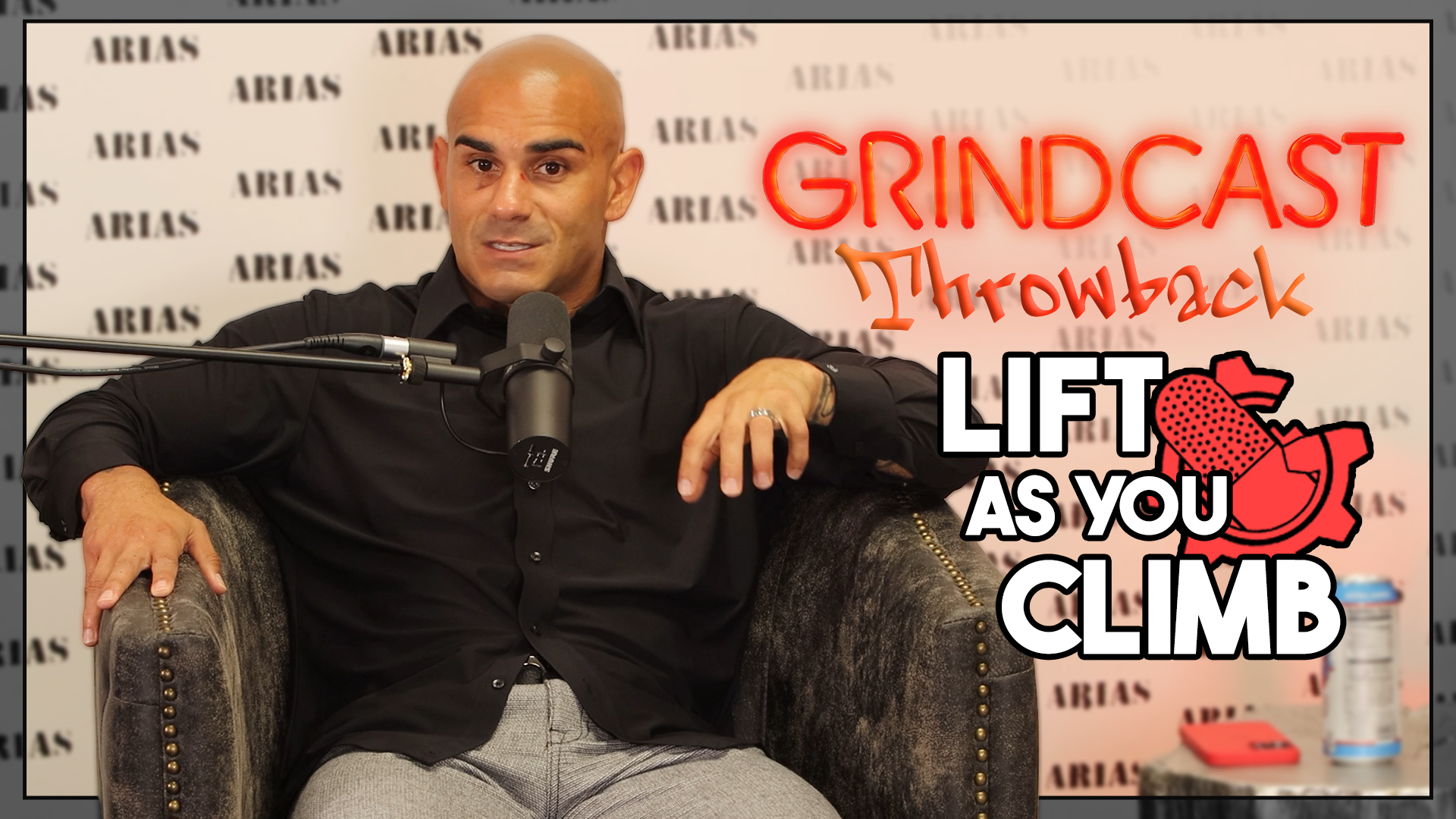
The Grind-Cast “Special Guest Justin Adams”
Show notes
Tune In with Justin Adams!!!
Transcript
Count money man, money, that grits is fine.
I told trying to told him I'm a beast.
But what's up gang?
Welcome back to the grind cast.
Simon areas here.
Get ready to do.
New day.
What's up gang?
Welcome back to the grind cast.
Simon areas here and the Justin Adams is going to be rocking with me this morning.
What's up, Justin?
My man's.
So me and J.A. became close friends at the age of 13 years old.
I reluctantly went to Urslin.
It was in the summer I didn't want to go to Urslin.
So I was, Justin was my first friend in high school going to Urslin.
And his last name was Adams and my mom was Areas.
And they would start to put us next to each other and sit us behind each other.
I would sit behind him in class and the rest is history.
So Justin ended up being a beast of an athlete.
One of the state championship in baseball.
One of the state championship in football was a beast in track running 100.
What else did you do in track J?
Long jump, long jump, 200 meter dash for by one.
And that's about it.
So was a beast athlete, great student and went on to play football at the division two
level with me at Mercyhurst, where he started as a true freshman, graduated with an accounting
degree, started playing as a corner, defense as a freshman, played running back your sophomore
year or junior year.
Junior year switched over to the other side of the ball was a running back and was able to
do both at a high level kick returner to whole deal.
One thing that sticks out to me about you, Justin, is always having the ability from high
school all the way to being an adult.
I feel like you've had the ability to play under extreme pressure and keep yourself
calm and be able to perform and deliver in crunch time.
So I could think of multiple times in sports, you know, be it watching you play in a state
championship game in baseball where you would come through in critical moments, sharing
the football field with you where we would go to Sharon, the second game of our senior year
where we would play a nationally ranked Sharon Tigers football team with six guys going
to be one us as an underdog.
And we come out with a ten point victory where you would score multiple touchdowns and
outrun Marlon Jackson to the end zone who ended up being a super bowl champion, starting
defensive back for the Colts, all American corner for Michigan, and always able to come
through in crunch time.
I remember playing against Warren Harding, fourth quarter, a couple minutes left in the
game.
You know, we, it's hard to score on each other.
We're down, you know, five points and next thing I know Justin breaks 85 yards and we
win that game.
And so, and whether it was in sports and high school or in college, then we transition
over into business and then you have life adversities that happen in your personal life,
which are wife and in different things have come up in business and somehow, some way,
you're always able to keep a cool head about yourself and come through in crunch time,
be it for your family or business or even all the way back in sports.
That has to be somewhat of a of a mindset, not just the skill set because a lot of people
got the skill set, but they can't keep that type of a mindset.
What has happened?
What, what, what did you learn?
What goes on in your mind in in crunch time that has allowed you to be one of those type
of people?
Right.
I think the biggest thing is my parents raised me to not want to lose.
You know, a lot of people love to win, but, you know, I hate to lose.
So when I, when I prepare for things and I know that, yeah, I might lose 100% at a
time, but it's all about the preparation.
So when I prepare, I'm acting like, you know, they, they're going to need me four down
and one.
When I'm prepared, I want to be that person that hits the home runner wins the game, you
know, for baseball.
So when I'm preparing, there's one thing that I can control when it's myself, you know,
I can control my response and I can control how hard I work because you never know when
you're going to be put in that environment.
Always try to be the first person in the weight room other than you, you know, or we got
there at the same time if we rode together.
So I think my preparation and times when maybe we weren't in the limelight doing things,
really got me to whenever that time came, I was able to stay calm.
And then dealing with adversity in life, I realized that it doesn't matter who you are.
It's going to happen.
So when that adversity happens, I always have a response.
You know, I can either run away from it, but that's not going to get me anywhere, or
I can attack it and understand it's just one day, you know, one week, one month, but
it's not going to be a four year.
They always say, you know, whenever there's a rainstorm or a thunderstorm, it sometimes
has to end.
And then what happens, a rainbow happens, a rainbow comes.
So I know that deep down inside, it's not going to be there forever.
And I know I want to be that go to person, you know, no one wants to be that bench starter
or not playing in the game.
I wanted to be the go to person.
So when I was preparing, I was preparing to be that person.
And now in business, I want to be the go to person also.
So I know that adversities will come and I know that reading in the Bible, there was tons
of adversities, people, you know, getting killed, things happening to them, but they didn't
lose their faith.
So at the end of the day, you have to keep that faith and know that adversity will come.
But if you're preparing for something, you just got to prepare.
And then when that time happens, you got to shine and use all the things that you prepare
and all things you do learn in that situation.
What type of, so a lot of it is, you know, preparation, which breeds confidence, confidence
that allows you to stay calm and crunch time moments.
But sometimes in life, you can't really practice or prepare for certain things.
Right.
But you think of, you know, if we can be open, you know, what people to grow, you know,
you've had moments in your personal life where your wife would have miscarriage.
Hard to practice for that.
Yes.
Your mother-in-law, you know, Tyler's mom would suddenly pass away.
Right.
You can't practice and prepare for that.
You can.
Recently, her brother passed away.
Can't practice and prepare for that.
No, not at all.
Not at all.
But there are circumstances.
And those are just to name a few.
Before all of that, I watched you go through personal life stuff and find a way to come
out on top.
What goes through your mind, you know, as your ability to, you know, as you went through
miscarriages, I watched you still come to work with a positive attitude.
I watched you still show up for your team as a leader and not really show what was going
on in your personal life.
We have a stressful job as it is.
I watched things go on, you know, with your wife and her mom and brother and all these
things pop up to where you have to be there with three young kids and still get the job
done at work.
That is not normal.
It's not normal.
What goes on in your head?
How can you articulate to somebody else, you know, if you're giving them wisdom or teaching
them, you know, how do you go through those tough times?
You know, people think they go through tough times.
You know, they break up with a girlfriend or boyfriend and, you know, they don't show
up to work for two weeks.
You know, we're losing, you know, close loved ones, you know, miscarriages and you're still
showing up and getting the job done and being there for the family and being a husband
and a dad.
What tips do you have for people?
Yeah, the tip that I have, and it's simple, but a lot of people don't do it.
It's really the mind, body and spirit.
You know, I try to feed my mind every single day, not just one or two days.
I feed my mind.
I feed my body where I'm making sure that I'm working out.
I know I got a boot on my leg right now from playing basketball.
I tore my Achilles tendon, but I'm always trying to work out because a lot of stress and
frustration, you don't want to go punch somebody or punch a wall, but you can get it out
on the weights.
You can get it out in that work room and that in that weight room.
And then the third biggest key I feel that a lot of people miss is the spirit.
You know, I know that the spirit, if you read the Bible, there's been so many instances
of them losing loved ones.
And always think about that they killed Jesus.
You know, someone who was trying to deliver everyone, they killed Jesus.
So there's going to be attacks.
There's going to be things that happen.
And I know that what I'm thinking about in my mind is that someone else somewhere has
it worse.
Someone else somewhere lost a baby that maybe was not a month old.
They went through the whole pregnancy of getting big, eating crazy things, and now they
lost their baby.
And that's way worse than me losing my brother along.
You know, I know it's not easy to lose a brother, but imagine that mom going through,
you know, nine months, 12 months of that pregnancy.
So I try to put myself in the position and be there for everybody going through it because
I want to be sympathetic for them, but I also want to put myself in a position that
guess what?
It's not just me.
And I know that even though that person perspective, I think that's huge.
You got it.
And they pass away.
Life still has to go on.
I still have children that I have to build up.
I still have a wife that I have to love 100% of stuff, friends, I still have people that
need me leadership wise.
And if I crawl underneath a rock and don't come out, then I'm doing them a disservice.
You know, someone I think a pastor back in the day told me that you cannot get mad if
someone went to heaven because they have it a lot better off than you do.
It's better up there than it is down here.
So I think I try to tell people that try to tell people that God doesn't make mistakes
even though we don't know what happened or why it happened.
We'll know at some point in time, but he doesn't make mistakes.
So I know if I keep those things always in my mind that my body and spirit working out,
feeding my mind, I know I can now be a person and I got to be the rock.
You know, I mean the man's job and the family has to be the rock, you know, for that family.
So I got to be that rock.
I got to be that person.
And that's what feeds me that my body and spirit so that I'm able to give that to other
people going through.
Talk a little bit more about that.
My body, you know, spirit training for those of you guys listening out there, I talked
about some adjustments, sports accomplishments, but from a business perspective, you know,
Justin doesn't really have a year where he makes less than a half a million dollars in
income.
He's had years where, you know, he's made $900,000 in income.
This year will be over three quarters of a million dollars has what are you 15, 13,
15,000 a month in residual income.
13, 15,000 a month.
So before he wakes up out of bed every month, 15,000, ACH and two is account from things
that he's done in the past in this business.
And so I want to give you this isn't just a, I have them on the podcast because he's my
buddy.
You know, this is somebody that knows what he's doing and has been able to play at a high
level on and off the field and do it all while handling a bunch of adversity.
Talk to us a little bit more about that.
My body spirit.
Maybe somebody's hearing this for the first time.
They don't know what that means.
How do they go about it?
Who would you suggest somebody?
Again, it goes back to preparation.
So we talked about in sports, you over prepared to be ready for that moment.
Now you're talking about I'm preparing my body spirit to be ready for these adversities.
You got the preparation of my body spirit.
Yeah.
So starting with the mind, just just reading books, you know, who's your favorite author?
And I will say read their book.
If you're in leadership, what if they don't have one?
Find one.
You know, John Maxwell, awesome leadership expert.
You know, that I love to read.
They have a lot of other books, you know, from Relentless.
If you're a sports person, Relentless is an awesome book.
Tim Grover, the guy who trained Michael Jordan.
So if you love sports, love basketball.
I mean, that's an awesome book to get you to get you going.
But John Maxwell has books on leadership.
He has books on changing, growing.
And I think what you're mind, a lot of people forget about growth.
You know, if you're not in that growth mindset, you're not going to grow.
My father had a stroke a year ago.
And I remember the doctor telling him, if you do not read the newspaper, read books,
then you are going to lose everything that you basically gained for 50, 60 years.
You're going to lose all your perspective.
You're going to lose all the knowledge that you gain.
So I take that and I use it to myself.
You know, when the doctor was talking every single month, I'm reading a book.
Every single trying to get two, three off the shelves, I'm a reader.
And that go back and read them.
You know, but you got to find, I would say John Maxwell, awesome, awesome person to read
a book.
I mean, Bretton Costa wrote a book, you know, in our agency, the leadership code, which
is great if you're a leader.
And I talk about leadership a lot because leaders are the next generation.
You know, anywhere, I know I keep representing the Bible or whatnot, but they say you should
want the next generation to be better.
You know, so you got to be able to change yourself and being that growth mindset because
if you're not growing, you're dying.
And since you're not really living.
So that's the first part of the mind and I try to get something in every single day, at
least an hour, you know, or at least 30 minutes if you're on the go podcast or huge.
You can just, in there free, right?
I mean, what we're doing right now, I'm a podcast, you know, every single day, not just,
you know, one day, your body working out.
You got to find ways to work out.
You know, even if that's, you know, something that you're just doing in your home, you're
walking, you're running, it just starts to stimulate your mind.
And I think that in addition to the, you know, part of the body that sometimes people
don't talk about is the nutrition and hydration, you know, drinking enough water, the, the
what you're eating type of foods you're putting in your body.
All the stuff that people thinks no big deal.
Yeah.
They don't understand why they're getting tired and other people aren't.
Or why they get sick more than other people get sick.
These are ways that you're going to be able to, it's hard to have a positive attitude
when your body is sick.
It's hard, it's hard to have the amount of energy put towards family and business and
what you need to if you're feeling tired and sick and in a drain of, of, of energy,
well, nutrition, working out all those things.
That's why it all tons it, it tons into the mindset.
Oh, yeah.
You got to have the hunger and desire to want to do it.
You know, that's the first meeting point.
That desire, if you don't have that desire to want to get better, to want to grow, then,
then you're not going to grow.
You know,
You gotta find somebody who's doing it and try to mimic what they want to do.
I remember in school, they got mad at us for copying off people.
But when you're an adult, you can copy off anybody that you want and just mimic them and
mimic what success is.
And then the spirit, big piece, I would say try to get into a church if you can.
We have a great pastor, pastor, NewsO, he's awesome at Victory Family Church.
But even if I wasn't going there, there's podcasts for Joel Osteen.
There's podcasts for TD Jakes, Steven Fertic.
There's so many people coming up in this world and try to find one that you like.
You know, if you listen to Steven Fertic, you don't like him, go to Joel Osteen.
If you don't like Joel Osteen, go to TD Jakes.
If you don't like TD Jakes, find someone that can get you there.
You know, because if you're like I said, not working on those things daily, you're going
to, you're going to be dying.
You got to get on that mind.
You got to be prepared.
You got to be prepared for that adversity that inevitably is going to happen.
Right.
By training the inside of you in the outside of you to be prepared for that moment.
Let's rewind a little bit and then let's get into some business stuff.
Let's rewind to what was it, Justin?
Were you seventh grade?
When you lost your mom?
Yes.
Your mom passed away for my first ever football game.
Okay.
So talk to us a little bit about that.
You know, I know that's a hard subject, even still at 36 years old.
But you've gotten better at being more open, you know, about it.
And I think you'll help a lot of people.
These are things that not everybody can relate to unless you've been there.
And there's people out there that need to hear about it.
How did you overcome it?
How do you deal with it?
How did you fill in that moment?
You know, how have you been able to get through that?
Right.
Right.
Yeah.
Well, seventh grade, you know, I got home from football practice.
I had never played football ever.
Ever.
So I always played soccer, basketball, the YMCA, never played football.
And she was getting sick.
She basically was when my dad still lives in this home and she was getting sick.
She was on hospice.
And I remember just having to, you know, help with the oxygen tanks and anything that
she would need.
And they had a hospital bed set up in our house.
And when I got home, I remember someone saying that, you know, my mom had passed away.
And immediately I remember like it was just that I ran upstairs.
You know, no, I didn't show any emotion just yet.
But I ran upstairs.
And I started to cry, started to, you know, sob because I knew that she would never be
able to see me play football, see me play sports, something that I've been waiting for seven
years.
I mean, not seven years, 13 years to play.
And they would never let me play.
So she never, ever got to see me play football at all whatsoever.
I know she's seeing me play, I know she saw me play in heaven, of course.
But, but that was, was hard, you know, on my life, you know, just not having that woman
figure, you know, there.
They say a village, you know, it takes a village to raise a family.
And we had so many people around us that were, we're loving.
We were in Jack and Jill of America back then was just an organization for African Americans.
My mom was a Delta.
My dad was a Kappa.
So we had a family around us that surrounded us that made us food, you know, every single
day, you know, of the week for almost like 90 days.
Because of course, you know, the woman usually makes the food, you know, I saw my dad was
very strong, you know, in this instance.
And that made me, you know, pretty strong.
So I think having surroundings around me made me very strong about it.
And then once I got into college, I got, you know, basically it was really to high school.
I used to wear a pen, you know, every, every game that I let you win in a state championship
game.
You felt it helped you, you know, in a state championship, get that, get that interception
that was a turning tie to the game.
But I think every year that I got a little bit older, I was in college now was, you know,
I feel like I started to sense that God put me through this for a reason because then
our college teammate Jason Staley on, on Valentine's Day, I think our senior year lost his
mom.
And I was able to help him in that, in that, in that whole situation deal with that.
And, and I think now it's not what happens to you.
It's how you like I said, respond.
And so I look at every instance that verse you wise, be my mother passed away or anything.
And I take it as this is something that's going to help someone else later on, not myself,
but someone else later on.
And that's the approach I take just so I can get through those little adversities.
Love it.
You know, it sounds like a lot of it, you know, was watching your dad, you know, if, if
he wouldn't have handled it right, it would have been hard for you to handle it.
Right.
So it's shout out to Mr. Adams, you know, because you've been great at handling adversity.
Yes.
And it sounds like it started with you watching him handle.
Oh, yeah.
And so the hardest of the adversities that a person can deal with and stay strong.
So you model that.
Yes.
And it would just keep continuing, you know, throughout throughout throughout throughout
the rest of your life.
Let's roll into business a little bit.
All right.
And, you know, Justin, you know, one of the things I think everybody, you know, would be
able to say about you is not only are you reliable and dependable and trustworthy and all
of that stuff, but work ethic.
You know, it's very difficult to find anyone that has a better work ethic, you know, than
you can you give us some some advice in business, you know, what you've learned.
You bounce around to other offices, help to open up other offices.
You've even though it seems like we've been doing this a while, you know, we're young
still.
And what you've been able to do and accumulate and build is not normal.
So what tips do you have for people out there in business, growing a business, starting
a business, getting started in a business?
Just natural, you know, what what advice do you have for people?
Yeah.
I think work ethic is all about you, you know, and I mean, like what you want.
And that's the one thing you can control.
I can't control what anyone else does, but what I can control is what I do.
You know, I mean, that's my work ethic.
So I try to be the first person here last person out always with work ethic.
I try to make sure that I'm always doing things to get better because in work ethic,
you got to be getting better at the end of the day.
You have to and I look at it as we have a small chance on this earth.
That's it.
You know, I mean, it then it's going to be gone.
So if you're not working at everything that you're doing, the hardest that you can,
you shouldn't be doing it, you know, because I might not be first place in, in, in,
in AOP.
I might not be in the AOP is something that, you know, we trigger, you know, in our, in
our, in our, in our board, our scoreboard.
You might not be first in that, but guess what you can be first in your work ethic.
You can be first in the amount of effort that you're putting in.
We always say, A and E, your attitude and your effort has to be impeccable.
You know, I think that you did one thing on the, on the four troops, you know, on me,
being impeccable with your word.
When we hire people, I can let them know that I'm going to give you everything that I
got.
And I never want to slide away from that.
So if they ever see me slacking or anything, I'm going to get back up and I'm going to
be work harder than anybody else in here because I saw my dad work very hard.
He left the house at four or five o'clock in the morning, drove to Warren and then was
back like three, four o'clock, then coach baseball, you know, my baseball teams coach, some
of the football teams.
So he was doing things and I think I got that work ethic for him because I never saw him
complain, never saw him miss a day of work.
It doesn't matter what happened.
So I knew if he can do it, I know I can do it.
I always try to find somebody that was doing it and I try to say, guess what I got to compete.
That's what my father taught me is how to compete.
You know what I mean?
Because you can only do what you can do.
So I want to do it at the best of my ability.
No doubt.
But what things in leadership would you say you know now better after 10 years in the
business than seven years ago, five years ago, what do you think you're better at now
if you could pinpoint a couple things that you wish you knew then or that you wish you
were better at seven years ago, 10 years ago.
I think I'm better at connecting with people.
You know, in leadership, you have to go from directing to connecting because if you do
not connect with people, then they're not going to take your direction.
And I think that now I look at people in the sense of their own eyes, not my own eyes.
You know, I want more for people, you know, than what I want from them.
And I think that's a big leadership piece.
I'm able to connect with more people.
I'm able to now show them what I've been through.
How do you do that now?
How did you get better at that or how do you connect with somebody?
How do you get better at connecting with people?
I try to figure out what's in it for them.
You know, what do they want?
Insensitivity to people.
I'm learning people's names.
I'm finding out what's important to them because what's important to them is got to be
important to you in leadership always.
Their mom's important.
You better make sure that you make a big impact on them.
Like we just had, and I'm not doing this to my own horn by any means.
Okay.
But we have a gentleman on my team.
His name is Nick Attala.
You know, he has a pool at his house.
Awesome setup.
And I know that his mom is someone that's huge in his life.
I'm talking about he has two children.
He's not married unfortunately.
But his mom takes care of his children.
His mom had knee surgery a little bit ago.
And we had a call session at his house on Sunday.
So before the call session, I went and got his mom flowers.
And I got his little kids, you know, a little bit, a little toy.
You know, something small, but I know it goes a big way because she's, she's, she's basically
doing a lot for him.
And she's important to him and his kids are.
So I wanted to show them that I appreciate them, you know, 100%.
And I feel like I wouldn't have never did that two years into the game.
Never, ever, ever would have even thought about it.
Love it.
Love it.
What mistakes would you say you can help people avoid, you know, what mistakes maybe
did you make in the first five years of your career that you know you won't make in the
next five years of your career.
So people can benefit from some of those lessons.
I think a couple, I think I winged a couple of things.
You know, a couple of meetings I would just wing.
You know, I would, I would stay up all night, you know, not study anything like that.
Just pick up a paper and just wing a meeting.
You know, that's something that, you know, if people are spending, you know, I would
be spending, you know, their time with you, you got to, you got to be prepared.
So I think preparation now is key for me, but I think I winged a lot of things in the
beginning.
I think I reacted off emotion.
And I really didn't think about the situation or think about what's in it for them.
You know, what are they thinking or they brand new, nervous, scared.
And I would never think about that.
You know, I wanted, you know, because I had a lot of success, I wanted them to have the same
success I had.
And I didn't think that someone different than me could have success.
You know, I just looked at them as you got to be me, you got to do it like this, you got
to do that.
But now 10 years into the game, you know, now I'm knowing that, you know, everybody's
not going to do it like me.
And that's why sometimes you put top producers in positions and guess what they don't do
that well in leadership because they're a producer and they try to get everybody to do
it like them, but everybody's different.
How have you been able to have, you know, they'll, though, it's, people feel like
at times I think that it's more difficult to function in business or in a business setting
where the diversity or the culture is not all as many African Americans, you know, or
whatever the situation may be.
I'm comfortable with it.
I'm comfortable talking about it.
I'm comfortable allowing people to grow from your experience.
Right.
You've been able to play at a high level as a black man, one of the top performers in
the company at times.
And definitely my, one of my right hand, you know, growing this business.
How if anything have you seen that affect anything, how have you been able to adapt the
doubt would advice would you give to somebody that's coming up in business or in this business,
that's an African American male or female, you know, to be able to have the success that
you've been able to have because I've watched you lead all different groups of people,
all different situations and everybody love you.
Right.
So how are you able to do that with advice would you give?
Yeah, I think, I think it's about connecting with people.
And I want it to be that person, you know, I don't look at people black, white, Chinese
or anything.
I look at them as people.
So if you look at people as people, when you use things as a motivating factor, like I
want to be the only one, just so now I can show people that guess what African Americans
can do it.
I don't care that I'm the only one.
I go into it as I know I might be the only one.
So guess what?
I'm going to show people that I can do it.
It was the same way when I was a stock broker.
You know, I used to tell you that no, I don't want to come here just yet because I want to show
people that African Americans can't get the job done being stock brokers.
And I was very successful there.
And then I ended up stopping, you know, doing that and of course, doing this.
So I think the advice that I can give to people is don't, don't, don't, you, use your
mind.
You know, don't don't, don't use your mind as a crutch because if you let your mind negatively
pollute you that there's only men here that do well here.
There's only Caucasians that do well here.
Then all of a sudden you're going to start to believe those things.
Get around the winners.
Get around the people that are successful in the organization and model what they're doing.
It doesn't matter who you are.
And guess what, even if they're doing better than you, then guess what?
You can just try harder.
You can put in more time.
I remember how you sat people that instead of giving 12 presentations, it needed to give
20.
But some other people would say no, because I gave 12 and I didn't have success.
I can't do it.
But that person gave 20.
Why?
It's all about the mind.
It's all about what you feel and how you and how you react to basically the whole environment.
So I would say you got to make sure that you guard your mind through.
That's what podcasts through reading.
And there's always someone that is getting the job done that looks like you.
There is.
You got to find them.
And if they're not, then you take what other people have and try to do double the work.
And guess what happens?
When you start doing double the work, you're getting the same result.
You're start to get some momentum.
You'll start to get, get, get plays and you'll start to get into the game.
I think switching gears, everyone always comments about how big your arms are.
Joe Big Ass on.
arms to 10 to 5.
What do you feel is your best arm workout,
which your best bicep or tricep or arm workout
for cats that want to get some guns like these.
Show them these suckers.
Look at that.
That's their best.
Look at that thing, bro.
Come on.
I mean, it's really just discipline, discipline and genetics.
My dad has big arms, but discipline and genetics.
I really don't work them out more than anybody else.
It's I think just genetics.
Basically, you have no hope.
But my, but my, if you don't have it,
if you've changed your screw.
Yeah, you got it.
But my favorite one I think is,
is now is when I'm sitting down and just,
and just concentration, concentration curls.
Yeah, I think that gives you a good pump.
That and the one where you're on the,
what it's in climate, or whatnot,
and you're going to get your curls.
Print your curls.
You got it between those two.
If you keep doing those, I think if you consistently do it,
I mean, this is from 13 years old.
23 years, people ask me how long you've been working out.
I'm like 23 years.
They're like, oh, okay.
So if they're willing to do it for 23 years,
I'm talking about some days we would work out three days a week.
I mean, three times a day.
Have mercy hurts.
So if they're willing to do that,
I'll say it's just like me,
but most people don't want to do that work.
It worked.
But to work in, speaking about putting a work in,
a lot of people make excuses.
You can't do this.
You can't work hard because you got a family,
or because I'm married or because you got kids or whatever.
How are you able to make it all happen?
Because now you're married with three kids
and I'm still seeing you put work in and get the job done.
And you're a great dad in a good husband.
Yeah.
Two things I want to be the best.
I mean, I want to be the best dad.
I want to be the best leader.
I want to be the best at everything.
And I want to be able to tell people,
I think Marcus Smith said this.
I mean, I got on my chest.
You can do all things through Christ who strengthens you.
So why put limits on yourself?
So I want to be the best dad and make a ton of money
and be a good leader and be the number one person in an AIL.
Why?
Because I want to show people that don't make excuses.
I try to wake up every single morning.
Okay.
Really early so I can get a lot of time in.
So I do not take away time from my family.
You know, if I wake up at 5.30 in the morning,
my family's sleeping.
You know, so now whenever I'm done with work,
I can spend time with them.
So I think the biggest thing is waking up in the morning
and wanting to be the best.
I want to have the best marriage.
You know, we're listening to all these marriage podcasts
and they say you got to work on it.
So what, every single week, I think I got this from you,
we're listening to a marriage podcast and talking about it
and it's making our marriage better
because you can do it all.
You know, why put limits?
People say you can't be a good dad
and be a great CEO.
Why not?
They just didn't want to put in the work.
You know, you can put in the work
and get everything done if you prepare.
And that's why I try to wake up very early
and get everything done.
So now I have time for my wife later on.
I have time for my kids later on.
I want to be able to coach them.
I want to be able to teach them
rather than someone else, you know, doing, doing those things.
Talk to me about the, you know, last two things.
One is the transition from being a stockbroker.
You're making six figures.
Took me multiple years to bring you into this business.
To recruit you into this business.
Three years.
What was that like, you know, making that leap of faith?
You know, the, how would somebody,
it seems like everybody wants to steal second and third base
but they don't want to take their foot off of first base.
You can't steal second without getting that foot off
for first base.
So everybody wants to make this a big decision
that takes them up, but very safe.
And you can't do it.
You got to be able to give up something
in order to go up.
What was that transition like?
What would you tell people about making a leap of faith
in wherever they're at in their life?
It was very scary, you know, for three years.
Simon wanted me to come, wanted me to come
and I was scared to come.
You know, I never told him I was scared
but I was scared.
I was comfortable.
I thought at that time I was, you know, making good income.
$150,000 a year.
And I thought I'd be able to do a lot.
And what happened was I found what $150,000 I wasn't able
to do that much.
And what I mean by wasn't able to do that much,
is the things that I wanted to be able to do.
I didn't want my wife to work.
I wanted a bigger house.
I wanted to be able to give to the church.
I wanted to be able to give to my family
and I wasn't able to do that with $150,000.
So when I made that jump, I was very scared
but I knew if I put all my trust in Simon
and the system things would go well
because I saw other people in the industry
that I knew were not better than me.
And when I look at my whole life, you know,
I was afraid of commission, you know, I was afraid.
It took me three years just to be on commission
as a stockbroker and I was scared,
but I knew I could work hard.
You know, I took that mentality that I could work hard
that I could make the phone calls that I could, you know,
being in the office, something that I can control myself
and I did very well.
So when I got here, I put my head down
and I said I'm gonna give it everything that I got.
I'm gonna pick the people's brains
that were doing well and see why they were doing well.
I woke up every morning at seven, before seven, of course,
but I was at the office every morning at seven a.m.
We had a seven a.m. club.
And from seven to nine, all we did is we studied
and we studied.
And when nine o'clock came, then we started making phone calls.
So I think it got me a little bit more at ease
because I saw that it was only really hard work
that I had to do.
So while I was scared, I tried to look at the people
that were doing great and always thought, okay,
I could do better now.
I always try to look two years down the road,
four years down the road, eight years down the road.
So even if I had a bad day or a bad week,
or I remember I did have a bad day one time
and you came in and you told me just get on film,
you'll be okay.
You know what I mean?
I got on film and then I did very well.
And so I tried to keep a circle around me
that would always lift me up whenever I got down.
Then I remembered those people whenever I got up
that I made sure that they knew that I appreciated them.
Like the Jeff Thales and the Chris Williams,
the people that trained me early on in this business
and made me successful.
Last but not least, we just got back from Italy.
Couple days you and Tyler went out on a private yacht.
Yes, you know, just you for hours and hours in Italy.
Things that people don't get to do.
Things that people like you and I, you know,
coming from Youngstown, Ohio, you know,
to North Side, East Side.
Don't do.
No, not at all.
A lot of that comes from sacrifice.
Sacrifice creates opportunity.
Close us down, talk to us about, you know,
what sacrifice means to you?
How sacrifice has helped you in your life.
What advice you would give to others
that need to make sacrifices to take themselves
to the next level?
Yeah, sacrifices everything, you know,
if you're not willing to sacrifice anything,
you're not going to be willing to gain everything
that this world has for you.
Sacrifices mean everything to me.
You know, I've been I've been sacrificing some birthdays,
family reunions, and it's only for a certain period of time.
But I think what a lot of people don't sacrifice things
because they think what if something happens to me?
What if I pass away?
What if I get an illness?
And I think that deters people from sacrificing in their life.
They're afraid that if they sacrifice their daughters,
maybe first birthday party, and I get it.
I never want to sacrifice and not be at my daughters
first birthday party either.
But if I know what's going to make her fifth birthday party
even better, I'm gonna sacrifice the first one.
And I'm not afraid in a shame that if I'm not here
for fifth one, that I did something wrong.
Because she will know that daddy was actually working
so you can have a better lifetime.
And I'm sure my wife would tell her that also.
So you got to sacrifice a lot, not a little bit.
You got to look at your life and you got to think about
what do you want and what's it going to take to get there?
And you got to be willing to put in that sacrifice
because you're going to be here.
You're going to be living because the average life expectancy
is 80 to 90 years old.
I'm willing and I'm ready to go to a 90 or 100 years old.
So you can't think negative when you think about sacrifice
because sacrifice is everything.
I've sacrificed living in apartments, living in hotels.
I remember I used to drive from Pittsburgh to West Virginia
and then back to Pittsburgh on a Friday.
That's a two hour drive to Corsair West Virginia
and live in a hotel from Monday to Friday
just because I wanted to be here right now.
So I looked at whenever I sacrifice,
I look at what's the long term approach.
And guess what?
You'll learn more things when you sacrifice things.
You got to look at there's always a nugget
in something that you're learning.
So gang, if you're looking and you're thinking about,
okay, do I want to sacrifice this birthday party?
Do I want to sacrifice maybe not seeing my father,
not seeing my mother?
Guess who sacrifices the lot, the military.
You know, so imagine the military, you know,
they sacrifice two, three years at a time,
going to Afghanistan.
Might not even come back.
So I look at sacrificing for a birthday party.
Guess what, that military individual,
they didn't see their daughter, you know, for their first birthday.
I'd just guide that second birthday party.
They didn't see them.
So what's a small sacrifice to me
if they're willing to defend our country
and not even come back?
It's small.
So like you said before, perspective, you know,
I mean, what perspective are you putting on that sacrifice?
In our business, you know, one of the great things is,
you know, I tell people, I never want them
to have to miss key events, you know, for their kids.
I never want you to miss a birthday party.
I never want you to miss a major baseball game
or anything that the kids got going on, anything major.
I think we can work around those things.
Definitely.
Even before the kids, you know, I think
you made major sacrifices, you know,
so people see you now
or they see where you're at now
or they see where Matty Deez at
or they see where this person's at now.
And they forget the sacrifices
that were made in order to create that stuff.
Just like our parents, you know,
sacrifice, you know, so they're willing to do it.
Why aren't we?
Hey man, why aren't we?
Well, thanks for joining us, Justin.
Thanks for having me.
Appreciate you brother.
Thanks for joining us on the grind.
Cass, look forward to having you on again soon.
Keep grinding.
Oh yeah.
Count money, man.
Mother, man.
Stag gritts.
I'm trying to told him I'm a beast, bud.