Solo /Business / Mar 25, 2022 · 55 min
Dalton “Hercules” Rosta

Show notes
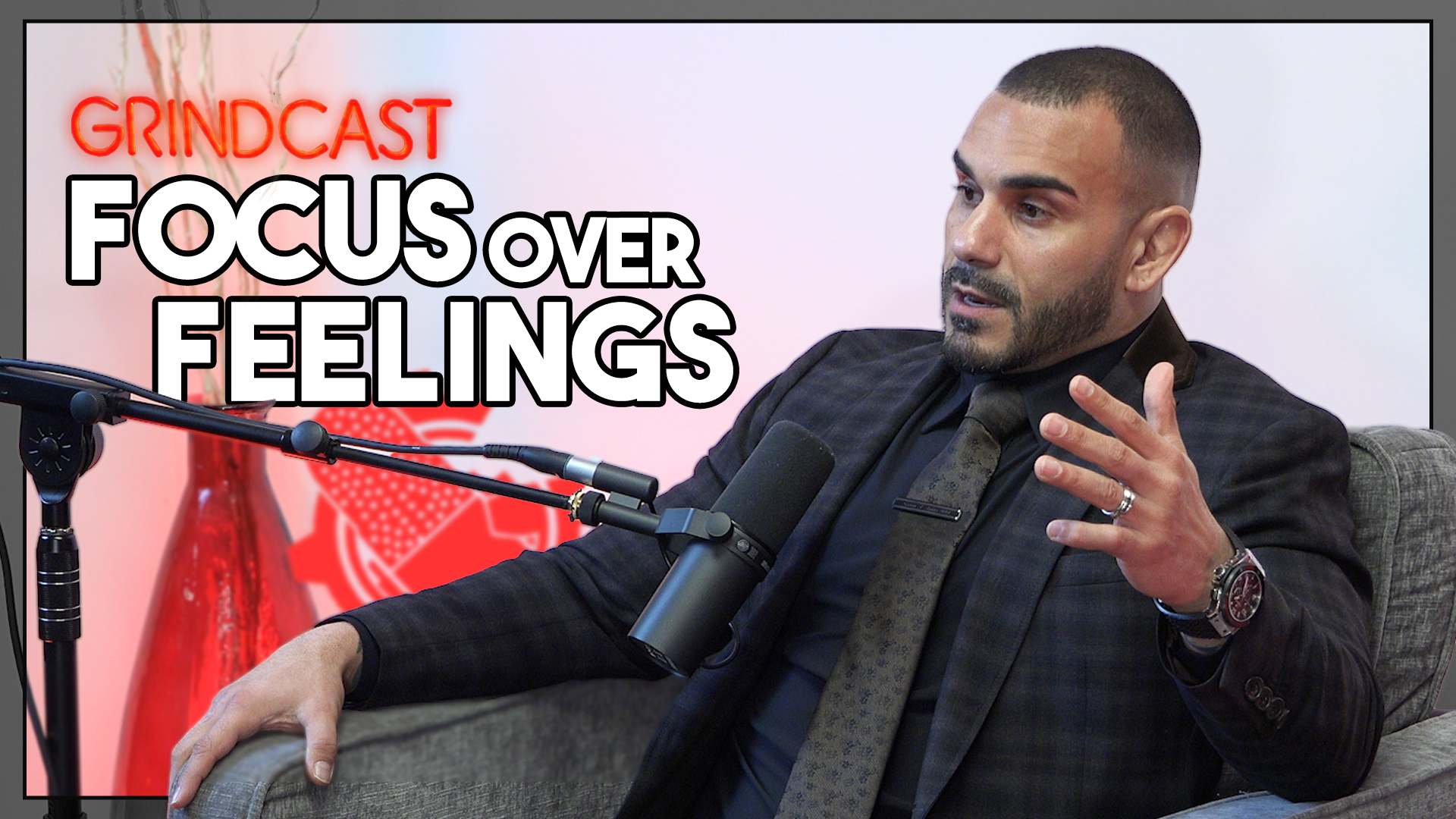
We had my friend, Dalton “Hercules” Rosta in the studio. Dalton just signed a huge contract with Bellator and is currently 6-0 in his professional MMA career. We dig deep into Dalton’s upbringing and everything that led him to become the man he is today. You can’t miss this one!
Transcript
Count money, man.
Money back riches.
I'm trying to talk, trying to talk to my beast, but
what's up gang?
Welcome to another episode of the grind cast get ready.
It's a new day and we got my dog Dalton Rasta in the house.
And I'm excited to go through his story a little bit today and
have an opportunity to interview you, you know, Dalton.
And it's been really a pleasure to sit back and watch even
over to just a few years period since I've met you.
And I remember watching you fight at the casino, you know,
outside and hearing about you from people in youngstown,
Sammy Caldrone telling me, man, you got to, you got to meet
this kid, you got to see this kid and then having a chance to
start training with you and watching you pull up and a rusty
trailblazer and watching you right now, man, just, just,
just signed a huge Bellator contract and driving a nice car,
living a nice life, got a nice, expensive place to me in Florida
and kind of just starting down the path of living your dreams, man,
just being able to watch it unfold over the last couple of years has
been really, really special, man.
And anybody that knows Dalton knows that just literally disguise
the limit and we're just, we're just getting started, you know,
with you but I think what's different in unique, man, is, is there's
more to you Dalton than even people really know or that you let
out. I think people know you're a fighter, they know you're a good
fighter, they know you ripped up, you know what I mean?
Like a model, like a action figure.
My son, my son Simon, he plays with these wrestlers and all the time,
he'll pull out this one wrestler and he'll say, you, you play
with your friend, you do it and I pull it out of him.
Who's my phrase says Dalton?
So he calls one of the wrestlers Dalton and then got an ounce of fat on
them all all ripped up with a beard, you know, and the mean and stuff
like that Dalton.
But there's, there's, there's so much more to your background and how
you got to where you're at, you know, maybe we could open up with,
with some of that stuff like who are you, you know, really Dalton besides a fighter?
You know, where did you, where did you come from?
How were you raised?
What was your environment like and maybe walk us through, you know,
what it was like to be Dalton as a child, you know, all the way up to, till today?
Okay.
Well, I grew up in Newcastle, Pennsylvania.
I was back and forth a little bit as you know, we talked about this.
I was two Arizona back to Newcastle back there as a few times.
We'll break that down, get through it a little bit, but probably try to
break it down in the segments as as a child.
I grew up mostly in Newcastle.
My dad was in the military time he was in the army.
I was probably six, seven years old whenever he first got an army.
So we were living at home with my mom.
My dad was like sending all the money that he's made from the army back home to
pay the bills and everything.
And so you were at home with your mom, dad was in the army,
send him money home, yeah, operation.
I racked he freed him.
He said he was over there fighting in the war.
And so from very, very young age, like I always just had like one parent in the
picture.
This, this how it started for me.
I was never, you never, never had both parents never really had a good parental
structure, you know, to guide me.
And it was always like one parent at a time from this point forward.
Like as I said, he was in the military.
He was overseas.
I was at home with my mom.
As soon as he got back, you know, to, you know, try to skim through all the personal
stuff, stuff was going on whenever he was away.
He came back.
They started the, they started to file for a divorce and they separated my mom
went to Arizona.
She dragged all the kids with us.
I wanted to stay with my father.
She wouldn't let us.
She was starting to take custody, custody, taking for child support, all this other
stuff.
So she moved us out to Arizona when he was at work one day.
Who's us?
Me and five of my sisters.
I guess I should go over that.
I have five siblings.
You had five sisters, four sisters, one brother.
I have five siblings.
Okay.
So you and all five take off to Arizona.
Yes.
I'm the second oldest.
I have an older sister, three years older than me.
I have a younger brother, 10 months younger than me.
And then three younger sisters blow that and she took all of us right away.
To Arizona.
You know, she was planning this for probably like about a month while they're
working on getting separated.
She goes or while they're working on getting separated, she's planning to leave.
So one day whenever she's at work, she just finally got everything together.
You know, it was building up money over the period of a month saving it, whatever she was
doing and then, you know, packed us all in the car, all the stuff in the back of the
truck and drove to Arizona.
And I was eight years old at the time.
So like I said, first off, my dad was in the military.
He comes back for like a month, then we're off to Arizona without my dad again.
So long story short, spent about three years in Arizona with my mom living in
apartments, moved bouncing around from house to house out there.
Finally, she lets me come back and visit my dad during the summer.
I take advantage of the opportunity to stay.
So I come back for the summer.
We're supposed to get on a flight back.
I miss the flight.
You know, how are you?
12 years old.
OK.
And at this point, she's threatening my dad trying to take him to court, you know, use
custody.
The she already filed for child support at this point too.
And he just said, effort, you know, and now I stayed with them dealt with all the legal
issues and everything.
I think she ended up dropping stuff because there was too much of time and too much on her
plate to do it.
And so I was a little.
So what was it, you know, you don't have to get into too much detail for the sake of time.
But you know, what was it, you know, as a young man that says, you know, I'm going
to out of all of us.
I want to go back with my dad.
You know, most kids are just like, they want to be with their mom.
You know, I spent six years, you know, over there with my mom and it's like, man,
at 12, I want to, I want to be with my dad.
You know, even if you don't, we don't have time to get into all the details today,
probably, but, but, you know, what was it?
Maybe about your dad that stuck out.
There was like, man, this is where I want to be.
I don't know.
I always looked up to my dad whenever I was a kid, but on top of that, my mom was a terrible
mother, just telling her how it is, you know, probably some stuff you should keep out
for PR reasons, but she was definitely very abusive, verbally, emotionally, physically.
There was one time where she lost her credit card and nine years old at the time of
brother's eight all the way down the line, all our younger sisters and everything.
And she starts freaking out, you know, going through the house, beating everybody until she finds a credit card.
At the time, I'm in the bathtub taking a hot bath.
There's a vacuum cleaner in the bathroom because the, for whatever reason, there was carpet in this bathroom
that we were living in this apartment.
And she breaks down the door, like completely bust it down because the door's locked.
Comes in, takes the cord from the vacuum cleaner and starts whipping me while I'm in the
hot bath tub.
So that there's a lot more that went on.
That's just one instance right there.
Yeah. That's one thing I remember that stands out, you know, I was in a hot tub and she's beat me with a vacuum
cord. Fast forward 10 minutes, she finds the credit card.
My little sister who's four years old, who was playing in her little kitchen, her little toy kitchen
was using it for, you know, she was playing waitress or whatever.
And she was using the credit card for, you know, as a toy.
Mm hmm.
She comes back, she's trying to fix the door to the bathroom.
She can't fix it. It's completely busted.
She ends up beating my ass again and blames me for the busted door.
So I got, I got beat when my sister was using the credit card as a toy.
And then on top of that, she broke the door and then I got blamed for breaking the door
and I got beat again.
So that's kind of like a depiction of like how my childhood hood was going up every time something went wrong.
When she was having a bad day, you know, she didn't want to get in it.
Not just me, some of the other kids too.
Okay.
But that's how we grew up, you know, she had a bad day at work.
She came in pissed off, somebody pissed her off.
She would beat us.
That's how she took out her anger.
You know, that's how she got stress relief.
She beat us.
And anytime somebody in the house did something wrong, she beat everybody for it.
You know, and these aren't just normal beatings.
You know, there's probably people, you know, 50, 60 years old watching right now, like, no, that's discipline.
You know, this, it wasn't discipline.
It was abuse, you know, and the world's a lot more soft today than it was.
And there's a lot of people that can't discipline their children because of like child abuse laws and everything.
But there's a difference between spacking a kid on ass, you know, and disciplining them and beating them with a cord while they're sitting in a hot bath.
Right.
You know, no doubt.
Complete different.
No doubt.
So that kind of, you know,
that explains why you want to be with your dad.
Yeah, that motivated me to get there a little bit more, you know, and then my mom, she's like so like baffled about like why would go live with that.
Yeah.
You know, it's like it's, there's no secret to it.
It's like she, she was the type of person she would do that.
And then she would feel bad later and try to make up for it.
However, like by being nice to you, trying to hug on you, whatever, then two hours after that she beat you again for something else.
Yeah.
You know, it was just back and forth, back and forth.
The big mood swings.
So I'm living on that 12 years old, that point forward first, you know, at first, I probably look like trouble child coming back because two months in to school and new castle.
I ended up getting a fight with a kid at Newcastle.
Of course you get all this anger, you know, in the mean big change.
Yeah, you know, so this actually wasn't my fault.
Were you wrestling at this point?
No, I was not wrestling.
You didn't start wrestling yet.
So I was wrestling whenever I was like seven years old when I initially lived in Pennsylvania, moved, didn't have wrestling out there, got out of it.
But at this point, it wasn't wrestling just, this was the winter time.
It was like second semester of sixth grade.
And there's a kid in one of my classes in sixth grade that always used to try and just pick pick on me.
Just always try to start shit.
And one day we were going back out back and forth about it and I was just like just had enough of it.
So instead of ignoring them, I just, you know, started talking shit back.
Dude came up to me and like grabbed me by a caller in my shirt.
We ended up in a fight.
We both got suspended for 10 days, you know, and then she used that as fuel.
She's like, oh yeah, this kid's trouble.
It's trouble.
It's it's him.
It wasn't me, you know.
Yeah.
That was probably the only problem that I had until about like high school where I got in like another fight in high school again, which I didn't start once again.
But, you know, just to talk you through what I dealt with whenever I was home, even though I was away from the abusive beatings and the emotional abuse and physical abuse and everything else.
My dad was struggling a lot, you know, he was paying $600, $700 in child support for the kids that were out there.
And he had three children here to support his girlfriend at the time had three children, you know.
So he had a, his bills, his expenses were high and he wasn't making that much money.
You know, he was a type of person that wore the same two pairs of clothes every single day, you know.
One day he wear this, next day he wear the next one, then he'd recycle.
You know, he was, he was that type of person just so he could provide for everybody else.
But, you know, I didn't have a good upbringing, you know, we were on food stamps.
There was, there was points where the washer and dryer broke and we were, he was washing our clothes in the bathtub, you know, and then hang drying them.
We were in ramen noodles all the time and tomato soup with grilled cheese, you know, that's, that's what I ate growing up a lot.
On top of that, you know, in high school, it got worse, you know.
His girlfriend at the time ended up like having like an injury with her lower back, she was unemployed, so he was footing all the bill was completely.
And it got to the point where I couldn't even buy new shoes for school, you know, and I was getting made fun of for wearing the same old shoes from the prior year.
And they were all run down and beat up, falling apart, you know.
And you know how high school is, you get picked on for that shit.
And, you know, that's, that's kind of stuff I dealt, dealt with.
And just from that point forward, like my dad, because he didn't want me to end up like he was, you know, where he has to work for a living and live paycheck to paycheck.
So he was like beating it in my head like grades, make sure your grades are as good as they possibly can be, you know, do all your homework, study, study, study.
You know, and I, I wasn't the smartest kid growing up and he, he probably knew that, you know, but the thing was is I put the effort.
I put the effort in though, you know, I wasn't, it wasn't just a, you know, natural intellect.
You know, my nickname, you know, I'm, I got a lot of nicknames for you.
One of them's doctor, Dr. Rostock.
Yeah, smart.
Part of that comes from, you know, me learning on, on my own, me doing the research.
You know, because some people naturally just get things, you know, whether it's sports, whether it's math, what's reading, writing, whatever.
I was never that person, you know, I always had to put in the actual work, do the actual stuff.
Yep.
And my grades, my GPA, all that was a result of, you know, motivation or discipline.
She ended up getting good grades.
Yeah, ended up getting like 4.0.
I graduated high school with a 4.7.
4.7.
Yeah, so, but that was all, like, yeah, all work.
Yeah, I was doing all the extra shit, you know, doing all my homework, make sure I was studying a lot, you know, I was, I wasn't cram in my study.
When did you start wrestling?
I started wrestling again in my freshman year.
Fresh me year of high school.
And I remember you saying your dad would drive you back and forth to different places.
Also, were you boxing or doing something else?
There was some type of thing.
I wasn't boxing, I wasn't boxing yet.
I started boxing whenever I was in sixth grade.
I was 12 years old because we didn't have wrestling back then, so he told me in boxing.
That was for like a year, then he did the judo.
That was for like a year, then high school came around.
Got in a wrestling.
Yeah.
But this is where I was bouncing back and forth there, zone.
I didn't want to go live with my back when I'm on my mom, but I had to because there was no wrestling and new castle we couldn't.
getting the Laurel. What a commitment. Yeah. So I went back to Arizona just for a semester
to wrestle in high school. Yep. You would go back there and wrestle and come back here.
Then I came back to Newcastle sophomore year first semester. Same thing, but this time we thought
we were going to be able to get in the Laurel or the wrestle. But that wasn't able to forward anything.
Yeah. You know, out in Laurel. So had to do it again. You know, so I went out to wrestle again,
my sophomore year. Then came back junior year this time. We actually were able to get in the Laurel
school district. So I started wrestling that fast forward past that. You know, he
whenever I started wrestling at Laurel, he was driving me even sophomore year, you know,
freshman year. He was driving me to Reynolds High School, which is one of the best high schools
for wrestling in the whole entire state. They were a double A at the time. I don't know what the
divisions and stuff are now. But they had some of the best wrestling. They were 45 minutes to an
hour away. He was driving me there. He was driving me to Bordman. He was driving me to Dubois
to wrestle with a kid named Tom Sley, who was like the third in the state at the time, but he was
undefeated. You know, he's ranked in the country. He was driving me to pit to wrestle with like
Pittsburgh wrestlers, college wrestlers, send him me to these wrestling camps and stuff that he
didn't have money for. You know, he was literally using every bit of money that he had to send me to
them. You know, and he was sacrificing a lot himself time driving. He'd get off work. He'd work 5am
to 5pm. Get off work. As soon as he gets off work, he's taking me to Dubois, you know, driving two
hours. I don't have to Dubois. And let watching me wrestle for an hour and a half, two hours, then driving
me an hour and a half back, you know, not getting back till 10, 11pm. Yep. Then by the time he gets
asleep midnight, he's waking up before getting ready to get to work. He's on four hours of sleep. His time
they spent and spent an outside of work. He's driving me all over the place. Just the wrestlers get
better. Yep. And then the money he's making from work, he's using two, putting his gas tank to send
me to these wrestling camps over the summer to make me get better. Yep. Because my goal was to be a
state champion. Didn't happen. Injury bar. That injuries. Yeah. So, so then you end up getting a,
you went to Youngstown. I went to Seaton Hill first. Seaton Hill first. Okay. Scholarship still to
wrestle. Even though I got injured with my junior and senior year. I was undefeated both years before
like post seasons. Okay. My senior year, I was trying to wrestle through injuries. My junior year,
I couldn't wrestle whatsoever. Yeah. I tore my knee completely. Had that surgery. And
So, you had a scholarship to Seaton Hill? I had a scholarship to Seaton Hill. Went to Seaton Hill.
Went to Seaton Hill for what made you go to YSU? So, I had to fall in out with the coach at Seaton Hill.
I was wrestling now. I was doing well. I was like 23 and 4 on the season. You know, I started
having problems with my knee again. It was my opposite knee this time. I did my left and in high school,
my right in college. And it was the point where like I couldn't shoot at practice. It was unstable when
I was in my stance. Somebody showing on me. I tried to spawn. It was brawn. It would feel like it
was like loose and about. Got you. Running always hurt. Really bad. So, I was going to see the athletic
trainer. He was letting me go do that. I was doing physical therapy there. But it wasn't getting any
better. Honestly, it was getting worse. And so, I wanted to see a doctor. So, you have to get
approved by the coach and then approved by the athletic director to go see a doctor through
the university. So, it's a process in college. At least there it was. And eventually, you know,
the athletic trainer is like, he got to see a doctor. You know, this isn't getting any better. So
the coach approved it. He set up the appointment. The appointment is supposed to be like 7am on a
Wednesday. So, they call me like 6.45 that morning, maybe 6.30. Like, left me a voicemail. I didn't
answer it. Left me a voicemail. I was like, hey, Dalton. Just wanted to let you know that
doctor's out sick today or family emergency after I forget exactly what the excuse was. All I
remember is that he was out for the day and they had to reschedule the appointment. And so, I
didn't go to the doctor. I walked in the wrestling practice that day because he had me riding the
bike and doing the ropes for a condition in the stand shape. And he's like, why didn't you go to
your doctor's appointment today? And I'm like, because they canceled. He's like, yeah, they canceled
because you missed it because you didn't show up. And I was like, coach, no, they didn't. They called
me beforehand. He's like, no, they didn't. He's like, they called you after and rescheduled it because
you missed it. I was like, coach, I have the voicemail on my phone and I have the timestamp next
to the voicemail. Can I go get them? Because we had to keep our phones in the locker. I was like,
do you mind if I go get my phone? Show I can show you. Yeah. He's like, go get it. And he's
super pissed off at times. So I run all the way downstairs. We're practicing this old gym at
Seaton Hill. It's like all the way at the top of the building. It's an old basketball gym probably
from the 1900s. You know, and I have to run all the way down the locker rooms three floors down.
I get it. Come back up. I let them listen to it. He listens to it. He see, I show them the time
stamp. He doesn't say one word. He has the straightest look on his face. You know, not no expression.
No apology. No apology. No, nothing. Didn't even say nothing. Just blank, just a blank look on his
face. Yep. blank look straight straight face, no expression, no emotion, nothing. Yep. I didn't even
get like, he didn't even tell me to just go work out, nothing. He just nothing. What didn't even
talk to me after he listened to the message. It's like, all right. So I was talking to Lohan Dalsky.
He was like, what do you want me to do? He's like, jump on the bike. And about two weeks later,
the semester is about to hand you know, peace acts coming up. I had to set out peace acts, which
was one of the biggest tournaments of the year. Yep. For division two, at least we're at and I'd
up deciding to transfer me. And by that we're talking about it. We're like, this isn't like good for
me. The, you know, I wanted to transfer to wrestle, but after talking to the rest of the day.
Have wrestling or why is she? No. Yeah, I didn't think so. So then you went to wash you. Played football.
Played some play football. Got injured again. So the knee I was having issues with.
And it's not having surgery. Captain. Yeah. So I ended up having surgery on it. So got one point. Did
you say, I'm going to transfer my thoughts from wrestling and football into, into wanting to fight.
So I was growing when I was growing up, I always wanted to either fight or play football.
There's a professional like I wanted to be a professional fighter professional. At what age do you
remember having these thoughts? It was when I was growing up, it was football first. Yeah.
Seven years old. As soon as I started playing football, I was in every kid. When did you want to be
a professional fighter? So I can say football is per seven years younger. Ten maybe for fighting.
We were watching UFC fights. I remember. Maybe it was actually maybe 11 going on 12.
Okay. Because I just started boxing and we went to like one of our teammate's house to watch the UFC
fights. And I remember just getting hooked right away. And I was like, I want to be either a football player
or UFC fighter. At the time, I was probably thinking myself, I'm going to do both. I'm going to be both.
Yeah. Right. Right. Thank you. That you can do it. Yeah. Yeah. But you can't do that shit.
Long story short. Ended up being an MMA fighter. Right out of college. Right out of football.
Did you did you transfer right into training for MMA? There was probably a couple of month gap in there.
How old? I was 19 maybe turning 20 when you started. So this is right around the time where
I'm living on campus at wise year at the time. Okay. And the tuition, everything goes up the
fall and year end up having to move out. But in that process, after I get done playing football,
because I injured my knee and I'm having surgery on the knee that I was having a problem with at wise
you. And two months in between there, you know, I was probably just lifting weights, you know,
just living a normal life. And I was like, it can't do this. You know, so I need to do something.
And I started going back to Jujitsu at Mike Demko's. In this process, probably at semester ends and
my dad ends up getting a motorcycle accident. And this one I just started, I just started training
at MMA again. I remember. And he was in the hospital. I remember showing up to hospital. I was the
first one there. And then me and my dad were actually fighting at the time. A lot of people don't
know this. We were arguing. We got a really bad argument at the house. And I actually went to
like live with one of my friends, like hang out and stay at one of my friends house for a couple
of weeks, you know, just let things cool off. And then that happened. And I ended up being the first
one there. I was like the last one to find out because nobody wanted to tell me because they knew me,
my dad were fighting. And I ended up being the first one there. And then everybody, like whenever I
showed up there, I remember his girlfriend was there. And she was like, super pissed. We, you know,
we have shit out now. We're cool now. But at the time, she was mad at me. And she was like trying
to get me kicked out of the hospital. If she's watching this, she'll probably get a laugh out of it
because I know she remembers that. She was trying, she was trying really hard. It was pretty petty.
And along the way, short, everybody else went back and my dad was like asking for me to come back.
You know, and then so I came back and it was just me and my dad in the room. And he wanted to like,
you know, squash the beef and everything right there. And we did. And probably two weeks went by.
And he was doing well, you know, he had like five six surgeries and then he ended up passing away.
He had complications after like the six or seven to one, whichever one it was. And they had him on
like life support and all this other stuff on oxygen and put him on dialysis and everything was
failing. He ended up passing away. So after that, fast-forwarding to like the 20 years old. Yeah.
So 20 years old, you got really no huge relationship with your mom. Mm-hmm. I'm not talking to her at all.
And then closest person really to you, your dad, you know, and he passes away. So 20 years old,
probably feeling a little me against the world. I'm alone. I would imagine not a huge relationship
with the, with your siblings. No, no. I wouldn't say that. I never had that attitude because I've always had
a lot of friends around me that they've done stuff for me or their families have. You know, I've
been really fortunate to have really good friends that have had really good families that treated
me like family. Yeah. You know, I mean, I have a lot of people helping along the way. You know,
so whether they let me stay at their house, whether they lent me some money whenever I needed it
when I was behind on bills or something. Because after just expand a little bit on my upbringing,
after my dad passed away, I went from living on my own to living with an aunt to living on my own
again, to living with my Nana, to living with a friend to living on my own. I was bouncing back and
forth. There was like no stability. Yep. You know, and the only reason I kept moving back in with
my aunt and my Nana and then a friend is because I wasn't able to make the bills anymore.
You know, I was working so I was going to school full-time. And you graduated? Yeah. 18 credit
hours. I was trained it two to three times a day. Training was the most important thing to me.
Everybody's like, all you need to call it for a plan B plan B this plan B that you know plan B to
me is for losers. But the only reason I went is because I already started. I was already halfway
through and I know my dad would want me to get my degree. So, so the only reason why I finished but
would you get your degree in finance finance would have made a minor in accounting. What a 4.7
that was that was high school. Okay. Call it. 4.0. 3.8. Okay. 3.8. So,
where was that? So basically you're you know you're transferring and you know people are helping you
out and now you're starting to transfer into into two three hours a day two three sessions a day.
Yeah. So putting it all in the priority of MMA. Yeah. Training was the most important thing to me.
I was probably run down you know under slept over trained but I was trained two to three times a day.
I was when you take their first fight. I actually just got a memory on my Facebook. It was five
years ago. Yesterday? Okay. Yesterday was my first fight. Okay. So it's been I've been at this for
five years. That was my first amateur fight. Yep. So yeah. So I've been at this for five years and like I
said training was the most important thing to me because I knew at that point I was done with football.
I knew what I wanted to do was become a professional fighter. See when all you went all in. I went all
in. So this is what I want to make my job. Yeah. And now it's now it's your job. Mm-hmm. And there was
a lot of struggle that was involved with that you know it was like I said two three times a day and
driving all over the place all over the place going the mat factory in lower borough and I was going
to town school in Youngstown then I was going to boxing in Youngstown. I was going to
jujitsu in Hermitage at Monarch. I was going down the Pittsburgh to Commaworthy's gym and at the time
it might have been Mark Cherkos during this sparring going to Cleveland. Strong style you sent me up there
to get some sparring and stuff up there. I was all over the place because back here you know there
wasn't much. So those are some things that people don't see. Yeah. You know right there you see
all men because five years I mean it's you've accomplished a lot in five years man. But the
people want it but how many people are willing to drive and want it that bad. What would you say?
Listen listen listen the the thing is is a lot of people who want it it's it's easy to do the training
you know if you love what you're doing it's easy to do the training so it's easy for me to get a
practice driving yeah it's sucked being in a car if you're training two to three times a day sometimes
from the past six seven hours yeah because an hour and a half there I want to have back there's
three. Yeah do that twice a day they're six you go into another gym for a third session maybe it's
30 minutes away seven you know it's easy to do to go and do the training the the driving to and
from and all over the place made it you know made it worse. On top of that like I said what I've
saying with the struggle is I was still going to school doing 18 credit hours and I was working
as much as I possibly could probably 30 hours a week and I was probably getting four to five hours
of sleep every every night you know under slept over training two two two three times a day
working as much as I can to pay my bills there was a lot of times that I didn't have enough money
like if I paid my bills I didn't have enough money to get put gas in my card to go to Y shoe
so I was trying to find a ride with somebody that was from Newcastle that was commuting to Y shoe
or there was times where I wasn't able to pay my bills so I was a month behind on my bills and I
needed gas in my card to get the practice and get to school yeah so I prioritize that and
then end up moving in with somebody for a couple of weeks there a couple months you know right
while I got back under my feet and then when did the same thing over again you know it got to
the point where I couldn't even pay for food I was working a full-time job during the summer when
school wasn't around the training still two three times a day plus working for you. What's the toughest
part of your job now that's like trying to find a needle in haystack bro that's everything about
is tough you know you you go to practice it's the cardio is super intensive the you know you got
wrestling
You got Jitsu, you got kickboxing, boxing, everything.
You know, all these different martial arts
that you have to win at once.
But you have to constantly improve on all four of them
and you only have so much time in the day.
On top of that, you're getting punched in the face.
On top of that, you get to these points
where you go to these dark places
where you don't think you have anything left in you at practice.
And you still have somebody in your face,
punching in your face, taking you down, whatever,
grinding you out.
You might have went three rounds with one person.
Now you have fresh person in on you.
You know, there's places that in this sport
that you go that you don't go in other sports.
You have the weight cutting.
You know, you have the constant day to day
like training two to three times a day every day
and your body's beat up.
You go through injuries, your shins are banged up,
your elbows, your forearms.
Maybe you had another knee injury or whatever.
It's just the plus, you don't get a paycheck
unless you fight.
You know, you get injured and you're out for a year.
Speaking of paychecks, you just signed a new deal
with Bellator.
Yeah.
Four fights, 18 months.
So four fights, 18 months.
Four fights, 18 months.
And it's a lot of money.
Yeah, it's a lot more money than what I was getting.
Come along, come a long way.
So come a long way from struggling,
getting a knee neurotic, a youngstown state.
Yeah.
They're paying you a lot of money for these fights, dog.
Yeah, so I went from, I just want to back up a little bit.
Yeah.
To the college thing, right before I graduated,
I even got to the point where I was swiping,
or not Kenny Bars, protein bars at Walmart,
because I didn't have any money to eat.
I didn't have money for food.
So these are things that nobody knows about you.
I'm learning still things that I didn't know.
Yeah, I was doing that.
I was trying to find ways to just put gas in my car,
just to go to practice.
You've seen the car I was driving.
Yeah.
There's constantly problems with it.
I didn't have money to fix the gas line,
or the power steering, or in your driving all over.
Yeah.
All over it was rusted out.
There was rattling noises coming from it,
which ended up being an emergency break,
the frickin' spare tire on the back,
because hanging down, because of the things rusted out,
you can't put it up.
I was struggling a lot.
And then I graduated college.
And I got a job at first.
And right after I got the job,
I got offered my professional contract with Bellator.
So at this point, I'm working a job
where you can make a lot of money.
But then this contract gets put right in front of my face,
right on table or even front of me.
There's a pet in my hand.
And I'm only getting paid 4,000 guaranteed to show.
But it's like, all right, this is your chance.
If you take the leap of faith right now,
that 4,000 can turn into six figures.
You know what I mean?
And at the time, I had so many people telling me,
you know, I'm telling them how much I'm making.
They're like, you can't make a living off that.
They're like, why don't you work and do that?
It's like, well, I want to be all in on this,
because I know if I take the chance right now,
and I go all in, and I dedicate myself to this,
it's going to pay off in the end.
And I'm not going to worry about it.
Here's the things that stand out to me that apply to business,
entrepreneurship or those out there that feel like
that they want to fight, that people go through these struggles
to where you're broke in the process,
that you're not making a ton of money,
and you got to be able to believe.
And you got to give up something of value
to gain more things of value.
There was a turning point of, man, do I sign a contract
for $4,000?
Do I finally go alleviate this pressure?
Do I chase my dream?
While people are telling me that I'm crazy,
or do I go all in?
You've mentioned many times, it's not a plan B.
Like all in, you got to go all in,
you got to make sacrifices,
you got to be able to block out the noise of safety
and security from others to go ahead
and embed on yourself.
And that's what you did.
Did you ever think that you would be in this situation already
to where you're signing the contract
that you just signed?
Yeah, I thought I would, I believed in myself, you know.
And that's part of the reason why I took that leap of faith
and took that contract for only a guaranteed $4,000
for my first fight.
I was leaving a job where you could possibly make six figures.
And people were thinking I'm crazy, you know,
especially because I grew up struggling as a kid,
then I grew up struggling in high school,
then I grew up struggling on my own, again in college.
Like I just told you I was still in freaking protein bars,
just to eat.
Literally my bet, you know, many times
I overdrafted on my freaking account
where I was putting gas, you know,
I know I had $2 in my account,
but I put $20 in my gas tank.
Yeah, so yeah, yeah.
Because once you have $2 in your account,
it accepted at the pump, but you know,
you're gonna overdraft, you know.
I had to pay that shit back later.
I did all this shit and you figure whenever I get that
contract off to me, but I'm working a job
where I can make six figures,
I'm gonna take the six figures.
No, that wasn't me because I had a goal,
I had a dream and I believed in myself,
I wanted to take the leap of faith.
And I knew if I put the work in,
and I actually believed in myself,
then it would pay off later.
Now that you've trained with some of the best fighters
in the world at American top team and around,
what would you say are some of the traits
that stick out from the greats,
you know, the what separates, you know,
people from the top tier level that you've seen,
does anything stand out?
I think what the people do inside and outside of the gym,
you know, a lot of people whenever they look at
somebody that's dedicated or that works hard,
they always think about what they're doing in the gym.
They're like, they see them come in,
they see them like going balls to the wall
for practice for an hour, you know, an hour and a half.
They're like, man, that's a hard worker, you know.
They might even see them going in there too,
sometimes three times a day, they're like,
man, that's a hard worker, you discipline.
That's not all it takes in the sport, you know,
what are you doing outside?
Are you getting the proper rest, you know,
or you're getting eight to nine hours a night,
because that's important whenever your body's,
when your job's physically demanding, you know what I mean?
You can run on fumes with a lot of other stuff, you know,
with fighting.
Not just discipline while you're working.
Yeah.
Discipline while you're personal life when you're not working.
Outside things are gonna show symptoms in your inside.
Yep, you have, like I said, sleep, your diet supplements,
you know, and then drinkin, smokein' partying,
you know, all those things are gonna add up, you know?
So you're eating bad, you're not, you're under-slaped.
Which is something that you, those inches, you know,
you don't do, you don't drink, you don't smoke.
No, I've never drank, you've never smoked my entire life,
never did any drugs, 26 years old,
I went through college all four years in college, you know.
How do you do that?
I mean, how do you pull that off at, you know,
most young people going to college,
and it wasn't like you were just raised around,
you know, a perfect situation, like,
how do you just say I'm not gonna drink,
I'm not gonna smoke?
So my dad never had beer in the house, you know.
I never seen him drink, you know.
People told me that he drank and stuff,
whenever I hear stories now, you know,
people come out the woodworking, like I remember dad did this,
your dad did that after he passed away.
So I hear the stories and stuff now,
but the thing is, he was a good role model in the aspect
that he never did it in the house,
he never did it in front of me, you know?
And then he never told me that I couldn't, you know.
There was a lot of people, there's a lot of parents out there
that try to, you know, control their kids too much
and their kids rebel, you know.
My dad never told me I couldn't do anything,
never told me I couldn't smoke,
never told me I couldn't drink, never told me.
So we're making out certain people.
Not want to.
Just him, the fact that he never did it for one and two,
he knew how invested I was in the sports,
I knew how invested I was in the sports,
and we just always used to talk about,
like just simple conversations when it was just me
and him, like, what can we do to get an edge,
to get an edge, you know?
And we were talking about supplements, you know?
Create, we'll create teen help, you know?
Well, me doing an extra workout a day help.
Well, me going to the house of speed
to work on my 40 yard dash time help, you know?
What else will help?
Let's let's let's think outside the box, you know?
What traps have you seen fighters fall into?
Like the common traps.
The party, the party, you know?
Too much party and they get a little bit of same here
in business stuff.
They get a little bit of fame, they get a little bit of money,
you know, they right away, what they want to do
is they want to go get girls, they want a party,
they want to drink, they want to have a good time,
they want to live the lavish life, you know?
They want to look, especially nowadays for social media,
they want to look like they're living that life, you know what I mean?
Yep.
And that's a rabbit hole that they did themselves into.
And they sooner or later, they can't get themselves out,
you know what I mean?
Whether they become addicted to the drugs or whether they run out of money,
you know, one or the other,
sometimes it's death, sometimes it's jail.
And you see a lot of fighters go through that, you know?
And it's unfortunate, you know?
I've seen good people turn, experience some bad situations,
and up in some bad spots when there's some good people,
you know?
They probably shouldn't have ended up in that spot,
but they get involved with the wrong people,
or started doing the wrong things.
And it's very unfortunate.
After your last win, you know, when I came out there to Arizona
to watch you, I was coming off a tournament,
and I was looking forward to celebrating your win with you,
and you know, I tried to compete with you with after your win.
We went out and just ate as much food as we could possibly eat.
I didn't know you were competing with me.
Oh, yeah, yeah, I was trying to keep up with you with the eating.
I think we ate the most at the table.
What would your go-to cheat meal be?
Your go-to celebration meal be?
What does that look like for you after a win?
I mean, every thing you're going to.
First thing you're going to.
To an Italian restaurant, it's every time.
Remember you came to the one in Connecticut, too.
Remember we went to, I forget what it was called.
It was in the Mahi in the sun.
There was a Italian restaurant there.
Same thing, I always get chicken parm, pasta,
get some ice cream, some desserts, or whatever after.
This might go to every time.
I love pizza, too.
If they have pizza there, get that as appetizer.
There's a plus.
Then for the next week.
Your carbon up.
Yeah, next week you're going to Italian.
Yeah, I go all out.
For the next week you're going ham.
Yeah.
Burgers, fries, appetizers, wings, pizza.
You still on the red bulls?
The blueberry red bulls?
Blueberry red bulls?
Or have you moved on from the blue bulls?
No, I've moved on from those.
But people still tag me in their stories.
They'll get one and they'll still tag me.
OK, I still think of you.
Yeah, OK.
What tips do you have for weight cuts, man?
I know, for me, when I was cutting weight recently,
I was blowing you up for like a month and you're good at it.
I mean, everything you told me to do worked.
What tips do you have for people that are cutting weight?
I mean, the biggest thing would be to get as lean
as possible before you actually start to cut.
What you do outside of the fight camp matters.
You want to stay as close to fight weight as possible.
You don't want to be always tracking your calories always.
You know, watching what you're eating,
and you want to enjoy life a little bit,
but you don't want to go wild.
You know, after my fight, I give myself a week, two weeks,
and then I start getting back to normal.
You know what I mean?
We're going to have to maybe three cheat meals,
meals, not days, a week.
A week.
And then whenever I start phasing out of that,
I'll do two.
And that's what I normally do.
Two cheat meals a week, outside of camp,
then during camp, one cheat meal.
But I would get as lean as possible.
Then I sent you an app where you can track your calories
and everything.
And me personally, I like to eat 2,200 calories a day.
During camp, the whole entire time,
I lose a little bit of weight each week.
You know, it's not too much.
You don't want to strain yourself.
You don't want to burn yourself out from dieting,
weight cutting, whatever.
You still want life to be enjoyable.
So I try to keep it like 2,200 something that's
I'm a small deficit, but I can't tell.
Yeah.
Still getting full.
2,200.
And you're still training a couple of times a day.
Still training a couple of times.
I'm probably burning 3,000 at least a day on average.
And so it puts me in about 800 calorie deficit.
If I'm a little bit more hungry, I'll eat more.
I'll eat up to 2,600, 2,800 calories a day.
And I do just do that gradually over time.
It was a course of 8, 10 weeks of a fight camp.
And then the last couple of weeks
is when I really start cutting the calories decently hard.
The last week is when I put myself,
if I'm still pretty heavy, I put myself maybe in a 500
or a 1,000 calorie deficit at most.
And that's just for the fight week, five days,
before the fight, a whole seven days, five days.
And then that's when you start implementing the water
loading.
At this point, you should be decently close to weight.
No more than 15 pounds over.
And that's if you're heavy.
And this is for how many fights?
If it's same day wins, you don't want
to be any more than five pounds over.
If you're fighting the same day as the wins,
then at this point, I'll start implementing the water loading,
where you start taking in more water, two gallons a day at first.
For five days?
Yeah.
For five days.
Then you start as the day starts going down.
Two days before you cut it down to a gallon, day before or day
of, depending on the same day wins or day before
wins, that would do a half gallon.
So you're still hydrated for the first part of the day.
You want to stay as dry as you want to be dry for at least
amount of time possible.
So me no longer than 12 hours.
And I still eat up into that point because you still want
to get insulin in your body.
You still want the carbs.
You still want energy.
And you don't want to like low blood sugar.
You don't want to crash.
You don't want to faint, pass out, all these other things.
So you still need to eat.
If you're doing everything properly, you should be eating the whole way
through.
You should be drinking the whole way through the last 12 hours.
Other things that help dandy my route, diuretics, such as caffeine
and stuff like that.
But I take caffeine.
I usually, the week of, I'll usually double my intake just
because it helps with fat burning.
It helps with burning calories.
It helps push them water out too.
It's a diuretic.
And you don't want to take the other diuretic, such as dandy
line route, unless absolutely necessary.
You're holding onto a little bit of extra weight.
Then you take the dandy line route.
That's last resort.
You don't have to do that if you're getting down.
Like we talked about this.
Yep.
And I've needed it.
Yeah.
So if you don't need it, you won't take it.
Because you could keep pissing out the water and pushing out
the waters even after the fact if you rehydrate.
Try it out one day early and like a week before.
And it works.
I said, oh my god, you can prepare me for this, my god.
Yeah.
The last thing for weight cutting is when you get close to weigh-ins like the day before,
what you eat, you still want calories. You know what I mean? So you still want,
you still want to be in a little bit of a calorie deficit, but you still want the calories
for the energy to keep your blood sugar up. So you want high calorie dense foods that are low in weight.
So like I told you, a good go-to for me. It's a metrics bar.
metrics bar, you know, if I'm really cutting it for. 400 calories.
It's about three ounces. Yeah, if I'm low in weight, you know, yeah. So the way your body works,
you have to, it takes hours and hours and hours to digest foods. Sometimes your body holds on to
it longer. You know what I mean? Especially if you slow it down your digestive track, if you're
taking apple cider vinegar, if you're not eating a lot of fiber, other things. So if you eat these
lighter foods closer to weigh-ins, when you, the diuretic is pushing the rest of the food and
stuff out of your body, the only thing that's weighing you down inside your body is the low weight
foods that you ate. So if you eat three, four ounce meals over the course of the day, the day before
weigh-ins, that's only 12 ounces. That's only a pound. Yeah, you know what I mean? You're going to
push some of that out. Yeah. You know, anything that's left sitting in there is nothing going to affect
your weight on the scale. That's that's the biggest thing. So a lot of people, they'll eat two
pounds worth of food the day before. You know, the main three pounds worth of food for the cumulative
for the whole day. That's three pounds of food you're putting in your body, you know, and your body's
not necessarily going to push that out. Push it all out. Yeah. Yeah. So yeah, calorie wise, if you're
looking for the long-term weight loss, the calories are going to matter, but short-term weight loss.
And before day. Yeah. You did everything right up until this point. Yeah. So that's not going to
matter in the grand scheme of things whenever you have a short period that make weight. So now you
have to adjust the weight of the actual food. Meals. Yeah. Yeah. Or bar or whatever. And then on top of that,
lastly, I like to use a sauna suit, to especially if especially if I'm not using it for my whole
cut weight cut, I'll use it for the first 15, 20 minutes to get a good sweat going, get my body heated
up, get my internal my body core temperature up. So I'm constantly burning calories and constantly
like getting the sweat going. You take that off, you maybe throw some sweats over it to replace it,
then you're still losing water. Maybe you take sweats off and you're just working out in shorts
and a t-shirt, but your body your body temperature is already like skyrocketed from the sauna suit,
you're still sweating. You go into sauna, you get the rest of it off, whatever. It's a weight cut for
me to take loose 10 pounds takes an hour. You know, some I sweat more than some other people, you know,
some people hold on, you have to know your own body, you have to experiment with it first, but
I mean, there's no reason that anybody, depending on their body weight, because body weight matters to
the bigger you are usually, the leaner you are, because how lean your are matters, you know, the more
muscle you carry, the more water you push out. So 10 pounds for me is easy, you know, somebody has
160 pounds, it might be more 7, 8 pounds. It's got an hour, but there's no reason nobody can't cut at
least 5 pounds an hour. You know, switching gears, what can you name a couple people that have
made a big difference, you know, on your life and what you learn from those people? A couple
people that stand out to you of like, man, I grabbed this from this person, I grabbed this from
this person that has impacted you and what did you learn from those people? I would say the first
person is my dad, you know, the dude's and the don'ts, you know, like we were speaking about how I never drink
or smoked or didn't any drugs or anything like that. Big reason was from him, you know, he was a good
rural model. We were always talking about what I can get to edge in. And then there's things that I
learned not to do based on what he did where I like saw it affect his life, you know what I mean?
Don't have kids early before you're ready to, you know, you know, be smart about your money, you don't
want to live paycheck to paycheck, invest, you know, other things like that. Going on from that,
you know, in the world of MMA, wrestling, whatever I learned a lot from Isaac, you know, my coach
at the MAP Factory. I'm currently an American top team, but you know, I always have Isaac in my
corner from my fights and everything, you know, he's helped me out a lot over the years, not just
with Jiu Jitsu and wrestling, but he's always been there, someone to talk to for me. You know,
he's a wealth of knowledge, not just for wrestling or Jiu Jitsu, but he has a lot of wisdom, you know,
he's helped me like with, he's a chiropractor, tell me what my body care and everything else, and
I don't know, he, I couldn't be more thankful for him, honestly. I wouldn't be where I was without him.
Yep. And I would say another person would be you, you know, don't want to
to eat your horn or anything on your own podcast, but I've learned a lot from you, man.
Whenever it comes to business for one, two, investing, three, networking, you know, meeting new people
for you've always helped me out whenever, whenever I needed it, you know, whether it be
financially or, you know, just giving me advice, always pointing me in the right direction.
Yeah, man, I can go on and on, and I can name more people, but I've talked my head, you three.
Right on. I'm grateful you edged me over there to the mat factory also, man, you've given, you know,
back to me also, man, I've learned off of you and have grown off of you, man, it's been a pleasure.
What two words, you know, stand out to you if, you know, if I had to say, all right, you know, above your head,
you know, what you represent, you can only pick two words. This is what I feel strongly about,
you know, for me, you know, these are the two words. What would be your two words that you feel
strongly about, passionately, about that embodies what you believe. Discipline and self-belief,
discipline, obviously doing the things that you're supposed to do, not necessarily that you want to do.
Big thing, like I said, is I've said it three times. To be great, you gotta be able to do things you don't feel like doing.
Yeah, and I mean having a discipline of doing the right things outside of training, like I said, you know,
not smoking, not drinking, not partying, dining, right, resting, right, recovery, doing all the things for
your body, massage, you know, physical therapy, cryotherapy, chiropractic work, all that. You have to
have the discipline to rest when your body needs rest, you know, you can't constantly run your body into
the ground. A big part of it is rest. You need to have the discipline to go to bed on time to take a
day off whenever you need it. You have to have to discipline to go to practice when you don't feel like
it, you know, because there's going to be those days. Same thing goes with work, same thing with your
in the life insurance agency, in business. 100%. There's probably so many people that work for you that
don't, you know, they're like, I don't feel like making a call right now, you know, they're like, I just
need a 10 minute break, near 20 minute break. Maybe today I'll only do 20 calls instead of 50, you know,
I don't know what you guys as quote is for how many calls you're going to make for a day. But, you know, maybe
they want to just take a nice easy day. That's that's, that's not discipline. You know, you have to have
to discipline to do it every single day in the matter. How tedious it is. And the other one, I believe,
I was the one being self-belief because I was thinking, can't wait on other people to believe in you.
Yeah, I was, I was thinking patients earlier, belief self-belief kind of ties into patients because
you have to believe in the process. You have to believe in yourself that even though it isn't,
you might not necessarily be there right now, that through your hard work and through your discipline,
and it ties in discipline, the things that you're doing right. That's where you get so much belief in
yourself from the discipline that you apply. Yes. Yeah. Because if you aren't doing all that stuff
correctly, how are you going to walk to the cage? How are you going to be on a call? You know, and have the
belief in yourself or the confidence in yourself to actually close. No one you didn't go all in. Yeah,
you didn't put everything into the process. And like I said, and if you don't believe in yourself,
who else is? Hey man, I mean, you can't have somebody else believe in yourself when you don't
believe in yourself. Hey man. You know, what would somebody be able to do to follow, you know, your
journey, you know, coming up on the next 18 month contract with, with Bellator currently ranked,
what are you six or seven? Right. Seven. Seven in the world in Bellator currently right now.
I'd imagine, you know, you handle your business at some point, you're going to probably end up
with a shot here in a title fight in an 18 month span. I'd be shocked. How would somebody follow you?
How would somebody get a whole you, you know, on social media and stuff like that?
I'm at the easiest way. I'm active on all social media, but the easiest way is Instagram, you know,
I think that's the most popular platform nowadays anyways. But my Instagram's Dalton Rasta at Dalton Rasta.
Dalton Rasta at Dalton Rasta. D-A-L-T-O-N-R-O-S-T-A. Okay. Yeah. And yeah, I mean,
watch my fights Bellator app. It's on the prelims showtime. It's on the main court.
Let's get behind them. Let's get behind them. Get on the Hercules train, you know, right now,
six and oh currently in Bellator, undefeated as an amateur, undefeated as a pro, and
representing Newcastle, Western Pennsylvania, YSU Penguins, and belief that you could come from
anything and really not have a ton of, you know, parental support at 20 years old,
you know, and find a way to make it on your own if you believe in yourself. If you got discipline,
if you're willing to put it into work, you can make your dreams a reality, man, and you're proof for that.
So thanks for joining us, man. Appreciate you coming on to the grindcast.
Yeah, thank you for having me on the grind. My dog. Let's get it. Let's get it. Thanks for joining us
on another episode of Grindcast. Get ready us a new day.