Solo /Business / Aug 14, 2022 · 9 min
Dealing With Conflict – Walking In Power with Nate Ortiz
Show notes
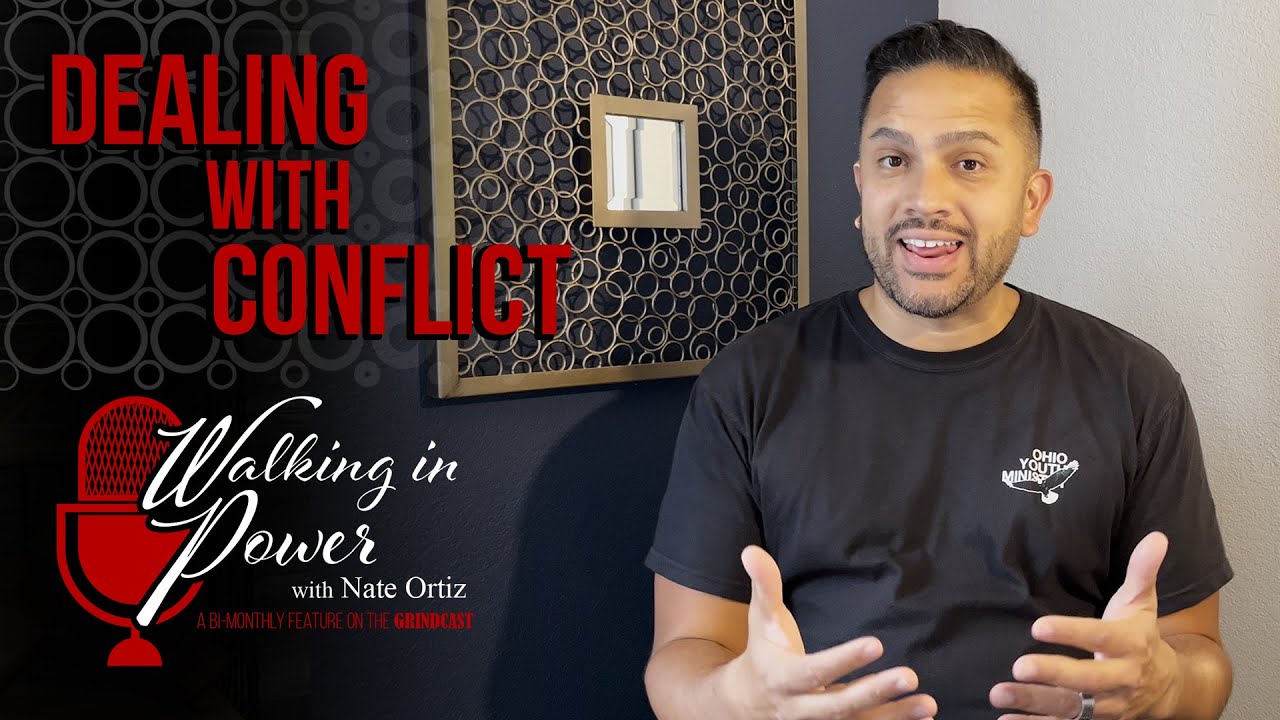
Welcome to Walking in Power with Nate Ortiz. Walking in Power is our bi-monthly installment on The GRINDcast aimed at helping people on their spiritual journey.
Nate Ortiz has been a Christian Youth Minister for years. As part of Arias Agencies mission to “To develop people within this agency mentally, physically, spiritually & financially…” we added Nate to the Arias Agencies family as a Spiritual Coach for anyone in the agency looking to strengthen their relationship with God.
Transcript
Hey everyone, this is Nate Ortiz and welcome to Walking in Power Today.
We are going to be talking about dealing with drama.
No one would go on record saying they love drama.
Now we know lots of people who will be dramatic and they will bring the drama wherever they
go.
But no person just says, hey I like drama and that's what I do.
They do it without even realizing it's what they're attracting themselves.
So we want to talk about dealing with drama in a healthy way.
That's just, you know, push it to the side.
But letting people know how do we do this constructively?
How do we do this in a healthy way that we let people know that this isn't a culture
that we want.
This isn't a culture we want to continue.
And so how do we deal with it head on but in a way that is productive.
So in Matthew 5, 9 it talks about that blessed are the peacemakers for they shall inherit
the kingdom of God.
Now when we, if you look at scriptures even deeper says what is the kingdom of God?
The kingdom of God says it's righteousness, peace and joy in the Holy Ghost.
That is the kingdom of God.
And so when you think about the kingdom of God there is peace.
And so peace is the opposite of what drama is.
And so when you deal with drama you create greater peace within yourself and your family
or within your organization.
And so when we think about keeping the peace, right.
We're not just talking about being quiet, not making any waves and not upsetting people.
When you are looking to create peace there are times where you will offend somebody.
You will say that they will hurt their feelings or just make them feel embarrassed.
But the reality is when you are dealing with drama you will find that person and deal
with them one on one and try to do it in front of people.
But you want it in a way that is healthy and beneficial for both parties.
And so there was a teaching my friend gave one time that I was just so good.
And he talked about this term in counseling and psychology.
It's called the Cartman's Triangle.
And so the Cartman's drama triangle would be exact.
But you could Google it, look it up.
But the unique thing about it is that there are three main pieces when it comes to drama.
And I think sometimes the person says that I don't like drama.
Try to stay far away from it but they find themselves in the middle of it whether you
are leading a team or just in your family.
These are some helpful ways to kind of go about it and deal with it.
So in Cartman's drama triangle, he says there are three people that have typically identified.
There is the bully, there is the rescuer and then there is the victim.
So right we know the person who always brings the drama to themselves are always the victim.
Everything is happening to me and nothing is happening for me.
This is a terrible card that I have been dealt and I have to play the cards.
And so this is just terrible.
And so that type of person says, hey I am the victim and nothing is going my way.
They will then look for someone to rescue them.
They will say hey this is what is going on in my life and this is terrible.
They want someone to co-miss or with them.
And when they find that person, the rescuer, the victim and the rescuer, they will then
look for someone that bully, that person is doing these things to the victim.
And they will say that is the bully, that is why what is going on.
It is this person or it is that.
And this victim looks for the rescuer to rescue them.
But here is the thing.
If the rescuer says hey I am not doing that, that is something you need to do for yourself.
The victim will then easily turn and make who they want to rescue them, the bully.
And so you know what, this person is the bully, you are the bully.
And maybe find someone else to rescue them.
And that is how the drama just continues in organizations, in places.
And so no one wants that.
But here is the part where I think it is helpful and doing it productively with someone
and when they are dealing with the drama.
You want to be able to have this idea of what I call live mixing.
If you have ever been to a concert or you understand how your audio works, when they plug
in the board, they have that big board in the back and you have all your instruments plugged
into it.
You have even just a person singing.
They do, they call it EQ, equalizing the sound.
They are making sure it sounds good in the room, they are adding reverb, they are adding
bass, they are adding treble, they are doing the mids, the highs, getting their voice.
This is how the best that it can.
So sometimes people would like drama, they create an EQ that is so hard, right, that they
just would like, well it is this going on in my life and this is going on and this is going
on and this is going on.
And they create this whole sound, this whole thing around their life that is just noise
and it is hard to really get to the root of what is causing this drama or why they want
to start this drama.
But here are three things, three roles that you can play in someone's life who is maybe
wanting you to be the rescuer or identifying you as the bully and how you can deal with
it head on.
So the Bible tells us, if you have an issue with someone, are you approached someone on
one, you just get with them and give them that respect and that honor, but you can go
to that space and so maybe someone is talking to you and express some things that are going
on in their life and some things that are difficult and they are blaming people and it just
seems like they are really complaining and not really looking to take action about it.
You can find yourself in these three spaces.
You could be empathetic, empath where you would create this shared space where you can
just say, that sounds really hard, right?
Whatever you are going through.
And just allow this person just to feel like they are cared for just to say, hey, yeah,
I am sorry, that does sound really hard.
And hopefully that person then begins to move into this other place of saying, yeah, it
does, but you know I am going to bounce back, they get encouraged, they self motivate themselves
and I will pray to see guidance from God and you can move on from that or you can move
into place of what we call the sage where that is someone who is in an advise and they
create space for the person to think through it so you can say something like that sounds
like a challenging problem, what can you do?
So you are putting the responsibility on them, right?
The empath just says, hey, I am here for you, I am sort of crying, you know, you encourage
you but then go on your way and you do that but then you move into the place of the sage
and you really can just say, hey, let's ask the questions like, you know, hey, what can
I do for you?
You know, or start what can you do?
How can you grow?
How can you move on from it?
And hopefully they begin to reflect and think about, here is what I need to change, here
is what I need to do.
And then lastly, you can step into the place of being the leader.
And so this is where you just directly feel that space where there may be come to you, the
complaining and you just say, hey, this is what you need.
Now, when you're in that leader space, that person has to give that right to be in that
space and say, hey, what do I need to do?
How can I grow?
And so sometimes I call like just like, you know, spiritual coaching boot camp where, you
know, someone comes and says, hey, I can tell you what you need to do and what you need
to do to move forward or you can take this space.
But I think we're dealing with someone who's in the place of always being the victim.
You want to be a person who's encouraging and like Christ like and be a peacemaker in
the situation.
And so I'm just trying to upset people, upset people, but you really want to help people.
And now obviously we all know you can't help people who don't want to even help themselves.
But when you are in that place of saying down with someone, where you can ask them, like,
hey, do you just want someone to listen?
And they might say, no.
And then maybe step to that place of being the, you know, in the place of being the sage
where you say, well, you know, what can you do about the situation and just ask them those
questions that kind of get them reflecting and thinking.
And then there could be the leader and just give them that direct information or give them
that direct tough love or just give them that direct encouragement.
And that the notes going to be all right and get through it.
But I think most importantly, you always want to end with prayer and continue to pray.
Sometimes we pray in moments because we just feel like we should.
But I think there's also something about the discipline of praying for something over
and over again and praying for that person and praying for the situation.
So next time you see him, right?
You can tell him, hey, I was praying for you.
I hope things are going better.
Hope that situation in life is settling down.
I hope there's been an answer to some of the prayers we've been praying.
But you want to be a person that is encouraging.
You want to be a person that is helping the person who loves the drama.
But once again, when the person doesn't want the help, that's something that they have to
come to terms and to grips with.
But we want to be peacemakers whenever we can.
We want to live peaceably as the Bible says, you know, with all people when it all possible.
So that is our heart that's what we want to be.
So when you deal with drama, make sure you go with the right mindset, the right heart,
pray before you go in, make sure you are in that place of being able to see that person,
not just with issues, but be able to see that person as God sees them.
Because everyone is made in the image of Christ.
And so you want to be able to love that person the best you can and help them as much as
you can.
And you may not be that person to do it, but you want to know that you give it your best
effort and all those things.
So whenever you deal with drama, remember some of those things we talked about today.
Just take a moment to you and reflect and think, hey, maybe someone I really have a
tough conversation with or talk about the drama they've been stirring up.
But how do I do in a healthy way that's productive and life giving at the same time?
Thank you so much for checking out Walking in Power.
We'll see you next time.