Solo /Business / Oct 4, 2019 · 46 min
David Zophin

Show notes
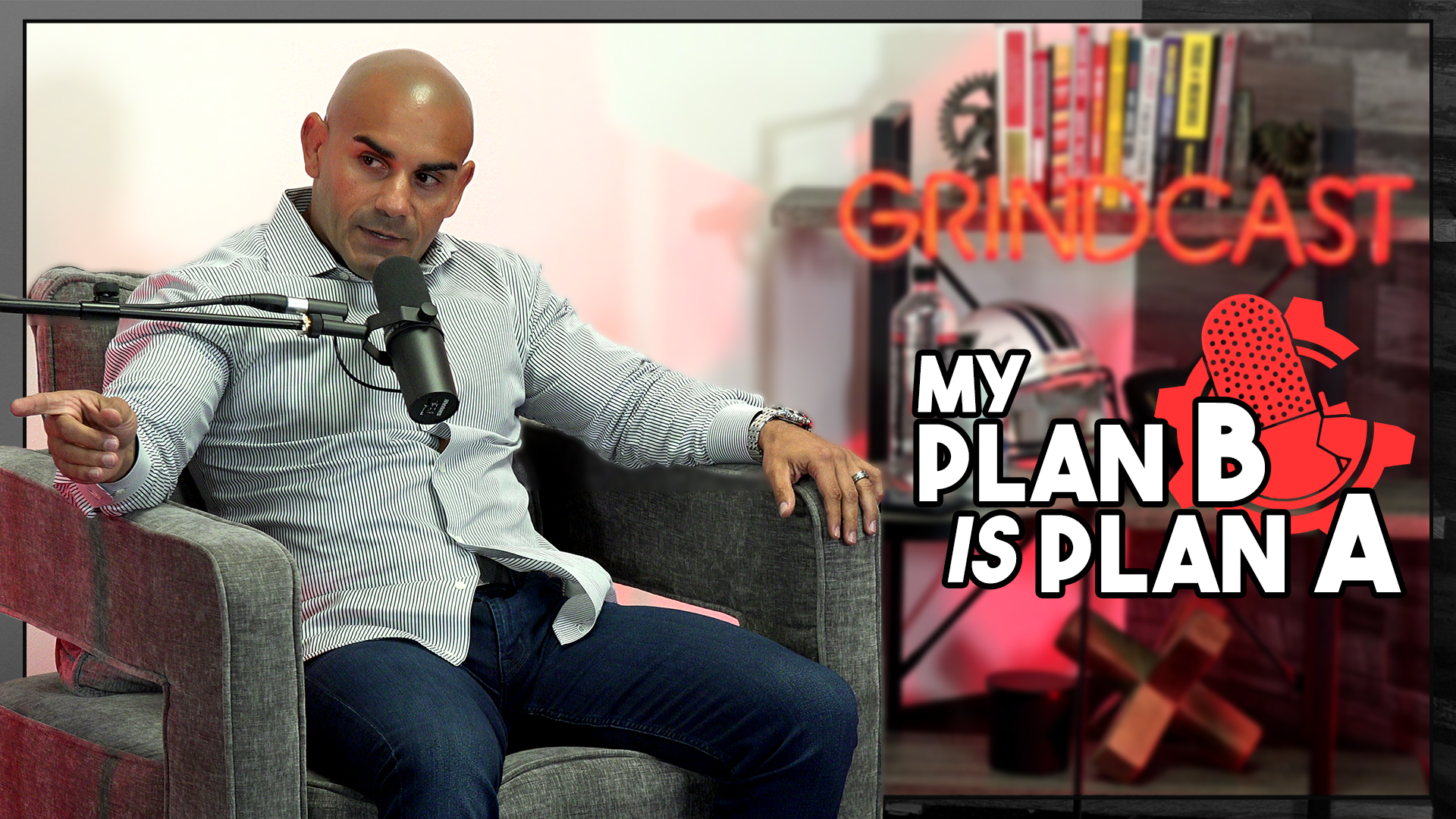
Join me as I sit with the president of AIL David Zophin… Find out how he went from blowing tires to the president!
Transcript
Count money, man.
Money, man.
Stag riches.
I'm trying to told him I'm a beast, but...
What's up gang?
What's up gang?
We're going to the grind cast.
Stop it, there he is.
Here, get ready.
It's a new day.
New day.
What's up gang?
Welcome to another episode of the grind cast.
And we have my friend and president of American Income and National Income Life Insurance Company,
the man to myth the legend, Dave Zoffen, my dude in the house.
What's up, Dave?
Going.
Going great.
We're excited to have you on the grind cast.
Thanks for visiting the bird today.
Looking forward to it.
Exciting.
It's my pleasure to be here.
So we're going to start out.
I want to be efficient with the time.
We wanted to come straight out and ask if we could...
If anybody has any hookups out there with the essential water, I feel like we're giving you
a lot of plugs out here.
I always got the water out.
Hey, you want to be our first sponsor?
Let me know.
We'll roll right into it.
And Dave, let me ask, how did you get started with American Income?
How did you get introduced?
And what was it like for you in the first year?
Did you have a ton of support from friends, family, stuff like that and how did that all
play out?
Yeah, so I was actually a personal recruit.
So my college roommate had been with the company for about five years.
And we actually took turns every four or five months of business each other.
It was my turn to go visit him in Florida.
He was actually living in Orlando working for the Mark Zipper agency back then.
And it was my turn to go visit him.
And we picked him up for the airport.
He had just moved into a new home.
He was living in a 6,000 square-foot house, four car garage.
It was just stuff that you couldn't fake.
Right out of college?
No, it was about six years after school.
It was just stuff that you couldn't fake.
It was real.
Sometimes people fake it till they make it.
This wasn't fake and this was real.
And I was actually doing well at the time in what I was doing.
But I just wasn't really happening it.
Started asking some questions.
Then kind of like the old competitive nature came out and I figured if he could do it,
I could do it too.
Asked a few more questions and decided, you know what?
I'm all in.
I'm going to take the plunge if you want to call it and do it.
I love it.
And so when you first started out, you know, you'll hear about a lot of folks that start
out here with the company and you know, many of them, but not all, but a lot of the people
that start out, you know, maybe they came from a background where you know, they don't
all have a college education or they didn't have a lot of money, you know, growing up or,
you know, both parents and stuff like that.
But I think your situation was a little bit unique in that your parents, you know, did
okay for themselves.
They actually helped you, you know, helped you get through college.
And definitely.
I think I remember here and you say that, you know, maybe your dad maybe was it or what
the appearance was saying, hey, when you're going to start, when you're going to stop selling
insurance and hood.
Right.
So tell us about that, you know, because I think a lot of the, you know, almost everybody
has some of that in the beginning of these types of businesses or our business, you know,
if you will.
And even for myself, you know, wasn't my mom directly, but other, you know, people around
me and friends and family members and similar type deals.
So, you know, what was that like, that transition, you know, what were some of the things that,
you know, that that's understandably, you know, what people would say and how did you overcome
those things?
Yeah.
So, you know, when I came to the company, you know, I had a couple of different unique circumstances
I think to the average person that comes to the company.
As you alluded to, you know, grew up in, you know, nice home.
My parents did well.
They were able to support us, give the school.
When I got out of school, got into the restaurant business for a little bit, did well at that,
but just realized it wasn't the, you know, the right long term solution.
And then I got into another sales career.
And for the first year and a half, it was tough.
You know, I knew it was going into it.
It just took time to get to the point where you developed your client base where you were
actually making money.
And this is a different company.
It was basically selling retail industrial packaging and printing.
Yeah.
And I really struggled for about a year and a half was living off a 400-week draw check.
And when you got rent, utility bills, your car payment, you know, if you want to eat,
there's really no money left over.
And you're really, really, really struggled for about a year and a half.
And then finally had developed my client base where I started making money.
And, you know, for about, that was basically back to 1999.
First nine months of 1999, taken home about 200,000.
You know, it was doing well.
Thought I was doing well.
It wasn't really where I wanted to be, but from where I was the previous couple of years.
I was doing really well.
And then I had that visit to my, you know, my college roommate.
And said, you know what?
This is where I wanted to be.
I just felt like this was going to be home.
This was my calling to come to American income.
And, you know, so you left a company where you were making already six figures.
Yeah, I was going to make probably close to 300,000 back in 1999.
All right.
But I just wasn't happy with it.
I think being happy is really important, having a sense of purpose.
And, you know, all the things while everyone loves American income, I didn't get that from
my previous career.
Yep.
And so I knew I had to get all my stuff.
You know, when I go in, I want to go all in.
Yep.
So I didn't want to wait.
So I just figured, what's the fastest way for me to get from Dallas?
Because I was living in Dallas at the time, to Orlando.
And I called a couple of friends and said, hey, would you be willing to help me move and
drive my car across the country?
And I don't know what wasn't appealing about that.
But it was pretty hard.
So I moved on to my father.
He said, hey, I need a favor.
Yeah, I need you to help me move.
And well, why would you be moving to Orlando?
And I explained to him, I was going to work for American income and he had my college
roommate.
And his quote was, are you having kidding me?
You're going to give up to what you've already accomplished, to selling packaging and go sling
insurance in the hood.
And I said, listen, the day you cut me off, the day I graduated from college, was the
day you eliminated yourself in my choices and decisions.
I didn't ask your commentary to say, can you help me move?
So in the beginning it was tough, but what happened to me is, we've talked about this
in the past.
For me, there was no choice but success because I had struggled when I had been on my own.
And I was broke as broke as possibly be.
In my mind, there was no way I was ever going to go back to those days.
So my transition to the company was pretty simple.
The failure wasn't an option.
But I was smart enough to find the best of the best in the agency and take them out to
lunch and find out what they were doing.
And I knew if this guy was the best of doing that, if I could just do a little bit more than
him, then I'd be better.
That's huge.
I want to stop there for a minute.
Two things point that stick out to me.
And it's so relate to many things, not just our company.
The first one is, and I know how much that you care, respect, value, love, your dad.
I've had the opportunity to meet him before.
So it's not to knock your father, of course.
You wouldn't be where you're at without him.
But I do think that a lot of people struggle.
I had some people close to me telling me very similar things, not my mom, but people
very close to me saying the same things.
And if I would have listened, and if you would have listened to your dad, you wouldn't be
the president of the company, right?
And maybe be doing something successful somewhere else because success leaves clues.
But I know I wouldn't be where I'm at.
And I'm not, my ego isn't out of whack enough to think that a lot of my blessings would
have come if it wasn't for me finding this company.
Just like they say, you can't pick your parents.
You can't pick your company.
A lot of times, in the beginning, you can in a sense.
But once you're in that company, I feel like I got blessed in many ways just by picking
and having the right company.
But I think a lot of kids coming out of high school, college, you have that loyalty to your
parents.
You appreciate them.
You value them.
And you listen to their opinions and they've got to do your whole life.
And then it comes down to a period of where it's time to start making your own decisions.
And I think most people can't do that.
You know, what you were able to do, which is tell your dad, I love your respect.
You appreciate your matter of fact.
I need your help.
Get me across the country.
But just back me up because I'm about to make my own decisions here.
You know, I think what went on in your mind, you know, in that process, because I know that
can't be easy with somebody telling you, why are you leaving a quarter million plus job
to start this and not 100% be behind it or understand it.
And you say, I'm going to do it anyway.
You know, what goes through your mind and how do you, you know, get through that process?
I think there's a lot of things that come to mind.
You know, one, you know, when you don't love what you do, you're right.
You're working for a check and it will limit you on how well you can do because if you're
not truly passionate about what you're doing on a day to day basis, it's really just a job,
no matter how much money you make.
But when you love and you feel calling, you feel like you're really making a difference.
And at the same time, you know, the thing that promote, you know, that really, really
got me excited about American income was the only person who would ever get my way
with myself.
You know, with the other company, I wanted to get into management and there was no management
opportunities.
It was just sales.
I just felt like when I found out that, you know, when I went and visited my friend and
met with my first stage agent, Mark Zeper and found out that, hey, at the end of the day,
everything's going to be up to me.
And the only person who knows every going to get my way would be me.
You know, to me, that made me really excited because I believed in myself.
And I always knew I wasn't the best, but I always knew I was willing to do more than
everyone else.
I was willing to do more with the best person an agency was, no matter whatever the given
task was.
And I just knew if I could do more than everyone else, there was no doubt it would be successful.
Yep.
So the opportunity for advancement, when you move beyond that,
you started talking about, okay, when I first started, I started to take some of the
top producers out to lunch.
You know, I would spend time with the top people.
That sticks out to me.
You know, that's something that I did too.
What went through your mind, I think a lot of people could learn from that.
You know, that we just blow by this part of the segment.
People can lose a lot of value in that.
What was your thought process and how did that go in finding the top people?
Why did you find the top people?
What made you say, let me take them to lunch.
You know, how did that whole process go and what made you think that way?
Yeah, just like we all do today, you know, those weekly recognition, and then there would
be monthly recognition.
And I'd write down all the names of the top producers for the week, you know, when it
was a monthly meeting, the top producer for the month.
And I figured, listen, if there's something they got to be doing right, said you were writing
it down.
I wrote down the key.
So many people, they'll be in these meetings, and they don't pay attention, or they don't
write things down.
You heard JB say, note takers are money makers.
Oh, for sure.
So you were taking notes in the meeting, you're writing it down.
I'm going down names.
And then after the meeting, I'd be like, hey, if you were the top producer, you know, hey,
would you mind if I take out the lunch?
I want to ask a couple questions, kind of new in the business.
Yeah, I want to, you know, maybe learn from what you've, some mistakes you've learned,
and learn from what you're doing right.
And it's funny back then, no one would turn down a free lunch.
It was the best investment you can make.
You can reach to go to a place, you invest like seven or eight bucks and so on as lunch.
It's priceless.
I wouldn't even eat.
All I would sit there and do was at the paper and ask them, I'd have my second questions.
Yeah, the first time I didn't have my second question, and I learned a second time
went to lunch.
I had my 10 to 15 questions.
They were ready to go.
I was firing away questions.
So you were ready to go.
Oh, it's another thing.
I don't have an in fire, you know, domain with the questions already ready to rot.
No matter what business you're out there in right now or what it is that you're doing,
are you identifying the top people that are where you want to be and moving your ego aside
and reaching out to them and asking them questions and becoming prepared?
Yeah, you can't argue with results.
No doubt.
Like the results of the results.
That's the truth.
It's kind of like talk is cheap.
The results tell me to make the real statement at the end of the day.
So if someone's getting consistent results and someone's putting up the results, obviously
they're doing something right.
Yep.
And what I would do is take the best of the best from the people I had a chance to sit
down with and kind of made it my own.
Yeah, and made it work for me.
Yep.
Because everyone's personality is different.
You know, what you might be able to do might really work for you, but my personality and
my fit, but what I could do is take part of what you do.
You know, make it fit for me.
Yep.
That was huge in the beginning.
So started out in Florida.
So I'm Florida.
All right.
So did you move up the ranks and what did that look like for you?
So the company was a lot different back then.
Back then, no one really got promoted for about six to nine months.
You know, just in the fact that it wasn't room.
It was a whole different deal back then.
You know, for the most part, the company was very restricted on growth because of the lack
of resources.
And, you know, as the years went by, we got into, you know, child safe and third party
vendors and alternative leads, which has really kind of changed the whole company where before
in the past, there was restrictions on how big an office or agency could be where now
it's unlimited.
And back then, they were just wait because it was very only so many people could be a
management.
But I remember working out a deal with my MGA and my SGA and basically, I said in my first
full month, if I hit a certain number, they would give me my essay contract.
What I didn't find out is the number I agreed to.
I overshot myself.
No one had ever done 75% of the number I put myself to in a month.
So when I said, hey, if I do this, you can mess a contract.
There were laughing.
It was the funny thing.
Like, well, it's so funny.
Like, I just want to make sure on the same page.
I do 20,000 net ALP in this month.
I want my essay contract.
And they're like, okay, whatever.
Finally, I had to type it out and make them sign it because I just didn't feel comfortable.
What I didn't find out is no one ever wrote one 15,000 a month in the agency.
Yep.
So did you do it?
Well, I did it.
So you did it.
I didn't go for a month.
Yeah, I was supposed to go home for Thanksgiving my first month.
Way back in 1999.
Way back in November of 1999.
Come on.
With inflation and all of that, that's probably like, you know, 40 grand right now.
Yeah, they have a sale.
It's 300.
Yeah, oh yeah.
Yep.
You move up the ranks and you had success at every level.
You had success as an MGA, you know, a lot of success as an MGA, a lot of success as
an SGA and then moved into the, the president role, you know, within the last few years
with the company.
As you, as you've been with this company, you know, and I'll mention you've been with
the company for 20 years.
Maybe 20 years this October.
20 years next month.
Yep.
So congrats on that.
Thank you.
A lot of respect for that.
Married for how long?
Been married for 16 years.
Been married for 16 years to, to Christie.
And you have how many children?
Four.
Four kids, three daughters.
Three daughters and a son.
Three daughters and a son.
So not only, not only making it happen, you know, in business, but making it happen at
home, you know, as a husband and as a father.
So congrats on all of that.
I know none of it is easy, especially when you put it all together.
But what I wanted to pull out is, you know, what have you seen that because I've been with
the company for 14 years started directly out of college.
What have you seen that stands out to you now that is different or better about the company
versus, you know, when you started 20 years ago or when I started, you know, 14 years
ago, it'll be 14 years for me in December.
Man, there's a lot of things.
Why not say compensation?
Yeah, the compensation today has never been more rewarding on what you do.
You know, at all levels.
You know, in the past, you know, when I was in MGA, you know, M.J.
The bonuses were in the 20,000 range.
Yeah, I was kind of putting the pen to the paper a couple months back if I was in M.J.
A month.
Yeah.
My bonuses would be probably 80, 90,000 a month, which is quite droop.
Not.
Yeah.
You know, that not only the compensation, you got better.
incentives, there's no contest back then,
we have amazing contests all the time.
Here you have the parent company now
is so much more involved and gives so much more support.
And when I first started, we were owned by Torchmark,
who's now a globe, but they were kinda in the back scenes.
And they get recently globe just took over the naming rights
to the Texas Rangers stadium.
Yep, and so we're in new stadiums being built,
$1.4 billion stadium opening up next March.
So it's gonna be globe life filled for the next,
I believe 39 years.
Beautiful.
And we just became about two months ago,
the official life insurance company, the Dallas Cowboys.
Saw that.
It's huge.
Saw that.
Yeah, they're just really willing to invest into the brand.
And yeah, I think that's just gonna be the beginning of it.
They're gonna get into a lot more things to get the name out,
which you only only helps us.
That was my biggest fear.
You know, I remember coming out in my first year
and making $187,000 with this company, 22 years old.
You know, raised by a single mom, my grandma,
grandparents pitched in a little bit for me
to help out.
It was a group effort.
You know, I'm having me at 19 years old.
And part of my life,
I was, we were on welfare, stood on welfare lines.
And I look at my first year out of college
and I already did what I thought my dream would be
maybe by the time I'm 60 years old to make six figures.
And I did it at 22 and 23 by the grace of God
and this company and some great mentors.
And when I looked at that, my second year,
this is going on and almost double that in my second year.
And I didn't have a friend in the business.
I didn't have, you know, parent or cousin
or none of that, somebody called my resume Marcus.
And all I remember thinking my second year
was I'm scared to death
that this is all gonna just go away.
You know, is this even real?
You know, is this a real thing?
Is this a real company?
I mean, how is this even possible?
And it wasn't until I met, you know,
the folks from the company and Torchmark
and I saw it myself, did I start to believe like,
shoo, man, the only one that's gonna blow this is you, Simon.
This is actually a real thing.
This is a real company because my thought process
was so small.
I didn't know anybody in the world doing stuff like that.
Everybody around me was blue-collar
and I'm thankful for those relationships in my family
that was, you know, they taught me how to work hard.
They taught me how to respect people.
Talked me to toughness and love
and how to stand up for a lot of my family was in the union.
It would stand up for, you know, for their brothers
and situations like that.
So I'm grateful and thankful,
but I didn't have anybody out there
that was showing me something this big was possible
for someone like me.
So I was scared to death
that this wasn't even a real company.
No, it's fun on a baby with my support system.
I had felt the same way.
Yeah, I kept on saying, is this real?
Like, how could this be real?
Making the kind of money that's being made
to have the advancement that's here
being 100% control of your career?
Yeah, I was just waiting for one day for someone to tell me,
hey, the joke's on you, this isn't real.
Like I remember going back to my friend
who was my college roommate who recruited me
like to tell me the truth, is this real?
Like it just didn't feel real
because to do something that you can kind of fall in love with
and feel really good about.
You know, not only are you helping people,
you know, on the world that really need help,
like you have that opportunity to be,
you know, be there for families
at the most devastating time in their lives
when someone passes away
and know that you're there for people
and then the same side be able to take people
that come into the company like both you and me
where you can bring them in and kind of be there,
tour guide and show them, you know,
hey, this is not only is this real,
but help them develop not only as a person
as a husband or a wife or a significant other
and show them how, listen, if you're willing to do your part,
we're gonna do our part and show you how to get to this point
and the only person ever is gonna get your way
is that good looking person that's seriously back in the mirror.
I mean, to this day, I self-depend to myself sometimes,
it's been 20 years, I'm like, I'm just hoping,
you know, hoping not to wake up and say,
hey, this last 20 years wasn't real
because it just allows you to achieve everything
you'd always dreamed for and much more.
Yeah, I think, you know, part of the things,
you know, you're talking about, you know,
the money and what the company's been able to do,
you know, I think another thing that's impressive
and you could hear about it, but when you really see it,
especially, you know, the company truly here
people say that they give back,
but everywhere that we go, you know,
whether, you know, if it's executive council meetings
or SGA meetings or convention, you know,
we have something that wherever we go,
we make that community a little bit better, you know,
wherever we're at, we're gonna leave a piece of ourselves
there financially and we're gonna contribute to that area
and make it a little bit better.
And you know, that's something that I've grown
to love about this company and respect about the company
is that, you know, they're very, you know,
very giving from the top down, from the corporate company
and global life to American income separately
to the individuals in the company.
And I could tell you, you know, five years ago,
it's almost been about five years, you know,
we started inspiring minds, you know, the youth program
in my hometown, which was a dream of mine.
And when we started that branch of inspire minds,
you know, the one thing is an idea,
but the second thing, anybody that's ever done a nonprofit,
they realize the second thing you need is you need some money.
And so I didn't know where we were gonna do this,
how we were gonna do this, a lot of it,
I was gonna be able to self-fund due to the company,
but the amount of support that I received,
the very first thing that we had was unbelievable.
You know, the fundraiser that we had,
we had the CEO of Torchmark, Fluent, Mark McEnter,
you know, all of you guys flew in,
people were flying in from Florida and all over the country
to start this program with me.
And, you know, I've seen companies out there
where someone will pass away
and the whole company can't even raise, you know,
a thousand dollars or a couple thousand dollars
to help, you know, someone in a time of need
and I got people flying in all over the company,
all over the country to help something like this.
Even recently, you know, we had someone in the company
that developed cancer and he has children
and he's a husband and a father
and we came together as a group
and none of us had any financial vesting
in his life for his career, you know,
never made a dollar off,
I'm never worked for us, none of that,
but just to collectively come together,
like a team, like a brotherhood, like a sisterhood,
like a family and we were able to raise,
think it was about 30 grand, $30,000 for Chris recently.
And that's what I respect about the heart in the lifeblood
of the company.
Yeah, it's something that totally sets us apart
versus the other company, really legitimately a family.
I mean, you said it, really legitimately a family.
You know, we take care of our own, we look out for our own,
we want to make sure whether someone has a
best financial interest in someone or not
you're part of the family,
we want to make sure that everyone gets taken care of.
You know, and you're kind of talked about,
you know, the program, the make tomorrow better program,
you know, global life is just so generous.
You know, and the money that they give to council members
every year, and that's about to go up,
that's going to go up 50% for next year.
Wow.
So each council member's going to be 50% more
to donate to charities local to them.
Love it.
You know, they allow Steve and I to have a fund
where we can give to, you know, SGA's, you know,
some of the things that they're passionate about
in their territories, you know, over and above
the council donations and, you know,
it's just amazing when people come together
and what they really do.
You know, something that stands out to me,
you were saying about, you know, you,
when you started out, you found your purpose,
you know, and love, you know, for what you were doing
in the company, I think that message can be,
you know, we could talk about that elaborate on that more
because I felt, I felt similar,
but there was things in the process that I didn't like.
There was things in the process that I didn't love,
but I still felt the love for this company
and for the game.
I felt the love for the game.
I felt the purpose, I felt the calling,
I felt all those things, but there was things in that process
that I remember not liking that you needed
to fight through and get to.
So, you know, why don't you talk about that?
You know, how did you, you know,
was there anything in the process that you didn't like
that you, but you, how do you say,
man, I found a purpose and I, and I loved it,
but there was probably some things in there
that you didn't love, how do you, you know, articulate that?
Yeah, I mean, definitely, I think everyone comes in
in this parts of the process that you just rather
not do than do.
But at the end of the day, it's easy to get overcome those.
If you have really clear and precise goals,
and you understand exactly what you want,
not only from American income or national income life,
but what you want from your life,
what you really learned real quick,
that's just part of the process and it's just part
of the grind and you learn to love to do those things
because you understand that the quick you learn
to love the things that you don't like to do
is the quicker you're gonna get on the path
and you're getting your goals.
So what happens is, you know, there was certain things,
I don't know if you want me to get into the specifics.
You know, back when I started,
we called resumes at seven o'clock in the morning.
It wasn't really crazy about phone resumes.
Yep, but I just knew if I wanted to build my team
other than, you know, personally recruiting my team,
which I did a lot of and found that that was a much better way
to build my team to get on the phone and call strangers.
But you still have to do both, you know, we did it.
You know, there was times where,
if you didn't have a good schedule,
like I didn't like getting on the phone at seven
in the morning, you know, and calling some,
you know, more appointments before you got on the phone
call resumes.
Yeah, but you got to do it.
You know, there was times where, you know,
we're set, you know, one of the huge changes
of the company now versus when I started,
you know, the leads were far and few between
when I first started.
So when I first started, one day you'd be three hours south,
the next day, be two and a half hours north,
then it might be three hours west.
And, you know, to me, like I would never,
I never, ever cut a day short.
Like to me, like if there was light on,
I was not gonna, it's hard for me to understand.
I know, I just couldn't do it.
Like if I was gonna go drive three and a half hours
at three hours, there was no way I was not coming home
with at least $2,000 of LPL.
And that was back when the average sale was 300.
So like, you know, I loved doing door knocks
because I knew if you got in a door knock,
the clothes was like 90%.
But I didn't love doing door knocks
like at 9.25 at night because I knew if I got in,
back when I started, it was a two hour process in the home,
you know, with that 19 page script.
So I knew you're out by 11.30 and you had a two
and a half three hour ride home.
I wasn't in love with getting home at two
at 33 o'clock in the morning knowing
that I had to get up at six.
How could you say you loved it?
I loved it because every time I did it got me one step closer
to what the reason why I really came up.
That's what I think people need to get.
I mean, it's just temporary.
No matter what your business is,
I think this is what people need to get.
The grind is temporary.
You know, and a lot of people have hard time
convincing themselves like you can sell yourself
on anything you want.
That's what I learned.
I can sell myself that the grind's not that big of a deal
or I can sit there and stay in bed all day and say,
yeah, it's just not worth it and that it out.
What everyone needs to understand
is no matter what you're doing, the grind is always worth it.
You know, if the reward was as high as it is
and there wasn't a price to pay,
everybody would be doing it.
It wouldn't be doing it and it'd be too good to be true.
That's right.
And what I can promise you is I'm a living testimony,
you're a living testimony,
that there's nothing too good to be true about this.
All you gotta be willing to do is just pay the price
and I don't think the price is that hard.
You know, all of it matters.
Once you get going and doing it,
then what I found is really not that big of a deal.
Like the mental, the emotional role coaster saying,
yeah, I want to do it or hey, I'm doing this
or I don't want to do that.
A lot more taxing than actually doing it.
And once you do it, by the time it's over before you even know it
and you're moving on to that next step in your career.
No doubt.
So now that you've been with the company,
you've made a couple moves.
How many times have you moved for this company?
If it's gotta be six.
11.
11 times.
Okay.
11 times.
So like a coach.
And so if you move 11 times.
All 100% on me.
No doubt.
High choice.
And now you travel as the president of the company,
you gotta go bounce around to some of the other offices.
And stuff like that.
In your travels and in your 20 year career and stuff like that.
What sticks out to you about people that are successful
and get the job done versus people that don't.
You know, is there anything that stands out and said,
man, you know, it seems like these qualities
or these things stand out about the people that make it
and the people that don't make it.
I mean, some of it might be just kind of talking about
we talked a little bit earlier, but it's really clear
that they have a real true sense of purpose
and a true sense of why.
Yeah, because the why we talked about this couple of minutes
and go what you want out of life becomes the justification
of doing those things that you don't want to do.
You know, some people call the things that they hate to do.
But it becomes a justification of doing them.
I understand that's the only difference
between where they are and where they want to be.
So I would say the successful people have a true sense of why.
They have a true sense of purpose.
They figured out exactly what they want it from their lives.
And when you have that, you know,
it's really just a matter of time to get there.
You know, the other thing I found out is that the real success
for people do more than everyone else.
You know, it kind of goes back in the beginning.
You know, it's kind of been like the 20 year case
starting of when I first started with the company.
Yeah, I figured out who's the best at this
and who's the best at that.
And I just kind of figured out what they did.
And I didn't want to reinvent the book
what I just did was more than what they were doing.
So I knew if I did more than what they were doing,
I would be able to get more than what they were getting.
And it kind of worked, you know, for my whole entire career.
Is that, you know, if you're just willing to put in the time,
you make the sacrifice, you put in the effort,
it's all gonna work out.
Did we win every day?
No.
We said no line, do we win every day?
No.
But if you make the right choices
and you make the right decisions
and you hold yourself accountable,
that's another thing.
The people that do really well
are really good at making choices and decisions.
Like there aren't any stupid mistakes.
The only stupid mistake is making the same bad decision
over and over again.
It's kind of like an insanity
expecting a different result.
But if you learn from your mistakes,
you know, failures are just temporary setbacks.
So learning lessons of what you need to do
to make the right choices and decisions.
But if you can kind of put that all together
and hold yourself accountable and win every day,
you know, when you can get in the mindset of winning every day,
then you win every week, then you win every month,
then you're gonna have success.
But you know, people that kind of draw lines in the sand,
that'd be another thing.
You know, the winners in this company don't,
like I've aligned in the sand,
they don't say, hey, I'm willing to do this,
but I'm not willing to do that.
You gotta be willing to do it all.
Never take.
Can't take.
People ask me, what does it take?
Whatever it takes.
Whatever it takes.
I said.
The thing is, is that anyone who's willing to do
the things we're gonna talk about, they won't regret it.
I'm a firm believer.
The only thing you ever regret is not doing it.
Amen.
Amen to that.
Amen to that.
Where do you see this company 10 years from today?
You know, I mean, what does that look like, you know,
in your mind?
Where do you see this company 10 years from today?
Where do you see our agency 10 years from today?
That's a great question.
You know, if we're not doing well over a billion dollars
and all of us started with myself,
we collectively must out on a whole.
I see it's been over a billion dollars,
you know, a new sales company.
I could see us having 35,000 to 40,000 agents
that managers work with this company.
You know, I see us having five times as many offices
as we have today, you know, at least five times
as many managers.
You know, the agency in our parts
is really gonna depend on the people.
So I'm not really plugging in an agency on a part,
but I just think the infrastructure's there.
You know, the time is now, you know, we've proven,
we've learned, you know, listen,
in this economy today,
we're unemployment's at record lows.
Yeah, we're still growing our company
in our agent count and our management count
like anyone else in the industry.
At its...
feel like everything's primed for the spot. We're just, you know, looking for people that want to change their lives.
It's ironic you're a, you're a Patriots fan. And so what things, what things stick out to you about the
multiple time world champion, New England Patriots? What, what things stick out to you about the
Patriots that you think coincide or mirror what it takes to be successful in this business or
outside of this business? What do you see from Tom Brady that makes him a star that would mirror, you know,
these, these things in our business? Yeah, I mean, if you want to start with him, it was a student of the game.
Like, you can never stop being a student of this game or any game you want to win. In the second, you
stop learning or subjecting yourselves to developing and investing in yourself is the day you start
dying. I'm a true believer of that. So to this day, you know, I try to start every day, listen to books on
tape, you know, I want to make sure I practice whatever is I preach, but you can tell he's always
getting better. You're so in the analysis and the Patriots came said, Tom Brady's still getting
better at the age of 42. It's crazy. That's got to be intentional. It's, it's, it's intentional.
You know, a lot of it's, you know, everything rises and falls on leadership. You know, there's no,
there's no question or there's no mystery about it. You know, Balachek's an amazing leader. You know,
in, in this business, if you really want to grow, you've got to be a great leader. You've got to be
investing yourself as a leader and only in sales. But you know, like Brady has the quarterback if you
want to quit that to sales, but you got to invest in yourself as leadership. You can't be stagnant. He's
always trying to, you know, learn and develop and stay at a head. You know, he's proactive, you know,
in his coaching style. He's proactive in what everyone else is doing in the league and so on here,
it has to be really proactive too. I'm a firm believer. If you're always reacting, you always
a step into ahead of behind him. Sorry, and you can never get ahead. You know, the other part is they've
proven that systems and structure works, which is like American income. You know, you need really good
systems and structure. You know, they are able to take players that people like kind of cut,
whether they're able to take players that don't get drafted every year. They have at least someone
stand out making massive contributions of an undrafted free agent. You know, they have, they're
able to take players, they get cut, you know, whether it's, you know, before the 53-minute
moroster gets out or they're getting people that get cut because, you know, the casualties of
salary caps and or they're able to get people kind of towards the end, the twilight of their career,
where one team wants to give up on them and they're able to put them in and plug them in the system.
And able to win with that. But they also win with people out of versatile. And to be really successful
in this company, you got to be versatile. You can't just be a one trick pony. You got to be, you
know, if you want to be in leadership, you got to be really good at all the core parts of leadership,
whether it's, you know, leading other people, whether it's recruiting, whether it's training,
you have to be good at all that. And that's, I think there's so many similarities between
what the Patriots do and a lot of people don't like to hear about that. But I mean, if you're not
going to study them, you kind of miss them out on the whole really great history lesson. No doubt.
No doubt. I would, you know, I would couple that and said, do you remember when one of the most,
one of the last few Super Bowls they won. I can't remember which one, but I remember seeing a parade.
And, and, and one of those interviews and, you know, everybody, a couple people get to speak and
Bellachat got up there and he had a chance to speak and he chanted three words. No days off.
No days off. No days off. So this man, you know, I don't know how old he is, you know, but he got to be
60s. Yeah, I was going to see seven. Okay. So he's 6, 67. And I think part of the reason why he's great
is because he came through Youngstown. He came through. It was, it was in Struthers outside of
Youngstown as, as a young, as a young lad. But he was chanting no days off. You would think 60 some
years old, multiple times Super Bowl winner. You got the best quarter back in my opinion, the best
quarterback to ever play the game. Multiple, you know, things that he's accomplished. First ballot
hall of famer. And the first thing on his, on his mind is no days off. No days off. Going back to
the, well, we got to go back to the grind. And I think those are things when you watch Brady
in the off season, getting with his receivers and going off to different places where they'll bond
and I just think they beat people in the mindset and they beat people with work ethic. And I think
people underestimate what it takes to be great. I think if you want to be great, you need to be
obsessed and people shy away from that. You know, you show me somebody that's great. Show me an
Olympic champion. Show me a champion at anything. And I'm going to show you somebody that is obsessed.
And a lot of the world will tell you that you're wrong if you're obsessed because weak people
have been or other people they're listening to versus finding solutions to what it is that they
want to be great at. No one says that you can't be great at all. You know, you all things that
you can be great in business and you can be great as a parent and you can be great as a husband.
You know, these are just specifically to me, things that I'm trying to pursue greatness at. I want
to be great and I'm obsessed with our business. I think about it every day. I do it every day.
Regardless of where I'm at, I'm getting better. I'm in books, leadership books. I don't think I'm
good enough currently right now to do the things that I want to do with this company. Even if people
can point to numbers that, you know, haven't been done much before. I'm obsessed with trying to be
a great dad, you know, every every week. I'm looking at my schedule and making sure that I got time
in, you know, with the kids and I'm putting time into them. I want to be great as a husband.
And I think that people think that other people have told them that you can't be obsessed in this
or that and still win in those areas. And so they start to beat themselves mentally. The mind is
a powerful, powerful, powerful tool. And whatever you start to think up in your mind starts to
become your reality and is what happens with your life and in your body. And so if you start to
write yourself off and say, man, I sure would love to pursue this dream, but I want to be a good dad.
Or I sure would love to pursue this dream, but I got to be, you know, I'd like to be a good wife
or I'd like to be a good mom. You start to beat yourself with the thoughts that you're giving
yourself that are false and not true. So I'd like to just encourage people out there. I'm telling you
one thing that you, me, nobody else can help. If you plan to do anything great, you have to get
obsessed and stay obsessed. We just said period. You got a plan. You can be a great in the business.
You can be a great significant other. You can't let it go. You can be a great parent. But if you don't
have a plan for it, then you're not going to do it. You know, and you said something else kind of
trigger to thought a lot of times people use things in their lives as the excuse of why they can't do it.
But it should be the opposite. They should want to figure out a way to do it because of that.
I'm sorry. I just can't do it because I got to do this for my kids. No, you should want to do this
for your kids to be able to provide a better lifestyle for your kids and provide a better lifestyle
for your family. You know, a lot of this comes down to, you know, it's kind of like, I know it probably
drives a lot of people crazy. I was happy. It's my team. But, you know, I respect the shit out of
them. And if you know what, and if it wasn't my team, I love watching it and I respect the shit.
I'm a Cleveland Browns fan. But I respect that organization in Bill and Tom and I just respect it
so much because I'm a student of success. And I have such admiration. I know what it takes to
play at that level. But what I respect and appreciate the most is I know what it takes to stay at that
level. It's hard. You are to stay at the top. Then it's to get to the top. Oh my God. But I was going to
say, you know, if I didn't, even if I didn't grow up one town over from where the stadium is, you know,
I'm a legit grow up one town over. You know, I'd be a student of them as well. And what they've shown
is you don't have to be the best. You don't have to be the strongest. You don't have to be the fastest.
You don't have to be the tallest. But what you got to do, and I believe it's quintessential to
having success here too. You've got to have it in here and you've got to have it up here. Like this
is a lot more important than this. You need to have that mindset. More important and skill point.
Because I can convince myself of anything I want to do and I convince myself of anything I don't want
to do or don't need to do. And at the end of the day, you know, it's just people just use the things
like we just talked about as a reason why they can't do it. Instead of using the reason why they
need to do it. And if everyone just sat there and became a student and applied themselves and just
didn't quit and to just figure out, you know, why they really want to have the things they want to do,
it'll give you the perseverance to fight through the tough times. Talk about not quitting. You know,
maybe we'll start to wrap it up on this. Regardless of the industry. You know, I keep saying that because
I want this to add value to to anybody in any any feel. But I think the I've seen so many people
that should be great in in this business or in life for business in general and and they just
they quit too easily. They give up too too easily. You know, when I look at the history of, you know,
Rick Altag always reminds me, man, it you know, it took me 20 years to get to a million dollars or
something he said, you know, in a in a in a in a year. So you know, 20 years to get to a million a year,
you know, we've put up million dollar weeks and he seems, you know, so far, you know, out there for me and
for others. People forget that that happened. And I look at Zach, you know, Zach Hart, he's had a
successful career here. You know, I think he'll tell you in his first six months, you know, it was a
monthly bonus back then. I think he only bonus one time or something in his first six months, you know,
with with the company early eight, eight, 19, 20 years old. Where would he be? You know, in his family
being if he quit, if he would have quit, you know, where would Altag be in that this company be if he
would have quit. And so, you know, much like, you know, I was thinking about what your, my dad told me,
you know, when you sell nights of weekends and hood, uh, shoe dog, uh, a book that I've, I like by
Phil Knight, the founder of Nike, you know, his dad told him, when are you going to stop selling
shoes out of the trunk of of your car? Now the company's worth over 50, 50 billion dollars. What,
what advice would you give to an agent here in their first six months as, you know, they're trying
to get to where they want to be? And I'm not talking about the ones that just, you know, no matter what,
there's just a certain amount of people that just don't got it. You know what I mean? If there's
a hundred people, there's going to be 10, 20 people, they just don't got it. But I think more people
have it than don't have it that I see. But they, they, they, they quit too soon. So what would you say
to that, you know, agent in their first six months, you know, that to encourage them or advice
that you would give them seeing the people that have made it and seeing where everybody came from,
that would maybe help them in a, in a point where maybe they feel like they're breaking down. Because
I think there's, there's points where there's these turning points in, in careers and lives that
really make a difference, you know, the, the V in the road, if you will, you know, adversity
causes some people to break and other people to break records, you know what I mean, those
breaking points, what advice would you give? I'll share what I told myself, you know, when I first
started, I told myself, I'm going to give this everything I got and not even going to think about
if I made the right choice or not for a year and a half. That's the deal I made. And remember,
the deal I made myself is I'm going to give us all I got for a year and a half and add a year and
a half, then I'll step back and I'll take it to reevaluate and see if I made the right choice
decision. And I think for a brand new agent, you know, I think it's easier, you know, they could say,
hey, they're watching this day, if they're a brand new agent or someone doing their craft or trade,
even if it wasn't here. And they'll probably say it's bless you. I think they probably would say,
it's easy for you to say, because you've achieved what you've achieved, like, you know, amazing
success with the company. And I know you're not happy about it and you haven't even scratched the
surface. And I think it's probably easy for them to say, hey, you know, you're done what you've done,
you've been at the company 20 years as well and now you're the president. But what I can tell you
is that if you make a deal and a commitment with yourself and say, hey, I'm going to give this
at least a year. I don't even think six months is enough time. If the people would make a pleasure
with themselves and say, hey, I am going to give this a year of everything I got and not even one
time will I either contemplate the thought of quitting. I think so many more people would make it.
I agree. And that's the deal I made myself. I just said, there's no talking about quit. No matter how
late it was when I got home, no matter how hard it was, you know, I could tell stories for days,
no matter how many times I got lost or had this jinx Cherokee, you know, I had a brand new
grand Cherokee limited freaking thing was jinx. The rear passenger tire blew out 11 times. It was
crazy. And when I'm on the highway and it's 95 degrees out and you know, back then we used to wear
a certain tie in the field, you know, not like today. And you're sitting there like certain tie.
God, I can't believe I got changed my tire because, you know, roadside assistance took like three
hours to get there. And I couldn't miss an appointment. You get out there and it's like, you
know what, you can take off all your, you can take off your shirt because you're going to sweat through
it. Then you got to go find a hotel lobby to go get into getting the bathroom and you know, clean off.
You got to do what you got to do. But not once I'd ever say, gosh, I guess someone was not wanting to
make it. I just felt like there's no matter what, I'm never going to have that discussion with myself.
And if you can make that commitment a lot easier, you never find yourself even having the conversation,
hey, what did I make the right choice? Because then undoubtedly you did make the right choice.
Yeah. So what's your daughter's name that likes the Browns?
Taylor. Taylor, I just want to shout you out and say, what your husband is getting really lucky.
When whoever ends up finding you is finding an amazing person and a loyal woman because you grow up
in it. I know you're rufre the Patriots too. But when you grow up in a house full of patch fans
and you somehow end up with the Browns, that tells me you got a heart of gold and you're super,
super loyal and you have great taste, my girl. Okay, stick, stick with it. One day is going to be our
day. Maybe another 20 years, but it's going to be our day someday. And Dave, I just tell everybody
to listeners, you're going to be hard pressed to find somebody that's a better person and a better man.
Then I've seen in Dave and knowing you for as long as I've known you. And makes me feel comfortable
and sleep well at night about knowing that the company is in your hands and Steve's hands,
two great people and great men. And your work ethic is impeccable. There's not many people. I think
you're working harder. And it's just who you are. Your work ethic is as hard as some of our
field trainers. A agents, SAs, GAs, you're just constantly on the ground. And that's something
that I respect about you a lot, not just your character and integrity and the person that you are.
But just that work ethic and competitive nature and drive that you got, man, I really admire
that about you. And I appreciate you making the trip to to
It's a Pittsburgh to come see you.
So I appreciate that too.
And I know, Steven, I feel the exact same way about you.
You know, I sleep a little bit better at night knowing
that we have you on our team and you as an agent
so in there with your goals and your vision.
You know, it just makes a little bit more settling for us
to know that, hey, we're going to take this company
with Billion.
I wish we had a few more of you.
But not to take anything away from anyone else,
but I know we sleep a better at night knowing that,
you know, you're an SGA agency owner with the company
and with your goals and visions is no doubt
that you're going to achieve everything you want to more.
And just the true testament to who you are too.
I got the best team that I've ever had.
God bless me right now with a field of just animals
and superstars.
And so God willing, the best is the best is yet to come.
Yeah, your team's on fire.
Yeah, people.
Yep, staying that way too.
So Dave, thanks for joining us.
And thanks to everybody for tuning in.
If you found any value in this, please share it with others
so we can impact our piece of the world.
Thanks for tuning in for another episode of The Grandcast.
Get ready.
It's a new day.
We have money, man.
Money, man.
That gritch is fine.
Trying to talk.
Trying to talk to my piece, but.