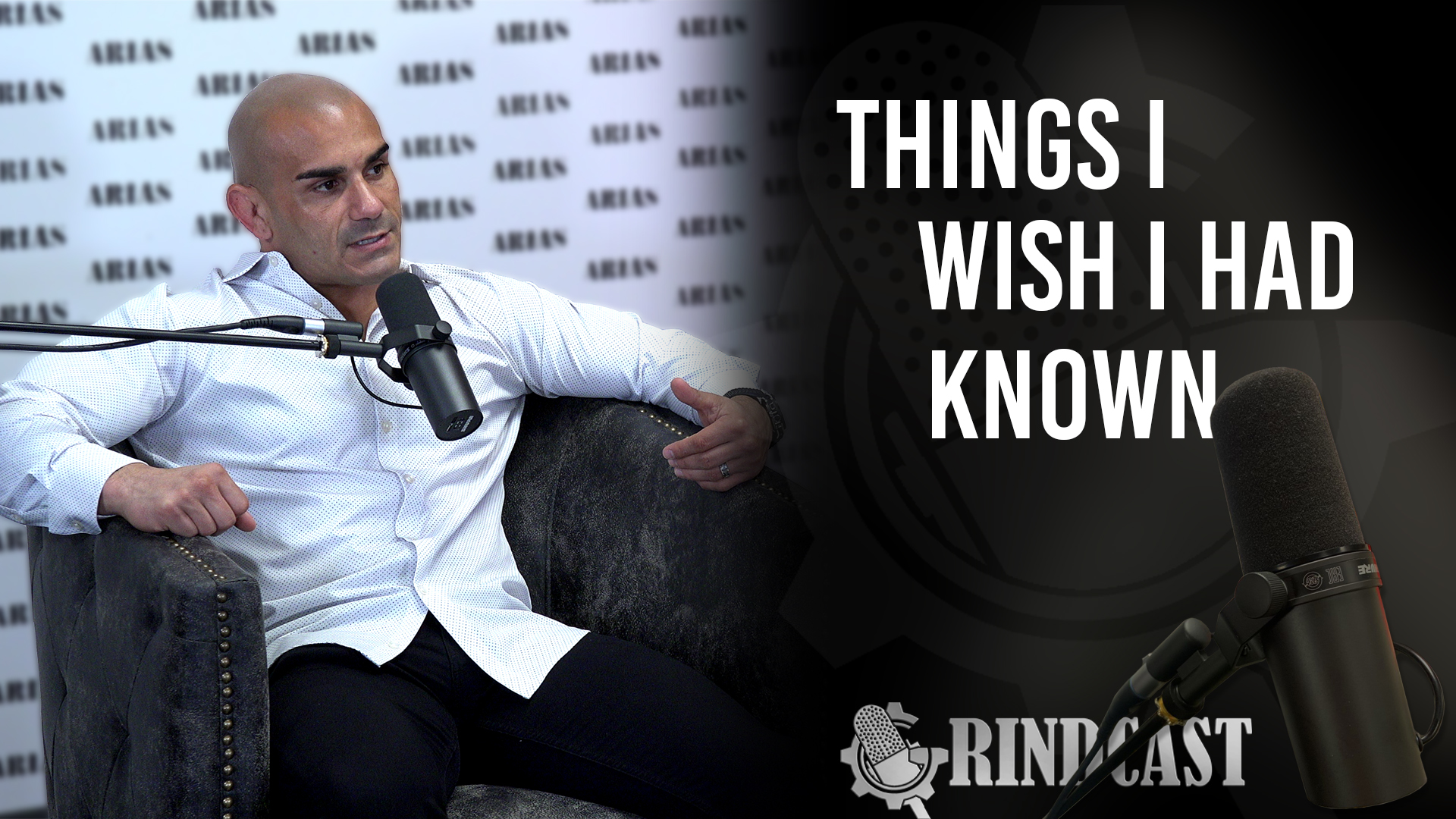
Solo /Business / Jan 29, 2021 · 31 min
Alyssa Interviews Justin
Show notes
Transcript
Count money, man.
Money that grits is fine.
Trying told, trying told, I'm on the beast, but...
What's up, gang?
Welcome to the Cronkast.
Simon Arias here.
Get ready to do the new day.
New day.
Hey, everyone.
Welcome to a new episode of The Grindcast, a little Weston here.
I'm here with Justin Adams.
We're sitting in.
Sitting in this week for Simon and Perm.
You know, as we're filming this, Simon recently had his third baby, baby Enzo.
Yes.
So congratulations to Simon and Natalie.
Congrats.
Congrats.
Number three.
Now you're in my category.
Three is a game changer.
So good luck.
But I know you don't need it.
But three is definitely a game changer.
Congrats.
So for those of you who don't know me, I'm part of Arias's media team.
So it's my first time on The Grindcast.
Justin is not new to The Grindcast, however.
First time.
I know.
Rookie, I like it.
Rookie, a little nervous.
Hoping to do Simon Proud, but I think we're going to have fun and kill it.
Definitely.
You're awesome.
You're awesome.
Thank you.
Thank you.
Yeah.
So what we're going to do is kind of talk to you Justin about, you know, your area's journey
really because I think something super interesting about you is that not only are you present
of the company, someone top leadership, but you're one of the few people here who actually
grew up with Simon.
Yes.
Oh, yeah.
Oh, yeah.
You know, I got to meet Simon when I was 12 years old.
And I think God put us together to know each other.
My last name is Adams, his is Arias.
So we had to sit next to each other at every class.
Oh, really?
I was in front.
He was behind me.
And he was a jokester at that time.
And he wasn't the person that he is now.
Everybody loves.
I mean, people loved him back then also, but for different reasons.
And he was a jokester.
He used to color in.
I have a scar on the back of my head.
He used to color that in when he wasn't paying attention to class.
And also one thing that people don't know is, he used to copy off me.
Everything that he did.
And now I copy off him, which is the roles of reverse now because he's had so much success
I copy off him.
It's funny, and it's awesome to see him grow in life because I've known him since I was
12 years old.
And now being a professional with him, it's awesome to see.
What really can happen when you put your mind to it.
And you really want something very as bad as Simon does.
Yeah.
And I know a huge part of our business is that business athlete mentality.
I know that the two of you played football together.
So talk to me a little bit about that.
And kind of the traits from sports that you now see and the two of you reflected into
business.
Oh, yeah.
I mean, sports is a big thing.
I think sports got us together first off because that's when I met him.
On the football field before we even, you know, we're in school.
And you know, when you look at sports and that business athlete, you know, we've just
really put that back into the business.
And I think one of the biggest traits in Simon was always, you know, a vocal leader.
He was always that person that, you know, said what he was going to do and then he backed
it up.
I was always that non vocal leader where I just did things, you know, and wanted the team
to see how hard I was working.
So I was never really a vocal leader.
I think that's why we really do well together because we know our place.
He was the more raw, raw guy, but I was the guy that just got the job done.
If the coach said, you know, do this, I was there.
You know, I was somebody that the coach can always depend on.
And you know, as a leader and as a business athlete, you know, when your numbers call it upon,
you have to perform.
So I think that's one of the biggest things about business athletes that, you know, we
like people that can perform at a high level.
But also we like people that have discipline.
You know, being an athlete, you have to have a ton of discipline because you're going
to school, you know, which, which, which a lot of times people are just going to school
so they can play football.
But you have to have the discipline in order to have the grades in order to even play
any sport.
So I think it teaches people a lot of discipline.
And I think once you put that discipline into an arena like American income, something
professional, you can really, really do things that are great.
So I think discipline is huge thing.
I think another thing sports also allows people to do is understand that you're not always
going to win.
You know, you're going to lose at some point of time, even though you know, our state championship
team, when we were, we were seniors, we went 14 and one.
And I think if we wouldn't have got that lost in the middle of the season, which everybody
wanted to win, we might not have won the state championship.
So we learned, you know, that you're not always going to win.
We learned the value of teamwork as well because, you know, it's a team sport football.
It's baseball as a team sport, basketball as a team sport.
There's not too many sports out there that are just individualized sports.
Even if you look at something like golf, I feel like you have a caddy.
I feel like you have a coach just helping you out.
Yeah, you might be doing it on your own when you're golfing.
But behind the scenes, there's a lot that goes into it.
So I think you learned teamwork from Rotterey, but at the end of the day, discipline is a
huge, huge factor in our business.
And then you can't forget about being competitive.
You know, competitiveness is huge in our business.
And you get that from sports because, you know, why play the game?
Why do they even have score?
You know, if they didn't have score, if it didn't matter who won, then they wouldn't keep
score.
And that's the reason why they keep score in sports because you got to be competitive.
And also a reason why we keep, you know, the scoreboard in American income is because
we want people to be competitive as well.
So I think that, you know, has really helped us in the business.
That's why we like a lot of athletes because they're able to juggle a lot of different
things, be disciplined, be competitive, but also have that team atmosphere as well.
Yeah, definitely.
And something I've noticed with leaders is a lot of them, things are learned, but there's
also, in most cases, a lot of talent and a lot of natural ability.
So as someone who's known Simon for a while, what do you think are some of those traits
that are, you know, from the start talent that you've seen since you were little, but
also kind of being, you know, someone in the business with him for so long.
What have you also seen him grow into as a businessman?
Yeah, I think, you know, talent's huge.
You know, without talent, you can't really do too much.
And I think some of the talent things that he really had is, you know, growing up, he
had an act to bring people together.
You know, he really had an act to, you know, if he saw people that were other, that were
talented also, he can bring them together.
He also had a had a had some had a niche that he could, if somebody wasn't doing well,
he could talk to them and get them to understand their role in the, in the economy, their role
inside sports, their role in size of this agency.
And I think he really, really, really had that big.
He had the, the tiger as well.
A lot of people, you know, like to win, but he hated to lose.
And he would go at all costs to win.
As long as it was ethically, as long as it was morally, there was instances where he
wasn't starting and football and he knew that he should start.
And he wasn't afraid to go up to the coach and just say, hey, give me a shot.
You know, he wasn't afraid to do some of the dirty work like special teams in order to
get a shot as well, because he just wanted to actually be on the field.
He actually wanted to contribute.
And if he wasn't contributing, he would find a way to contribute.
Either that's talking to the coach, either that's, you know, showing up first, you know,
in the rate room, showing up first in practice.
So I think he always had that, that talent piece where, where he knew that if he worked very
hard, he always had a work ethic that was like no other.
So he knew if he could work hard, he would get rewards at the end of the day, something
that I've been able to see him grow into an American income is his faith.
He hasn't always had the faith that he has now.
Shout out to Jim Sirace, shout out to Marcus Smith.
These were people that he met early on in his career.
And I thank those guys so much because they were able to grow his faith.
I was always a person that had, you know, good faith from losing my mother.
I'm at a very young age and I was 12 years old.
So I always had that faith component, but Simon didn't always have that.
And a lot of people see him now and they see that component of him and they're like, wow,
it's a complete night and day.
You know, because he was off sometimes doing the wrong things.
But I always look at people, if you're doing the right thing or the wrong thing, always
think about the influence that you make.
You know, and if we can just turn that influence, rather if it is negative, we can just turn
it positive.
I know good things are going to happen.
So I've seen him grow within that faith component very much.
You know, now he helps out people.
You know, that are in their walk with God.
I would have never thought that growing up.
But I saw that grow a lot, you know, in this business.
Another thing that I saw, you know, grow a lot in this business is when he had a child.
You know, his first child, Sienna, I could pre, I saw him now be just calm down a little
bit.
He was always the raw, raw, raw guy.
You can't do this.
You can't do that.
But I saw him being able to, it's kind of hard to explain.
But I saw like like a different side in him.
You know, now more loving side.
He was able to, you know, relate to a lot more people that had children by being a dad.
He was able to see what that other person is going through.
Rather if they had a child or maybe if they were just going through something because
I feel like it calmed him down a little bit and made him at ease just because of having
a daughter is a totally different, you know, mind schedule.
You know, I've got three of them.
So I've had, you know, three times, you know, to be able to do this.
And I know we just had a boy, but having that daughter and just, and just her loving on
you, you know, her, you know, you being her guardian.
I think that not softened him up a little bit, but made him calm down as a, as a, as a human
being and understand, you know, I think what life is all about.
And I love that version of him.
And I think it's able to help a lot more people.
But the faith component was, was for sure, you know, something that I've been able to
see him grow within American income, shout out again to, to Marcus and Jim.
You know, I want to kind of shift gears to your areas, agencies, journey because, you
know, I know that it wasn't your initial out of college experience.
No.
Tell me about, you know, your career here and how you kind of grown into the position you
have now.
Yeah.
I mean, I never wanted to come to American income.
My dad never wanted me to come to American income.
People just see me now and they're like, you wanted to come here?
Simon was here.
He hooked you up.
No, I had no intention at all of coming to American income.
I was the person that was Simon got the job, you know, people were calling me up because
we had an influence at Mercyhurst.
And they said he's going to make 100,000.
Is he really going to do this?
I'm like, I have no idea.
I'm making 30,000 as a stock broker, Series 7, 66, 31, all these licenses and these designations.
I'm making 30,000.
You know, the next year I made about 75,000 in my third year, I made 150, but I was always
going to just manage Simon's money.
You know, I wanted to be a hedge fund guy where they made a lot of money, being able to,
and it's not really all about the money.
But when you're young, understand, 22 years old right out of school, no kids, no family,
that's really all that you think about.
You know, you want to make a name for yourself.
And I said, I'm just going to invest your money which I started doing and invest other
people's money with you.
And I'm never going to come though.
And I made a statement to him as we were driving up to Chicago to see one of our other roommates
who I think we're going to have on the podcast here soon.
Jason Staley, shout out to Jason.
His brother just got the head coaching job for the LA Rams.
Shout out to Brandon Staley, great job, man phenomenal job.
And we were going to visit him and Jeff Deel was in the car and I said, you know what?
I know your script because when I used to go visit Simon, I would go out in the field
with him.
You know, we didn't go hang out at the bars and stuff like that.
Like he was working on Saturdays.
I was coming.
I had to go out on appointments with him.
So I said, I know your script.
I got a photographic memory.
I don't know about the time we get to Chicago and I knew it.
And I told him I said, if Simon, if you ever search your own agency, I said, I'll come.
I said, that will be the only way that I'll come.
And I thought he would never do this.
So he called me up and said, I'm starting up my own agency.
You told me that you would come.
You can't be, you know, you can't be a hypocrite.
I'm like, I did tell you that.
So he started in March and I came in November of 2008 and the rest was history.
I was, I strive to be a top producer when I first came.
And I was able to do that.
I was number two in the entire company in December, which is a month that is hard.
I made convention that year.
Within six months, I was an MGA.
I moved to state college and then I moved to Erie.
And this was two moves within like two months.
But all I wanted to do was be successful.
From there, Erie was doing phenomenal.
I was working very hard.
Again, made $150,000 that year.
And then I moved back to Pittsburgh.
Simon wanted me a little bit closer to him.
So I moved back to Pittsburgh.
But when I got there, I had to go to West Virginia.
And if you know, I had never been to West Virginia in my life, but I trust Simon.
You know, I'm known since I was 12 and he said, when opportunity knocks, you got to go
and pack your bags.
West Virginia doesn't have any black people there.
I don't, you know what I mean?
I'm going to call a spade.
It's called black people at all in West Virginia.
And I didn't, I didn't move there.
I live there in a hotel.
So some people think they have it hard.
I lived in a red roof in.
Not a, not a hampton.
Not a, not a, uh, Hilton Express, a red roof in from Monday.
I would get up and I would, and I had to go out of place in, in Pittsburgh.
Monday, I would get up, drive two hours to Clarksburg, West Virginia and stay in a red roof
in from Monday.
Then I would come back on Friday and I had a girlfriend at that time.
You know, and I did this for six months.
Oh, wow.
And then after six months, we closed the office.
So talk about, you know, like adversity, you know, striking.
I lost all my agents.
Everything.
There was no virtual, no nothing.
It was just everybody.
And I did that for six months, but I learned so much in that process, you know, that because
my dad, when I was young, he used to drive from Youngstown to Warren every day, you know,
30 minutes.
So I said, why wouldn't I drive another hour and a half?
And I'm probably going to double or triple his income, nothing against him.
But again, I was just thinking about that.
And then, you know, from there that year, when I got back, that's when the company gave
us Maryland.
We were able to send out a
team that was like the dream team.
You know, at that time, you know,
Aaron Haines, Cam Simino, Dan Nebraska,
and with those guys helped that year,
we were the number five, we should have been the number one,
but I had to promote somebody.
But we were the number five, you know, MJ team in the world.
There wasn't categories, there was just straight production,
and that started our journey.
You know, onto, you know, making a name in American income.
The next year, my daughter was born,
Cammy Adams, and we went through a couple ups,
we went through a couple downs,
but I feel like we went through those due to some of the things
that I was doing, but also, I feel like, you know,
I needed to show people that it's not always gonna be ups,
you know, it's always gonna be some downs,
and if you never have the downs,
you can't coach people on the downs.
You can't, like, if you've never lost a loved one,
it's hard for you to coach somebody on losing a loved one.
So I cherished those downs.
I didn't like them when they were there,
but now I look back and I'm like, I'm glad I went through that.
I'm glad the office did close down.
I'm glad I lost some of my top players,
and then we were on the way up.
Last year was our best year at American income.
I'm shot out to all my MJs,
and my GAs, my RJs, phenomenal year.
We opened up more offices,
and I think what happened is I started to put more people first.
You know, God brought Greg Rudolph into my life,
you know, Steve Dale into my life, you know,
some of these people that were able just to take the bull by the horn and run with it.
And I didn't have to micromanage them.
So I put a lot of emphasis on them.
Jason Bratton, Chuck Ferraris, all these guys.
And putting people first, you know,
really got us back to where we're at.
And now I think it's going to get us to run out to that next level
because we're trying to double up as an organization.
And you know, if you don't have a love for people,
then you should not get into leadership at all.
You know, a lot of people get into for the money at first, you know,
but but now it's more about loving people.
So when people call you, do you get excited or do you're like,
ah, another person I got to deal with?
No, you got to have a love for people.
And people need you in this world.
So I think, you know, at American income,
it showed me the last few years that, you know,
when you put people first, anything can happen, anything.
I mean, as you were talking, it's just crazy to me.
You know, a lot of people don't come to this opportunity
from a six figure job.
Right.
You know, what was it like to take a leap of faith?
And then, you know, I didn't realize the whole West Virginia story
and everything else that kind of came after.
You know, what advice would you have for people taking a leap of faith?
Because although some people aren't coming from a six figure job,
they might be moving across the country
or, you know, whatever their situation might be.
I'll tell you what's scary.
You know, my dad told me I was crazy.
I didn't talk to him for a long time.
My family members didn't tell me I was crazy as well.
And what I would tell you is that you gotta have confidence in yourself.
You know, if you have confidence in yourself,
everything is going to end up.
And if you know that you're a hard worker
and you know that you can put in the time
and the effort that it takes and understand
if it's gonna come quick, don't do it at all.
But as long as you're disciplined and you know what you want,
and when the other thing I'll tell people is,
you have to start with the end in mind.
You know, the biggest thing that I thought about when I switched is
when I was a stockbroker,
I saw people around that were in their 60s
and they were still working.
And I thought to myself,
I really don't want to be 60 and still working.
My dad retired when he was 55
and he retired when he was 55
because he was getting looked over by promotions
because a lot of times in corporate America,
when you turn 55, even 45,
you know, they're not gonna want to give you the promotion
that you deserve because they want to give it to the young person
that's probably a little bit more hungry.
They don't have a lot of, I wouldn't say baggage,
but they don't have kids, you know, family,
but they want that hungry entrepreneur
so he was getting looked over by
and he was more qualified than them not.
So, you know, that's what was in my mind.
I said, I didn't want to work till I'm 55 or 60
and they kept talking about these renewals.
You know, the renewals, the renewals, the renewals.
And if you do 10 years,
you can retire and still keep your residual income.
So, in my mind, you know, when I switched, I said,
guess what, I'm gonna give this thing probably two years
to see if it can work, but I'm not gonna limit myself,
but I wanna see what these renewals are all about.
You know, when I started with the end of mind
and then once I'd been here for a year,
that two year thing went away.
You know, now it was just a race to get to 10 years
and now I hit my 10 years,
now it's a race to get to 20 years
and see who I can see, who I can help.
But it was a big risk to go away from a six figure career,
but I would rather bet on myself than bet on a company.
And I always knew what I could bring to the table
as long as I worked hard and I was disciplined.
So I would say if you're looking to
that you want more for yourself,
I looked at my future family
because I was young at that time.
I was only 25 when I started.
I'm a old man now, 37, bought to be 38 next month.
But I just looked at, I don't have that much time
to figure this out.
Because once kids come into the equation,
kids aren't bad, but they change up everything.
They change up the amount of sleep that you're gonna get.
They change up maybe the amount of time
that you can grind for because you want to spend some time
with them or whatnot.
So in my mind I was thinking,
I probably got about a five year timeframe
before my first child comes and it was five years.
Before came, I came and I wanted to find something
that I could grow in, but also somewhere that respected me
and the harder that I worked, the more income that I made.
In corporate America, it's not like that.
You can work very hard but you're still gonna get
the same amount of money.
And I always wanted to be in business for myself
but not by myself.
So those are things I looked at and I wasn't afraid
to make that jump, but it was scary at first.
But I knew if I put my time and my effort into it,
I was working 60, 70, sometimes 80 hours a week.
I knew good things would happen.
Yeah, it's funny that I have the chance to talk to you
because as you know, my role here is to interview people,
talk to them about their milestones within the agency,
but something really interesting lately
is I got to talk to your wife Tyler.
Oh nice.
Yeah, so I don't get a chance to talk to spouses as much.
So we chatted and something I didn't realize
was the two of you met through here.
Yes.
So talk to me a little bit about relationship
in the business, although she's not here now,
I know she understands the grind and everything.
So give us some advice for married couples
and keeping that communication open and everything.
Oh yeah, I mean, I'm not the best at it,
but I'm working at it all the time.
It clicked for us just because,
I mean, you're around the people that you work with,
all the time, especially back in the day,
you're around them 100%.
And I feel like when you,
if you pick somebody that you work with,
I feel like it's gotta be a long-term solution
because if it's not long-term,
it can mess up that business relationship big time.
And I think while we work a lot is because
I try to stay even, kill.
I try to, we do a lot of mentoring stuff.
I listen to a lot of Jimmy Evans,
which is a pastor.
I listen to a lot of marriage stuff
because I wanna make sure our marriage is right.
But I think the biggest marriage advice
that I can give people is,
you gotta take some time
and you gotta go on a date night.
Date nights are very big.
I think this Thursday,
we're gonna go from four to seven
and we're gonna go to Mortons, steakhouse.
Not gonna have any phones around, we're just gonna talk.
We're gonna talk about what's going on
and our kids' lives talk what's going on
and our relationship, what do we need to work on,
what do we don't.
And a lot of times,
us as men, here's what happens.
And this is not me, this is just all the stuff I've learned
by being married.
I believe this is going on my fifth year of marriage
is us as men, we wanna be fixers.
We wanna fix everything.
If women have a problem, we wanna fix it.
But what I found out is that,
we don't need to always be fixers.
Sometimes we just need to be listeners.
It's something that they don't want you to fix.
They just want you to listen.
True, and a lot of times, especially if you're with them
all day at work
and now you're trying to fix everything at work
and then you try to fix everything at home
it doesn't work out because now you bring that home.
So my advice to a lot of men would be just listen.
And at the end of you listening, just ask,
the young lady or your wife,
is this something that you want me to fix
or is this just something that you wanted me to listen to?
And watch what happens.
You know, watch what happens.
And the other thing that Jimmy Evans always says
is help them out with something
that they can't do by themselves.
You know, he always says sometimes
you might have to clean up the house.
You know, you might be one day from cleaning up the house
away from having a happy marriage,
you always says, because women like the homes clean.
So try to help her out, you know, around the house
by cleaning up and then understand
try not to go to sleep, upset or mad ever
and keep the Lord.
You know, if you're a believer,
keep the Lord at the beginning of your life,
you know, in the beginning of your marriage
and your relationship,
the good things are gonna happen.
But that date night is huge because it's just you and them.
And all they want is your time.
All they want is you to listen to them.
And you know, if you are working with them,
you know, understand that sometimes
you gotta turn it off a little bit
and understand that, you know,
this is your significant other.
And if rough times come, a great book to read,
I feel, it's a love languages.
The five love languages, you know,
I forget who the author is.
But it's an awesome book because, you know,
there's five love languages.
And sometimes you just gotta know
what their love language is.
So you can speak that into them.
Like if they like gifts, you know,
then you might have to get them a gift every once in a while.
You know, if it's personal touch,
you might have to rub their back a little bit sometimes.
You know, if it's quality time,
then you gotta spend some quality time.
I know my wife's this quality time.
So I try to make sure we have quality time.
If that's us getting our feet done, you know,
petty manicure, whatever that stuff is called,
we do that.
Movies, you know, a massage is but I try
to always do some quality time.
You know, this is gonna be such a big growth year
for our company.
I know you personally.
One thing I saw that was excited for was inspiring minds growing.
I know you're on the Youngstown board.
Pittsburgh is starting up.
I know Simon will probably talk on that more,
but you know, I know you recently kind of got together
with other board members.
What can you tell us a little bit about
inspiring minds, Pittsburgh,
to kind of get us excited for what's coming?
Oh, yes.
I mean, we've been waiting on this for a long time.
You know, inspiring minds, Pittsburgh.
I'm on the board as well there.
And we have a all star lineup that is just ready to help children in this area.
You know, it's gonna be an extension of the one in Warren
that Derek toll started up that we had in Youngstown.
We're not on that young son board anymore.
Young son and Warren merged together,
but Derek also has one in Philadelphia.
And we're gonna start here in Pittsburgh pretty soon.
We have a cigar vent coming up.
Hopefully so people can join that.
We got Ryan, Shayzeria gonna be there.
We got Jim Truss.
We're gonna be there in a couple of other people.
And we're gonna start off at Stowe Rocks High School.
And because of COVID, we're gonna start with about 10 children
and just trying to help them out.
We have the help and the support of Sam Weaver,
who's a long time friend of Simon.
Simon has been helping out.
You know, Sam as well, he's the principal at Stowe Rocks High School.
And they provided us.
We just came from a school board meeting and they were ecstatic.
They want us in the school board
because they have no after school kids program right now.
At about three or four o'clock, the school is shut down
and they have nothing.
So, you know, they've allowed us to be able to be in the school,
which is phenomenal.
That the two biggest things that usually we have trouble with
is location where we're gonna have it at and then food.
So to have a location and we have the whole school
at our disposal is gonna be very, very, very big.
And our mission is just to help children.
You know, a lot of children don't have role models.
We wanna help them with their homework.
Expose them to businesses like Josh Atomic.
He's a real estate developer, Emory Bassman.
And I think he was on the podcast from Armina Stone,
Ryan Shayseer, you know, is on our board,
ex-Pisburg Stealer.
And we just wanna be able to show people, you know,
and show these kids like, like what is possible?
Because growing up, we didn't know about businesses.
We didn't know about being a professional athlete.
We didn't know any of this stuff.
So we're very excited to have our first 10 children
from the Stowe Rocks High School.
And we have a female.
They were very excited with Tika Hammingway
as on the board as well because they said the females,
it's a lot of challenges from the females.
A lot of these kids have one parent.
So when they get home, they might not have food.
They might not have supervision.
They might not even have, you know,
just a house that they can be in with good role models.
So we're really excited about this.
Hopefully people can jump on the bandwagon,
help us out with fundraising because, you know,
we're looking for grants,
we're looking for a lot of different things.
We got some things in motion.
But we're excited about, you know,
Inspire Mons, Pistburg, we think it's gonna be a big hit.
We're starting small and I know for a fact
it's gonna, you know, start to jump here pretty soon.
So close us out Justin.
Can you give us a little motivation
to end the day with?
Wow, wow.
I mean, motivation, you know,
I feel like is overrated because, you know,
motivation really doesn't last.
You can watch this podcast and then, you know, go away,
you know, then the next day comes
and a lot of things are gonna get hit or gonna hit you.
I always say you wanna believe in three things.
CPR, you know, I feel like CPR,
the C stands for consistency.
You know, you gotta be consistent with your thoughts,
with your words, with your actions,
with everything that you're doing,
you gotta say consistent.
So many people start and then they stop.
Almost like the gym thing, we're in January, right?
People start, but then they stop.
The P stands for patience.
You gotta be patient.
People we live in this society where you want things right now,
you know, so a lot of people aren't patient.
and their thoughts and they're not patient,
they want things right now.
Stay patient, your time will come.
And then the R stands for resiliency.
You know, when you get knocked down, can you come back?
If you tell your ACL, can you come back from that injury?
If you get 10 knows, can you keep going?
You gotta be able to say resistant
because the only thing that happens is you're getting better.
You know what I mean?
It might not just be your time yet,
but you gotta be able to breathe success into your life.
And I think you do that by CPR, saying consistent,
being patient and then being resilient.
And that's what I would give everybody.
Thank you so much for being here and pouring into us today.
Thank you everyone for watching and have a great day.
Count money, man.
Money back riches.
I'm trying to talk, trying to talk to my beast, but...